Tobal No. 1 at 30: Far More Than a Final Fantasy VII Demo Bundler
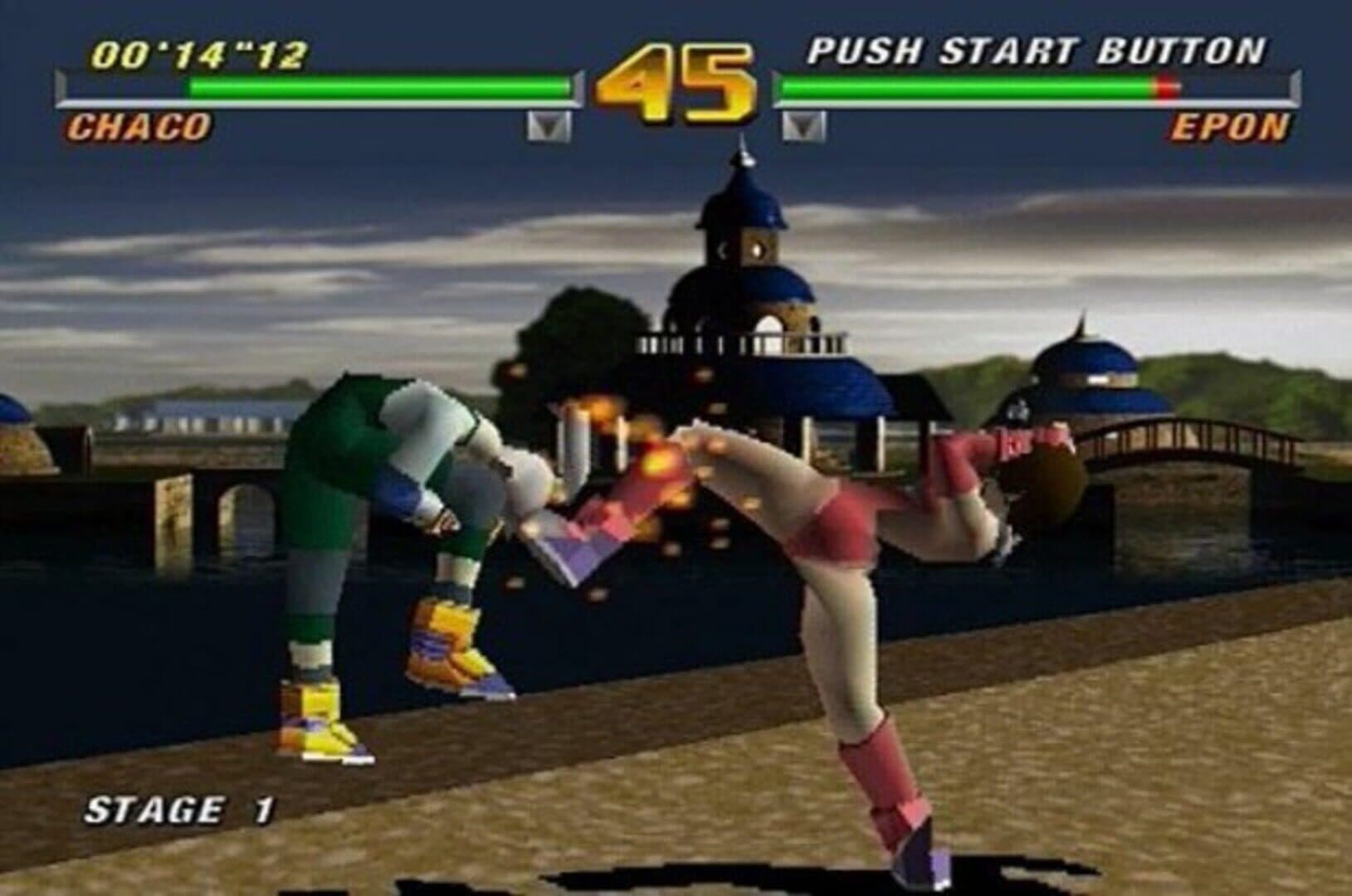
On August 2, 1996, Squaresoft launched Tobal No. 1 in Japan. Thirty years later, DreamFactory's fighting game remains trapped by a reputation that overshadows it: being the vehicle for a Final Fantasy VII demo. This misses the mark on a title that embodies the brutality of the 1990s 3D fighting game market, the commercial power of Akira Toriyama at his peak, and an ambition in game design that few fighting games have matched since.
Topic
News
Reading
4 min read
Updated
Sunday, August 2, 2026
Key points
- 1On August 2, 1996, Squaresoft launched Tobal No.
- 2Thirty years later, DreamFactory's fighting game remains trapped by a reputation that overshadows it: being the vehicle for a Final Fantasy VII demo.
- 3On August 2, 1996, Squaresoft published Tobal No.
Lumnix angle
We isolate the useful facts first, then keep the analysis focused on what changes for players.
On August 2, 1996, Squaresoft published Tobal No. 1 on PlayStation in Japan. The date seems unremarkable at first glance. It wasn't: that day saw the release of a fighting game developed by DreamFactory, designed with character art by Akira Toriyama, and bundled with a playable demo of Final Fantasy VII. That last detail has, for three decades, drained all critical perspective from the title. It's time to set the record straight.
A 3D Fighting Game Like Nothing Else in 1996
Tobal No. 1 didn't arrive in a vacuum. In 1996, 3D fighting was in full territorial war: Tekken 2 (Namco, 1995) imposed its standards on PlayStation, Virtua Fighter 2 (Sega, 1994) structured the discipline on Saturn, and Soul Edge (Namco, 1996) was beginning to show its sword. DreamFactory, a studio founded by former Tecmo developers, chose a radically different angle: a grappling and ground-fighting system of unusual precision for the era, combined with a quest mode through dungeons that fighting games almost unanimously ignored.
This quest mode—3D exploration, hunger management, battles against monsters—prefigured what games like Tekken Force (Namco, 1998) and Soul Calibur's Edge Master Mode would later attempt, with less coherence. DreamFactory positioned it from the start as the backbone, not as throwaway content. It's a design ambition that genre history has underdocumented.
Toriyama as Marketing Force, Not Window Dressing
Akira Toriyama's involvement in Tobal No. 1 was not cosmetic. In 1996, Dragon Ball Z was at the height of its Japanese television broadcast, and Toriyama was among the most recognizable artists in the country. Squaresoft and DreamFactory didn't simply slap his name on the box: the character designs carry real visual coherence, blending expressive roundness with mechanical detail that defines his style.
This choice worked commercially in Japan, where the game sold briskly. It also created editorial expectations that the title partially disappointed in the West, where the September 1996 American release suffered from ambiguous positioning: neither accessible enough for the general audience drawn by Toriyama's name, nor marketed sufficiently to compete with Tekken 2 among serious fighting fans. The game fell between two stools without anyone clearly responsible for pushing it either way.
The Final Fantasy VII demo: a marketing tactic that became a critical prison. The inclusion of a playable Final Fantasy VII demo in Tobal No. 1's Japanese packaging was ruthlessly effective marketing. It measurably boosted initial sales—Japanese players bought the game for the demo, not necessarily for DreamFactory. Squaresoft knew exactly what it was doing.
The problem is that this strategy froze perception of the game for the next thirty years. Tobal No. 1 became, in collective gaming memory, "the disc with the FF7 demo." It's a reduction that says everything about how marketing can short-circuit the reading of a work. Tobal No. 2, released exclusively in Japan in 1997 with an expanded roster and an even more developed quest mode, didn't even earn that label: it simply vanished from Western radar.
What Thirty Years Reveal About Our Critical Blind Spots
Revisiting Tobal No. 1 in 2026 confirms that gaming reproduces the same biases as film or music: a title tied to an event larger than itself eventually exists only through that event. The FF7 demo was the blockbuster; Tobal No. 1 was the vessel.
Yet what DreamFactory built still holds up mechanically. The hand-to-hand combat system, with its grappling layers and ground-counter possibilities, remains more sophisticated than much that followed in the genre during the second half of the 1990s. The quest mode, flawed and sometimes frustrating, asked questions about what a fighting game can be when it accepts being something other than a succession of matches.
Squaresoft didn't revive the franchise. DreamFactory later worked on Ehrgeiz (1998), another PlayStation fighting game mixing action and exploration, before gradually dissolving. The legacy of Tobal No. 1 is therefore orphaned, without a Western sequel, without a remaster, without digital re-release. At 30 years old, the game remains legally unavailable outside the Japanese secondhand market. It's less a nostalgic gap than a concrete preservation problem: a title that influenced thinking about ancillary modes in fighting games exists today only on aging plastic.
In brief
On August 2, 1996, Squaresoft launched Tobal No. 1 in Japan. Thirty years later, DreamFactory's fighting game remains trapped by a reputation that overshadows it: being the vehicle for a Final Fantasy VII demo. This misses the mark on a title that embodies the brutality of the 1990s 3D fighting game market, the commercial power of Akira Toriyama at his peak, and an ambition in game design that few fighting games have matched since.