Crimson Desert: The Open-World RPG That Wants It All and Can't Afford to Fail
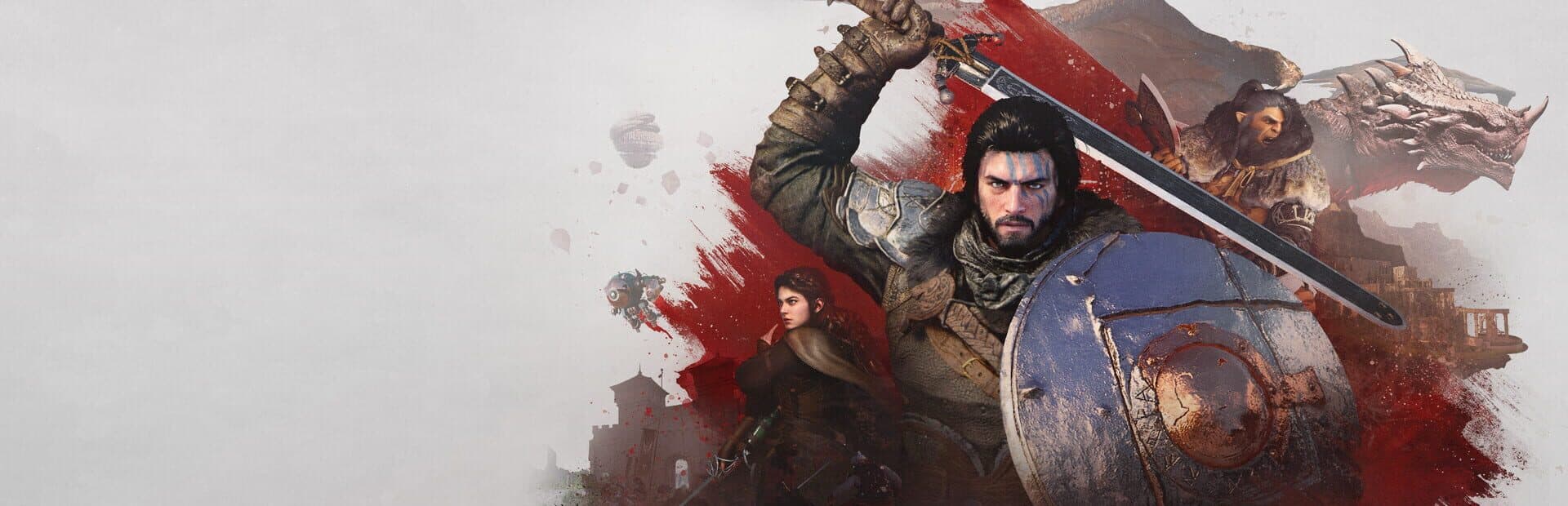
Pearl Abyss is back with Crimson Desert, their most ambitious bet since Black Desert Online. In a market saturated by Elden Ring, The Witcher 3, and their countless descendants, this Korean action RPG claimed Steam's charts this week without warning. Time to seriously ask what this game has under the hood, what it owes its predecessors, and why commercial success alone can't answer the real questions the genre faces in 2026.
Topic
Feature
Reading
8 min read
Updated
Sunday, May 17, 2026
Key points
- 1Pearl Abyss is back with Crimson Desert, their most ambitious bet since Black Desert Online.
- 2In a market saturated by Elden Ring, The Witcher 3, and their countless descendants, this Korean action RPG claimed Steam's charts this week without warning.
- 3Time to seriously ask what this game has under the hood, what it owes its predecessors, and why commercial success alone can't answer the real questions the genre faces in 2026.
Lumnix angle
We isolate the useful facts first, then keep the analysis focused on what changes for players.
Crimson Desert crashed into Steam's bestseller list this week with all the subtlety of a bulldozer. Pearl Abyss, the South Korean studio behind Black Desert Online, is no stranger to online open worlds — but Crimson Desert represents a deliberate pivot toward solo-focused action RPG, or at least solo-leaning, with a narrative ambition the publisher has never claimed this openly. The game is here, it's selling, it's generating conversation. The question is whether that conversation addresses the right issues.
This feature doesn't just read the sales figures. It takes the game seriously, traces its genealogy, identifies what it gets right, what it botches, and what it reveals about a genre that refuses to be buried despite its structural contradictions.
Pearl Abyss and the Black Desert Legacy: A Debt Hard to Repay
Before talking about Crimson Desert, we need to talk about Black Desert Online. Launched in South Korea in 2015 then rolled out globally between 2016 and 2017, this MMO left an impression for one specific reason: its fluid, snappy real-time combat system, almost arrogant in its visual generosity. At a time when World of Warcraft (Blizzard, 2004) still dominated player habits and Guild Wars 2 (ArenaNet, 2012) had attempted a first break from tab-targeting combat, Black Desert Online imposed a new standard of fluidity for action MMOs.
This technical heritage is both Crimson Desert's greatest asset and its heaviest burden. Pearl Abyss has a robust in-house engine, expertise managing vast open environments, and a culture of visual spectacle that shows immediately in the first hours of gameplay. But Black Desert Online also conditioned its community to expect a very specific economy built on grinding, RNG enchantments, and aggressive monetization. Crimson Desert must simultaneously capitalize on this loyal community while convincing a much broader audience that its economic model and design philosophy don't resemble what they already know.
A Genre Under Pressure: What Open-World Action RPGs Must Prove in 2026
The open-world action RPG faces a crisis of legitimacy, not popularity. Sales figures remain solid — Elden Ring (FromSoftware, 2022) has sold over twenty-five million copies according to Bandai Namco's statements, and The Witcher 3 (CD Projekt RED, 2015) still appears on charts a decade after launch. But this popularity masks formula saturation: the question-mark-dotted open world inherited from Assassin's Creed (Ubisoft, 2007), skill trees that expand endlessly without truly transforming gameplay, multi-choice dialogue that simulates narrative agency without delivering real consequence.
In 2026, an open-world RPG hitting the market must answer a fundamental question: what does it do that others aren't already doing? Elden Ring proved that vertical density and environmental storytelling could replace horizontal quantity. Baldur's Gate 3 (Larian Studios, 2023) demonstrated that narrative depth could reconcile players with dozens of hours of content. Crimson Desert arrives in this high-pressure space promising combat spectacle and a living world. Is that enough?
Narrative: The Historical Achilles' Heel of Korean Studios
Pearl Abyss isn't alone in this bind. Narrative has long been the structural weak point of RPGs from Southeast Asian MMO-focused studios. Lineage II (NCSoft, 2003) had rich lore but made it inaccessible; TERA (Bluehole Studio, 2011) had a coherent world but a main story few players finished. These precedents don't condemn Crimson Desert, but they establish a context where Pearl Abyss's narrative effort will be scrutinized with particular severity.
Trailers and gameplay sequences from major events over the past two years show a protagonist with a loaded past, conflicting factions, and ambitious cinematic direction. What can't yet be fully measured at this commercial launch stage is the real depth of that narrative once players sink hours into it. Do the dialogues hold up after fifteen hours? Do choices carry weight? These questions are the true markers of narrative maturity for an action RPG, and it's where comparison to The Witcher 3 or Elden Ring becomes ruthless.
Combat Systems: The Heavyweight Argument That Could Save Everything
If Crimson Desert has one indisputable strength, it's combat. Inherited from Black Desert Online's DNA and reconfigured for a less grindy experience oriented toward singular or group encounters, it relies on real-time character body reading that delivers rare fluidity. Combos are readable, animations have weight, and resource management demands constant attention that prevents autopilot play.
On this precise ground, comparison to Devil May Cry 5 (Capcom, 2019) or God of War Ragnarök (Santa Monica Studio, 2022) is fair. These two games set opposing but complementary standards: DMC5 on stylistic freedom and technical mastery, God of War Ragnarök on dramatic weight and accessibility for a broad audience. Crimson Desert seems to occupy middle ground, with relative accessibility and increasing depth for those who invest in skill mastery. It's a reasonable bet, but it demands the rest of the game matches that promise — otherwise combat risks feeling hollow.
The Open World: Between Cartographic Ambition and the Padding Trap
Crimson Desert's world is large. In contemporary open-world RPG context, that statement alone isn't a compliment anymore — it's a declaration of intent that needs proof. Open-world density isn't measured by surface area but by what it generates as friction, surprise, and organic discovery for the player wandering without immediate objectives.
Recent standout examples are clear-cut. The Legend of Zelda: Breath of the Wild (Nintendo, 2017) established that every visible hill should hold something to discover, without quest markers. Elden Ring (FromSoftware, 2022) pushed this to extremes, building a world where any corner might hide a boss, an item, or implicit storytelling. Crimson Desert, in publicly shown zones, displays undeniable visual density. The real question remains secondary content quality: is it designed to deepen world comprehension, or just fill the map with mandatory waypoints stripped of consequence?
The Economic Model: The Elephant in the Room
Pearl Abyss has a monetization reputation. Black Desert Online faced repeated criticism for practices that, while not strict pay-to-win, pushed players toward recurring purchases via costume passes, limited inventories, and time-limited buffs locked behind paywalls. This reputation sticks to Crimson Desert like a hard-to-remove label, whatever the actual final model looks like.
The economic model question for 2026 RPGs is more sensitive than ever. The era when a single $60 entry price guaranteed complete content is gone for large swaths of the industry. Narrative DLC, battle passes, cosmetic microtransactions — each now gets evaluated by players against what it means for base-game integrity. If Crimson Desert sells progression advantages for real money in solo or quasi-solo mode, the community response will be severe and lasting. If the model sticks to cosmetics with no gameplay impact, debate stays secondary. Pearl Abyss must be perfectly transparent about this, and fast.
What Crimson Desert Must Do That No One Else Has Done Yet
Here's where Lumnix takes a stance: Crimson Desert has a specific window of opportunity, and it's closing fast. No credible Korean action RPG equivalent has yet proven itself in Western markets for solo or solo-focused play. NCSoft, NCWest, Pearl Abyss itself — none have pulled off a large-scale narrative RPG cited in the same breath as FromSoftware or CD Projekt RED.
To change that, Crimson Desert must simultaneously achieve three things no one's yet managed in this exact position. First, sustain narrative over duration with secondary characters who evolve, not just a protagonist with a pre-written arc. Second, deliver open-world secondary content that's qualitative not quantitative — fewer camps to clear, more quests that say something about world history. Third, commit to a readable, defensible economic model from launch, with no ambiguity about what the entry price includes. These aren't wishes — they're minimum conditions for the game to be taken seriously by press and players beyond its launch window.
If Pearl Abyss misses any of these three marks, Crimson Desert joins the long list of games that sold well at launch before vanishing within six months. Babylon's Fall (PlatinumGames / Square Enix, 2022) remains the most painful and recent cautionary tale: stated ambitions, failed execution, servers shuttered in less than a year.
The Verdict Before the Verdict: Why This Game Matters Anyway
Crimson Desert matters because Pearl Abyss is among the few studios outside the usual Western trio — FromSoftware, CD Projekt RED, Larian — with the technical and financial means to produce an open-world RPG at this level of visual polish and systemic complexity. If the game delivers on its promises, even partially, it cracks open editorial geography built around a few names over fifteen years.
This week's Steam bestseller list just says players are curious. It doesn't yet say they'll be satisfied thirty hours in. That gap — between initial curiosity and lasting satisfaction — is where Crimson Desert's true question plays out. Pearl Abyss has the tools. Combat is there. The world is there. What's historically been missing from this studio is the will to refuse sacrificing substance for spectacle. In 2026, that will can't be a trailer promise anymore: it has to show in every side quest, every dialogue, every design choice that says no to easy shortcuts. Babylon's Fall shut down because Square Enix and PlatinumGames believed spectacle was enough. Pearl Abyss watched that lesson too close to the bone to ignore it.
In brief
Pearl Abyss is back with Crimson Desert, their most ambitious bet since Black Desert Online. In a market saturated by Elden Ring, The Witcher 3, and their countless descendants, this Korean action RPG claimed Steam's charts this week without warning. Time to seriously ask what this game has under the hood, what it owes its predecessors, and why commercial success alone can't answer the real questions the genre faces in 2026.