Physint Cancelled by Sony: Kojima Stunned, Eyes on Xbox
Sony Interactive Entertainment pulled funding for Physint without warning. Hideo Kojima, speaking at Tokyo Game Show, expressed shock to IGN and The Washington Post — while appearing at Xbox's booth. This sudden reversal raises a fundamental question: how can a project backed by one of gaming's most bankable creators get axed so abruptly? And what does this shift reveal about the real state of relations between star auteurs and proprietary platforms?
Topic
Preview
Reading
5 min read
Updated
Monday, September 21, 2026
Key points
- 1Sony Interactive Entertainment pulled funding for Physint without warning.
- 2Hideo Kojima, speaking at Tokyo Game Show, expressed shock to IGN and The Washington Post — while appearing at Xbox's booth.
- 3This sudden reversal raises a fundamental question: how can a project backed by one of gaming's most bankable creators get axed so abruptly?
Lumnix angle
We isolate the useful facts first, then keep the analysis focused on what changes for players.
Physint is officially dead on Sony's end. Days after Sony Interactive Entertainment announced its funding withdrawal, Hideo Kojima took the stage at Tokyo Game Show — not at a PlayStation booth, but at Xbox's. His interviews with IGN and The Washington Post paint the portrait of a creator genuinely caught off guard, and an industry where even the most established names have zero contractual guarantees.
A Spy Project That Couldn't Survive Sony's Internal Shuffle
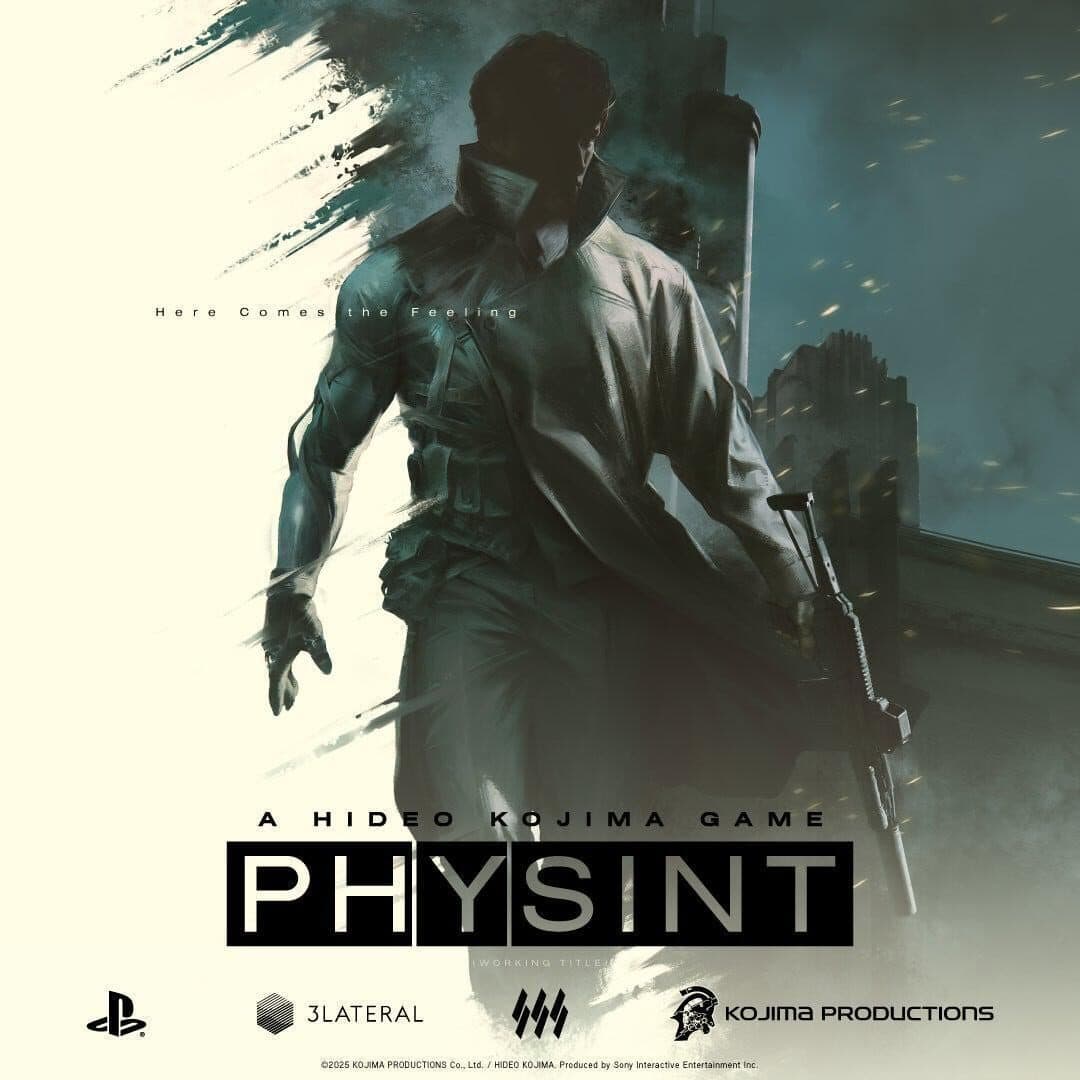
Physint was announced in January 2024 as Kojima Productions' return to action-espionage gaming — a bold statement of intent, a direct echo of his Metal Gear legacy, which he left under turbulent circumstances with Konami in 2015. The project was positioned as a PlayStation exclusive, with Sony Interactive Entertainment as financial partner. Less than three years later, that partnership is over.
What strikes about Kojima's statements to IGN and The Washington Post is less the pain than the disbelief. He indicates he didn't expect Physint to land on Sony's list of abandoned projects — phrasing that suggests there was indeed a list, in other words a strategic review process at Sony, not an isolated phone call. The project didn't collapse for creative or technical reasons: it was swept up in a major budget rationalization.
Sony Cuts First-Party Slate: Physint Isn't Alone
To understand what happened to Physint, you have to place it within the broader pullback Sony Interactive Entertainment has been executing on its first-party portfolio since 2025. After years of massive investment — studio acquisitions, ambitious project funding, bets on original franchises — Sony has entered a visible contraction phase. Projects have been frozen, studios downsized or restructured, and profitability standards for external partners have tightened.
In that climate, Physint presented a risky profile. Not because Kojima is an unreliable director — Death Stranding, released in 2019, divided critics but built a solid fan base and sold decently — but because an ambitious action-espionage game with dense narrative ambitions and an author-driven identity doesn't easily fit boxes for quick, predictable returns on investment. Sony apparently preferred not to take that risk at this stage of its financial cycle.
The Xbox Appearance: Signal or Tactical Opportunism?
What makes the situation particularly legible is the stage Kojima chose for his first public statements: the Xbox booth at Tokyo Game Show. This is no logistical coincidence. Xbox and Kojima Productions already have a concrete relationship — Death Stranding Director's Cut is available on Microsoft platforms via Game Pass since 2024 — but appearing physically in Xbox's communication space at the exact moment Sony drops Physint sends a message in itself.
Microsoft hasn't confirmed funding for Physint, and Kojima himself hasn't mentioned a new deal in his interviews. But the image speaks volumes — the creator of Physint at the booth of Sony's direct competitor, days after the split. If negotiations are underway, they're unfolding in calculated opacity. If they haven't started yet, Kojima has at least publicly positioned himself as available.
What This Reveals About Star Creators and Platforms
The Physint case illustrates a structural tension the industry generally prefers not to name directly. Proprietary platforms — PlayStation, Xbox, to a lesser extent Nintendo — need strong names to shore up creative credibility. They fund recognized auteurs, associate themselves with their image, communicate about their artistic independence. But when economic pressure demands it, they treat those projects like any other asset: transferable, postponable, or disposable.
Kojima isn't the first to experience this at this level of visibility. Kojima himself already suffered a brutal split with Konami over Silent Hills in 2015 — a project cancelled after its P.T. demo went live, still one of the most impactful horror game experiences of the decade (the demo remains unavailable for official download today, which says something about its symbolic value). Kenji Inafune, with Mighty No. 9 released in 2016, demonstrated the limits of the alternative model through crowdfunding. Star creators aren't insulated from institutional ruptures, regardless of which path they choose.
Physint's Future: Three Scenarios, No Certainty
At this point, three trajectories are plausible for Physint. First: acquisition or co-funding by Xbox, which would give the project a launch window on PC and Microsoft consoles — fundamentally changing its commercial and symbolic positioning, with Physint becoming the clearest sign of Kojima's shift toward the Microsoft ecosystem. Second: independent or mixed funding, with Kojima Productions seeking partners without platform exclusivity, mirroring what some mid-size studios have attempted with success — though the estimated budget of a Kojima project makes this option complex. Third, less likely but possible: a return to square one with a Sony reconsidering its position, particularly if public and media pressure around this announcement proves too costly to its image.
What's certain is that Physint isn't dead as a concept. Kojima Productions continued working while its partner pulled out — at least in part. The question is no longer whether the game will exist, but under whose banner and at what cost to its creator's artistic independence. This shift forces Sony to publicly absorb the reputational cost of a purely financial decision, and demands Kojima quickly clarify who he wants to build with next. The current ambiguity benefits everyone except the players waiting to see what this return to spy gaming actually looks like.
In brief
Sony Interactive Entertainment pulled funding for Physint without warning. Hideo Kojima, speaking at Tokyo Game Show, expressed shock to IGN and The Washington Post — while appearing at Xbox's booth. This sudden reversal raises a fundamental question: how can a project backed by one of gaming's most bankable creators get axed so abruptly? And what does this shift reveal about the real state of relations between star auteurs and proprietary platforms?