Vice City in 1984, 1986, and GTA VI: A Verified Comparison
Vice City Stories officially places the city in 1984, while GTA: Vice City is set in 1986. GTA VI brings it into Leonida with contemporary markers, but Rockstar gives it no precise calendar year: here is what the comparison can genuinely establish.
Topic
Feature
Reading
7 min read
Updated
Tuesday, November 17, 2026
Key points
- 1Vice City Stories officially places the city in 1984, while GTA: Vice City is set in 1986.
- 2GTA VI brings it into Leonida with contemporary markers, but Rockstar gives it no precise calendar year: here is what the comparison can genuinely establish.
- 3Three games carry the Vice City name, but they show neither the same era nor exactly the same project.
Lumnix angle
We isolate the useful facts first, then keep the analysis focused on what changes for players.
Community pulse
Are you planning to buy this game?
GTA VI
Three games carry the Vice City name, but they show neither the same era nor exactly the same project. The official Grand Theft Auto: Vice City Stories page opens with an unambiguous marker: “Vice City, 1984.” Rockstar's official retrospective material for Grand Theft Auto: Vice City places that game in 1986. GTA VI brings the city into a new fictional state, Leonida, with phones, social platforms, and viral videos among its visible markers.
One qualification governs the entire comparison: Rockstar has not published a precise calendar year for GTA VI's story. Calling it contemporary describes objects and practices shown on official pages; it does not justify arbitrarily placing the story in 2025, 2026, or any other year. This feature therefore compares three documented representations. It does not claim to reconstruct one continuous timeline, resolve the series' continuity, or assign the developers an intention they have not stated.
1984: a city officially described as emerging
The official Vice City Stories text directly associates 1984 with a city emerging from the swamps, construction everywhere, and a power struggle over the drug trade. It introduces Vic Vance as a soldier facing a difficult choice within a dysfunctional family. Those points securely establish the opening framework. They do not provide a measured city map, a population total, or a complete inventory of its districts.
The description of an emerging metropolis is limited but useful. It establishes that construction belongs to the official image of this 1984 Vice City. It would be excessive to infer that every building shown in another entry must have an older counterpart, or that a particular street documents a canonical urban evolution. Games can reuse, move, or reinterpret spaces. The source guarantees the year, broad context, and protagonist; it does not guarantee every possible correspondence between maps.
1986: the stated era of GTA: Vice City
For GTA: Vice City, Rockstar explicitly uses the wording “Vice City, 1986” in official retrospective publications. That date places the game two years after Vice City Stories. Its story follows Tommy Vercetti after his arrival in the city, but a person or location appearing in one entry cannot by itself establish anything about GTA VI. The safest comparison concerns the stated eras and the forms of media each game presents.
Rockstar's archive of classic series advertising also confirms the role of fictional radio and commercials in the representation of 1986. These materials are creations within the game's universe, not historical documents about a real city. They give the chosen era a cultural texture. They do not prove that a brand, station, or character will return in GTA VI unless an official page for the new game confirms it.
Two certain dates without inventing one timeline
1984 and 1986 are therefore two official dates. Their proximity makes comparison worthwhile, but it does not automatically turn Vice City Stories, GTA: Vice City, and GTA VI into three successive chapters of a perfectly continuous urban history. Rockstar reuses the city's name in games made at different times. Similarities, breaks, and returns must be described individually from something shown or announced, not from assumed continuity.
This distinction prevents a frequent confusion between setting, reference, and canon. An atmosphere recalling the 1980s is not evidence of narrative continuity. A recurring name does not certify identical geography. A GTA VI image that evokes an older entry does not confirm the return of its protagonist. Establishing a fact about the new game requires a source about the new game. Older titles measure a change in representation here; they do not fill Rockstar's silences.
GTA VI: contemporary uses, no official year
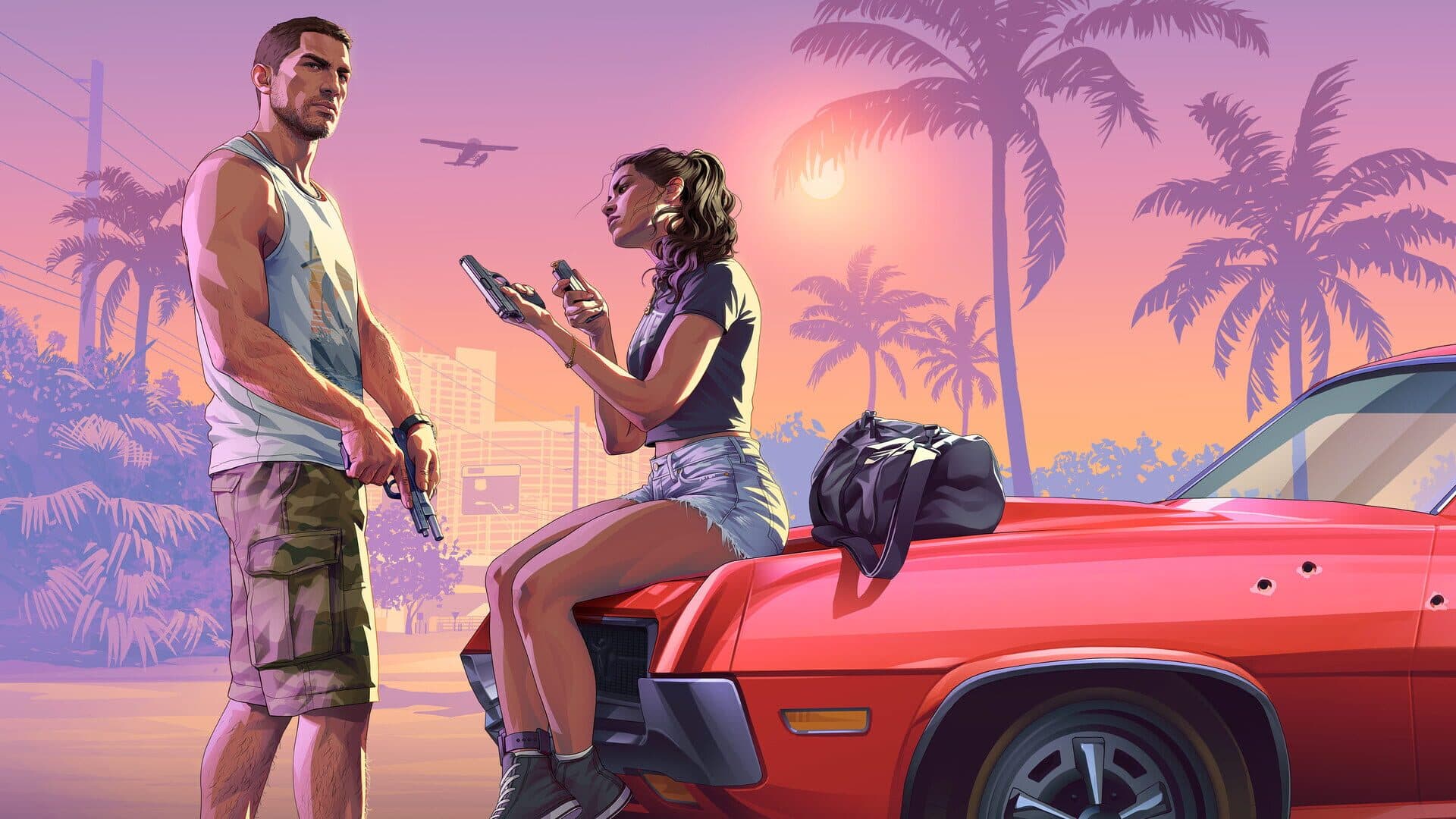
Official GTA VI pages show practices belonging to a contemporary environment: Cal Hampton browses the internet in private tabs; the Real Dimez are described as artists who turned their tracks and social presence into success; presented videos use the language of viral posts. The official music page also mentions on-demand podcasts and listening on foot with a phone and headphones.
Those observations support “contemporary” as a description. They do not support an exact year. A smartphone on screen is not a calendar, and a fictional social interface supplies no diegetic date. Lumnix will therefore not convert the game's November 19, 2026 release date into the date of its story. Commercial release and internal period are different information. Rockstar has confirmed the former; its public pages do not set the latter.
Vice City now sits within Leonida
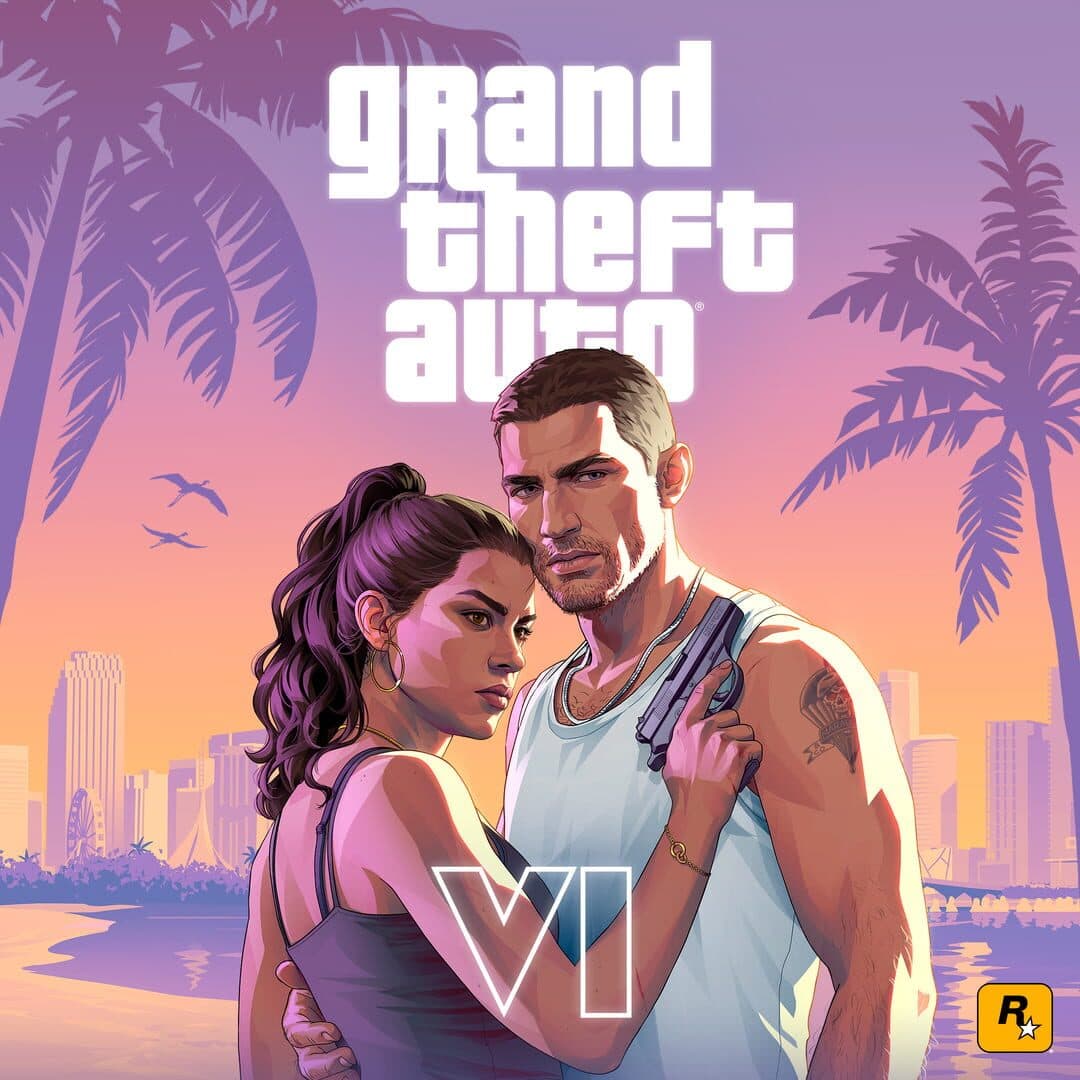
The official site presents Vice City as part of Leonida. It also presents the Leonida Keys, Grassrivers, Port Gellhorn, Ambrosia, and Mount Kalaga. Those names define a setting broader than the city alone. Rockstar uses fictional places, so it is inaccurate to write that GTA VI literally takes place in Miami or Florida. Comparisons with real landscapes may belong to visual analysis, but they must never replace the game's official state and city names.
This broader setting is one verifiable difference from official descriptions of older entries centered on Vice City. It still provides no total area, crossing time, or size ranking against GTA V. Rockstar's galleries show varied environments, not a measurement. Without a published scale, no surface figure can be treated as established. Describing a range of confirmed locations is valid; calculating a map from images would remain an estimate.
From radio broadcasts to social feeds
Fictional radio and commercials shape the cultural memory of GTA: Vice City. For GTA VI, Rockstar still confirms a major place for music while adding contemporary distribution forms: on-demand podcasts, mobile listening, artists' social presence, and sequences presented like viral posts. The documented difference is not the disappearance of radio. It is the addition of screens, feeds, and mobile habits to media already associated with the series.
Announced features must still be separated from their final role in the game. A music page confirms a listening option; it does not disclose every station, track, or host. A character profile mentioning social media does not necessarily describe a playable system. Before release, sound wording identifies the formats shown or announced. It does not promise a fully interactive phone, a complete social network, or a catalogue whose limits Rockstar has not published.
What the urban space genuinely lets us compare
Vice City Stories supplies an official description of an emerging metropolis with construction everywhere. GTA VI shows Vice City and other Leonida territories in official galleries. Between those points, visual comparison can note the architecture, roads, vehicles, or screens visible in selected material. It must remain an observation of images chosen by Rockstar, never proof of an exhaustive transformation of every district between 1984 and the new game's period.
The same caution applies to satire. The 1986 commercials and GTA VI's viral posts show that media participate in both representations. They cannot establish the precise message Rockstar intends or the political conclusion of a story Lumnix has not played. Describing formats is factual; assigning a definitive purpose to them would be interpretive. Any post-release analysis must distinguish observed scenes, their context, and the writer's opinion.
A verified comparison, including its limits
The result has three frames. Vice City Stories is set in 1984 and introduces a developing metropolis around Vic Vance. GTA: Vice City is officially associated with 1986 and Tommy Vercetti, with a media identity strongly carried by fictional radio and advertising. GTA VI places Vice City within Leonida and displays contemporary uses including the internet, social platforms, viral video, smartphones, and podcasts, while assigning no exact year to its story.
Anything beyond those points is either an observation requiring a label or an unknown. This feature does not claim that all three maps are identical, their stories share one continuity, an older character returns, or a commercial release date establishes the narrative date. Nor does it present Miami as the real location of the action. That discipline may reduce spectacle, but it protects the reporting: two dates are official, the third era is contemporary through its markers, and its internal calendar remains unpublished.
Official sources reviewed: Rockstar Games' Grand Theft Auto: Vice City Stories page; Rockstar Newswire posts about classic GTA: Vice City advertising carrying the wording “Vice City, 1986”; and the official Grand Theft Auto VI site, including character pages, “Only in Leonida,” music, and the launch gallery. Observations are limited to what those materials directly establish.
In brief
Vice City Stories officially places the city in 1984, while GTA: Vice City is set in 1986. GTA VI brings it into Leonida with contemporary markers, but Rockstar gives it no precise calendar year: here is what the comparison can genuinely establish.