Dream: The Lost Banjo-Kazooie Prototype Finally Playable 30 Years Later
A prototype for Dream: Land of Giants, a canceled Rare game for Super Nintendo that might never have existed in this form, is now playable for the first time. It's not just a digital museum artifact—it's the missing link between Rare's SNES experiments and Banjo-Kazooie, released in 1998 on Nintendo 64. Finding this build reveals how a studio shaped its ideas before commercial constraints scattered them elsewhere.
Topic
News
Reading
3 min read
Updated
Saturday, September 19, 2026
Key points
- 1A prototype for Dream: Land of Giants, a canceled Rare game for Super Nintendo that might never have existed in this form, is now playable for the first time.
- 2It's not just a digital museum artifact—it's the missing link between Rare's SNES experiments and Banjo-Kazooie, released in 1998 on Nintendo 64.
- 3Finding this build reveals how a studio shaped its ideas before commercial constraints scattered them elsewhere.
Lumnix angle
We isolate the useful facts first, then keep the analysis focused on what changes for players.
A prototype for Dream: Land of Giants, an unreleased game developed by Rare for Super Nintendo, is now accessible. For the first time since its conception in the 1990s, this build can be launched and explored—no longer just mentioned in veteran testimonies or lists of abandoned projects.
The significance goes beyond collector curiosity. Dream: Land of Giants represents a direct step in the genealogy of Banjo-Kazooie (1998, Rare, Nintendo 64), one of the most influential 3D platformers of its generation. Understanding Banjo's origins means understanding how Rare made its games—and why certain ideas survive their own cancellation.
What the Prototype Reveals About Rare in Its Prime
In the first half of the 1990s, Rare occupied a singular position in Nintendo's ecosystem. The studio churned out contracts and experiments on SNES, with results as varied as they were decisive: Donkey Kong Country (1994) established pre-rendered graphics on 16-bit consoles, Killer Instinct (1995) proved arcade cabinets could exist in living rooms. Between these visible milestones, dozens of internal projects were born, evolved, and died without leaving a public trace.
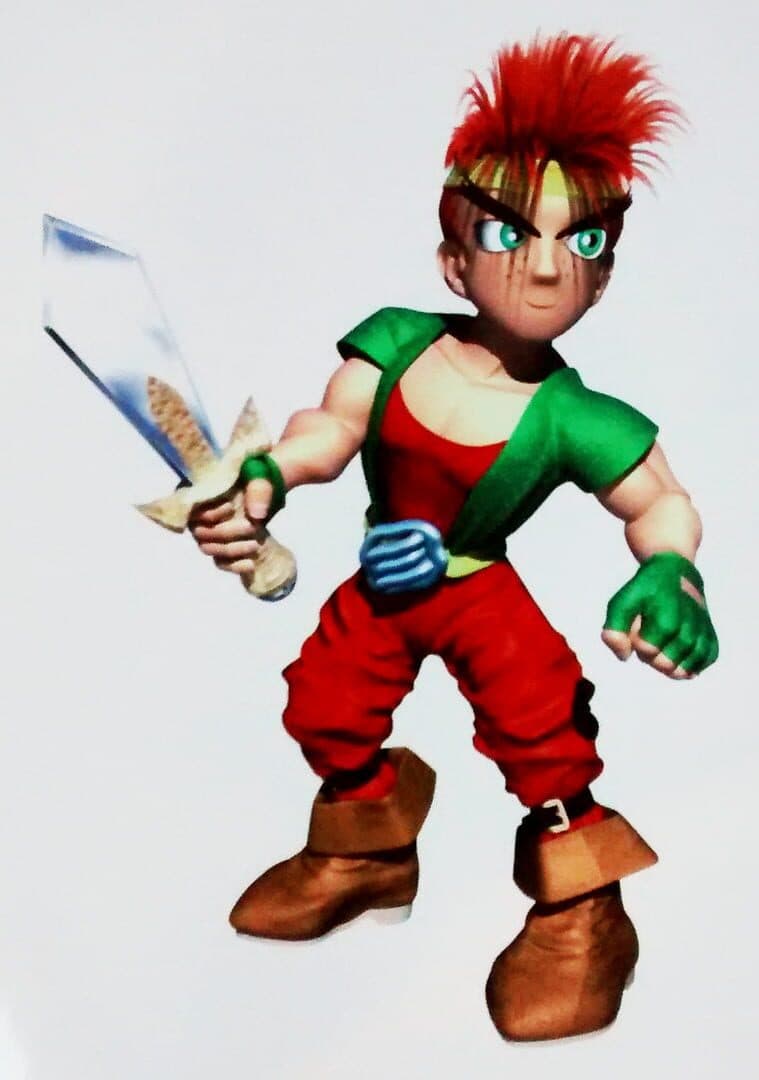
Dream: Land of Giants was one of these buried endeavors. The concept revolved around a character navigating environments at disproportionate scales—the idea of the "giant" as both narrative and visual prism. When the project was shelved on SNES, its conceptual foundations migrated to Nintendo 64, where they directly fed into what became Banjo-Kazooie. The bear-bird duo and the colorful world of the N64 title didn't appear from nowhere: they inherited a design philosophy that began on 16-bit hardware.
Game Preservation: Legitimacy and Gray Areas
Making an unreleased prototype playable raises tensions the preservation community knows well. On one hand, these builds are irreplaceable historical documents—they record creative processes that studios themselves don't always archive rigorously. On the other, they legally belong to their rights holders, in this case Microsoft, which acquired Rare in 2002.
The circulation of this prototype fits into a broader movement of ROM and internal build recovery and sharing, driven by organizations like the Video Game History Foundation, which has been pushing for years to give unreleased works a legal status suited to their cultural nature. For now, no clear legal framework protects this practice in the United States or Europe. Playing Dream: Land of Giants remains an action Microsoft hasn't authorized—though the American giant hasn't publicly responded to its distribution to date.
Why This Prototype Matters Beyond Fan Service
It's tempting to treat discoveries like this as bonuses for nostalgics, artifacts to share among gaming history enthusiasts. That would miss what this build concretely demonstrates: studios don't start from zero. Failed ideas don't vanish—they reconfigure themselves.
Rare, between 1994 and 1998, produced a SNES and N64 catalog of remarkable thematic cohesion precisely because its teams recycled, transformed, and hybridized their own prototypes. Donkey Kong Country 2 (1995) reused mechanics tested in unreleased builds. Diddy Kong Racing (1997) aggregated ideas from several parallel projects. Dream: Land of Giants fits into this logic of creative reuse.
This prototype also serves as concrete evidence in debates over institutional preservation. If Microsoft archived and made accessible its Rare holdings—even partially, even under conditions—the community would gain, and video game history would be written with primary sources rather than developer memories. The existence of this build proves the material is there. What remains is deciding who has legitimate custody of it.
In brief
A prototype for Dream: Land of Giants, a canceled Rare game for Super Nintendo that might never have existed in this form, is now playable for the first time. It's not just a digital museum artifact—it's the missing link between Rare's SNES experiments and Banjo-Kazooie, released in 1998 on Nintendo 64. Finding this build reveals how a studio shaped its ideas before commercial constraints scattered them elsewhere.