Freefall Racers: Kinect Exclusive Returns Without Kinect or Xbox
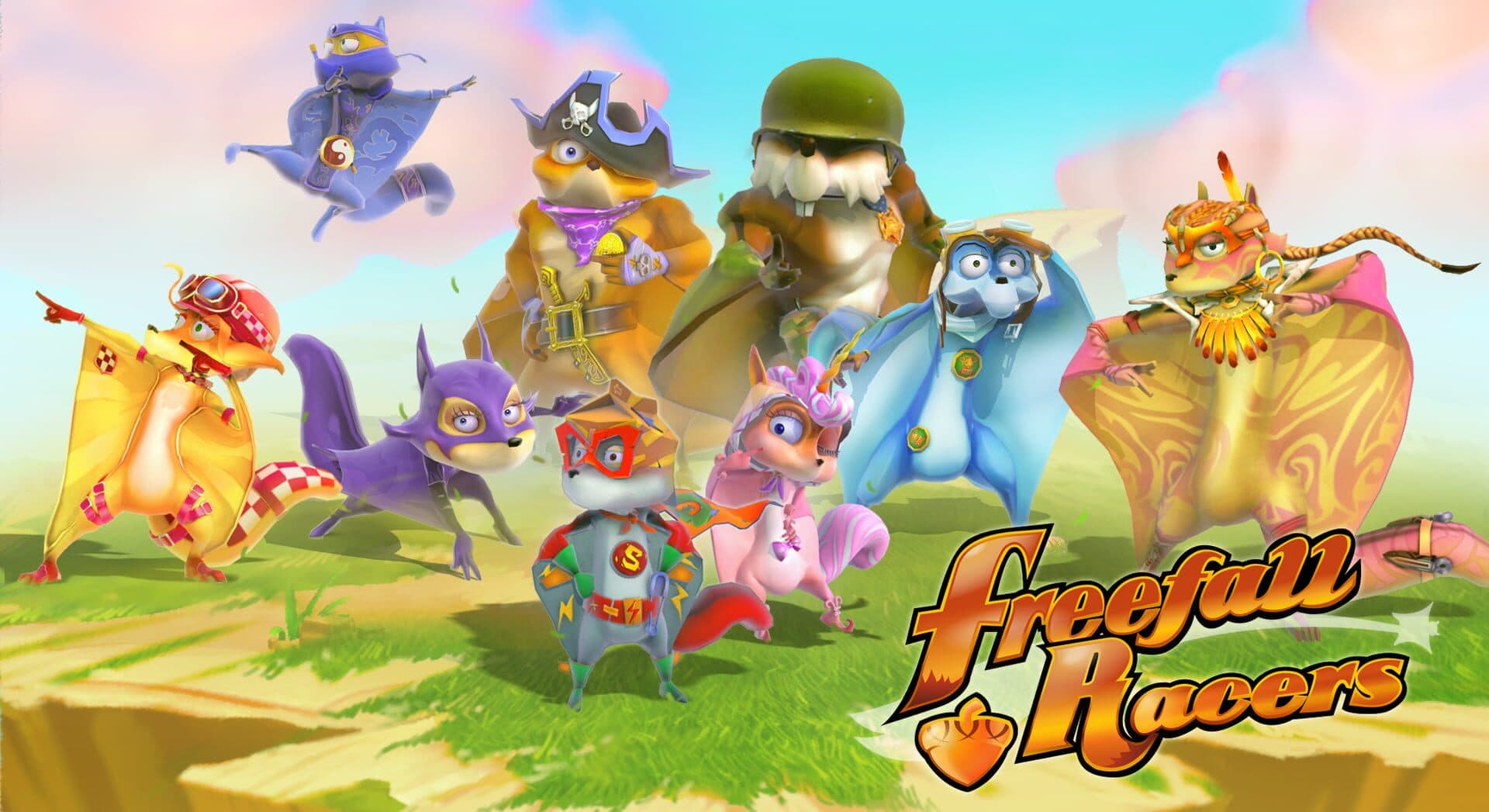
Freefall Racers, a racing game built for Xbox One's Kinect sensor, resurfaces in a version stripped of all motion detection hardware. This comeback raises a real question: how do you revive an entire genre killed by a peripheral's death, and what does it say about the fate of abandoned Kinect exclusives since the end of the Xbox One era.
Topic
News
Reading
3 min read
Updated
Sunday, August 2, 2026
Key points
- 1Freefall Racers, a racing game built for Xbox One's Kinect sensor, resurfaces in a version stripped of all motion detection hardware.
- 2This comeback raises a real question: how do you revive an entire genre killed by a peripheral's death, and what does it say about the fate of abandoned Kinect exclusives since the end of the Xbox One era.
- 3Freefall Racers is back, and without the Kinect.
Lumnix angle
We isolate the useful facts first, then keep the analysis focused on what changes for players.
Freefall Racers is back, and without the Kinect. This racing game originally designed to work exclusively with Microsoft's motion sensor has been ported to a new platform, this time with no proprietary hardware required. The fact is straightforward, but its implications run deeper: it opens the file on dozens of Kinect titles abandoned since the accessory stopped selling, condemned to collect dust on hard drives or shelves for lack of a viable porting solution.
A Kinect Legacy Microsoft Never Bothered to Reclaim
The Kinect had two distinct lives: a first on Xbox 360 starting in 2010, a second on Xbox One where it was initially bundled as mandatory before gradually vanishing from official messaging. Microsoft finally stopped manufacturing the peripheral in 2017, leaving orphaned a catalog that included titles as varied as Kinect Sports Rivals (Rare, 2014) and Dance Central Spotlight (Harmonix, 2014). No preservation program, no re-releases, no adapted backwards compatibility. The Kinect died without a will.
Freefall Racers belongs to that generation of games conceived for gesture rather than stick. Its core mechanic relied on body motion detection to steer a character in freefall through vertical races. This kind of design seemed, on the surface, inseparable from its original sensor. The fact that a functional version now exists without it proves the technical constraint was less absolute than it appeared.
The Port as Proof: Gesture Controls Translate
What this port concretely demonstrates is that Kinect gesture inputs can be remapped to standard controls without destroying the gaming experience. That's not guaranteed: several attempts to port Kinect games over the years ran into the rigidity of mechanics designed for six degrees of bodily freedom, incompatible with two sticks and four triggers. Here, the new version of Freefall Racers clears that functional hurdle.
The target platform for this port isn't Xbox. That's precisely where the editorial tension lies: a game born in Microsoft's ecosystem, designed for its flagship accessory, comes alive outside it. Microsoft didn't initiate this return. The studio or project holder chose another path, raising the question of whether the original publisher still owns rights to this kind of title or simply let them sleep.
What the Kinect Gaming Scene Waited For Without Saying It
There's a preservation community documenting and attempting to keep Kinect games alive through partial emulators or alternative motion detection solutions, notably via consumer RGB-D cameras. But these solutions remain in the realm of the informed enthusiast, far from mass accessibility. A clean commercial port, playable on a contemporary platform without any specialized hardware, is a different proposition entirely.
The precedent Freefall Racers sets is modest but real. If a game so dependent on its input sensor can be ported satisfactorily, other titles from the Kinect catalog could follow the same path. Kinect Rush (Asobo Studio, 2012) and Disneyland Adventures (Frontier Developments, 2011) are plausible candidates—their family appeal and relatively simple mechanics make them easier to adapt than more demanding gesture experiences.
Freefall Racers won't become a blockbuster again. Its resurrection isn't the triumphant return of a forgotten classic. But it materializes something Microsoft refuses to do itself: work to preserve what the Kinect produced. As long as the publisher doesn't actively manage this catalog, third parties will decide which games deserve to survive and in what form. That's an editorial abdication that says as much about Xbox's current policy as it does about Freefall Racers' own fate.
In brief
Freefall Racers, a racing game built for Xbox One's Kinect sensor, resurfaces in a version stripped of all motion detection hardware. This comeback raises a real question: how do you revive an entire genre killed by a peripheral's death, and what does it say about the fate of abandoned Kinect exclusives since the end of the Xbox One era.