Ecco Defender of the Future: 26 Years Later, the Dolphin Still Teaches
Released on Dreamcast in 2000, Ecco the Dolphin: Defender of the Future remains a singular artifact in gaming history. A quarter-century on, Appaloosa Interactive's title deserves closer examination—not for nostalgia's sake, but because its approach to marine ecology and environmental storytelling retains a troubling relevance. Few contemporary games have managed to surpass it on this precise terrain.
Topic
News
Reading
4 min read
Updated
Saturday, August 15, 2026
Key points
- 1Released on Dreamcast in 2000, Ecco the Dolphin: Defender of the Future remains a singular artifact in gaming history.
- 2A quarter-century on, Appaloosa Interactive's title deserves closer examination—not for nostalgia's sake, but because its approach to marine ecology and environmental storytelling retains a troubling relevance.
- 3Few contemporary games have managed to surpass it on this precise terrain.
Lumnix angle
We isolate the useful facts first, then keep the analysis focused on what changes for players.
Released on Dreamcast in summer 2000, Ecco the Dolphin: Defender of the Future is one of those games that endures not because of its gameplay, but despite it. Appaloosa Interactive had taken Ed Annunziata's Mega Drive license and transformed it into a 3D underwater action game with a narrative and environmental ambition few studios dared broadcast at the time. Twenty-six years later, the question is no longer whether the game is good in classical terms: it's understanding why it continues to occupy a distinct place in the collective memory of players who grew up with the Dreamcast.
An Underwater Universe Built as a Political Statement
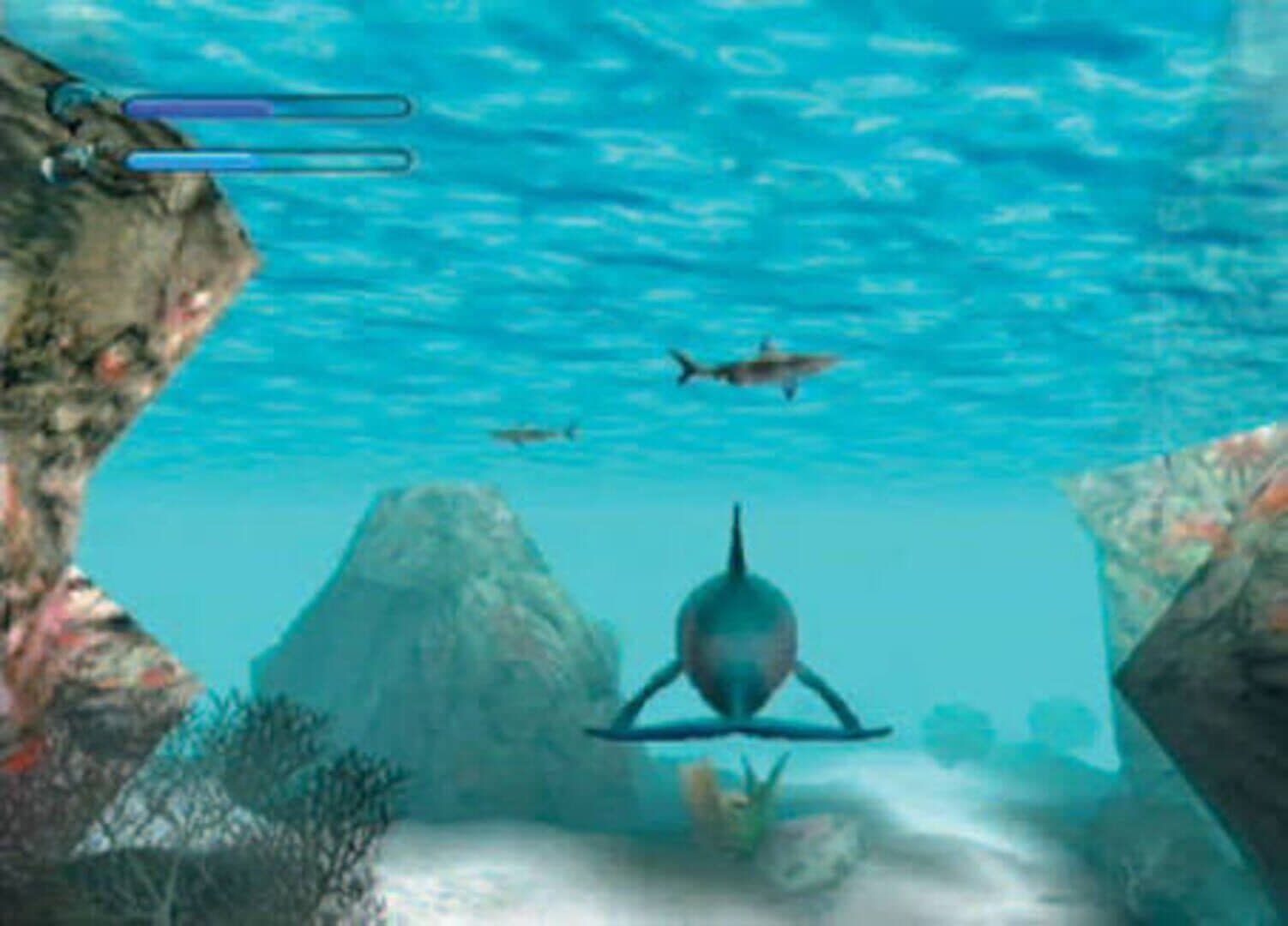
What distinguished Defender of the Future from its contemporaries was the intention behind the setting. While most games in 2000 used the ocean as aesthetic window dressing—Aqua Nox (2001, Massive Development) and Deep Fighter (2000, Ubisoft Montreal) treated the seabed as shooting galleries—Appaloosa constructed a coherent ecosystem with its own biological rules, animal hierarchies, and survival cycles. The dolphin isn't an interchangeable avatar: it breathes, it sings, it communicates. This friction between game mechanics and natural logic was deliberate, and it gave the title a rare texture.
The ecological message wasn't cosmetic either. The narrative of Defender of the Future opposes two visions of the relationship between humans and ocean: coexistence and predation. In 2026, with debates over marine sanctuary zones and the documented yearly collapse of cetacean populations by the IUCN, this narrative positioning resonates differently. The game wasn't preaching—it was building a world where the consequence of exploitation was visible, embodied, playable.
The Dreamcast as Reception Context
You have to remember what the Dreamcast was in 2000 to measure the title's impact. Sega's console was living its final commercial months—Sega abandoned hardware entirely in January 2001—and its library existed in a strange zone between bold experiments and rushed releases. Defender of the Future belonged to the first category. The Dreamcast version benefited from careful presentation for its era, with underwater lighting effects that properly exploited the hardware, and a score by Spencer Nilsen that lingered long after you stopped playing.
The PS2 version, released in 2002, expanded the audience but diluted the image of a game associated with a dead platform. This shift contributed to relegating the title to the purgatory of forgotten curiosities, far from recognized Dreamcast classics like Shenmue (1999, Sega AM2) or Jet Set Radio (2000, Smilebit).
Why No One Really Built on It
The uncomfortable question: why, in twenty-six years, has no studio developed what Defender of the Future sketched out? Aquatic games exist—Subnautica (2018, Unknown Worlds Entertainment) proved a mainstream market was there, and Dave the Diver (2023, Mintrocket) showed you could build a solid commercial proposition around it. But neither truly shares Ecco's DNA: narrative embodied in a non-human animal body, communication as central mechanic, political messaging dissolved into game design.
The answer likely lies in the commercial risk of a game without readable combat interface, without classical heroic progression, and with a protagonist that isn't easily anthropomorphized. Defender of the Future was a market anomaly in 2000; it remains one in 2026.
An Legacy Without a Direct Heir
Bringing Ecco the Dolphin: Defender of the Future back into view isn't an exercise in nostalgia. It's acknowledging that a twenty-six-year-old game poses questions the current market, obsessed with power scaling and progression comfort, still refuses to confront directly. Ecology isn't a narrative skin you slap onto a shooter—it's a design logic that constrains the player, denies them omnipotence, places them in fragility against an environment that doesn't belong to them. Appaloosa understood this. Twenty-six years later, few studios have had the courage to explore that path.
In brief
Released on Dreamcast in 2000, Ecco the Dolphin: Defender of the Future remains a singular artifact in gaming history. A quarter-century on, Appaloosa Interactive's title deserves closer examination—not for nostalgia's sake, but because its approach to marine ecology and environmental storytelling retains a troubling relevance. Few contemporary games have managed to surpass it on this precise terrain.