Eternal Darkness: The GameCube Masterpiece That Never Got a Sequel
Released 24 years ago on GameCube, Eternal Darkness: Sanity's Requiem remains one of the most inventive horror games ever made, famous for its sanity system that literally broke the fourth wall. Critically acclaimed and award-winning, it seemed destined for a lasting franchise. Yet no sequel ever materialized. Behind this failure lies a story of rights disputes, fractured studios, and unfulfilled ambitions—the kind of trajectory that reveals how fragile the video game industry truly is.
Topic
News
Reading
4 min read
Updated
Wednesday, June 24, 2026
Key points
- 1Released 24 years ago on GameCube, Eternal Darkness: Sanity's Requiem remains one of the most inventive horror games ever made, famous for its sanity system that literally broke the fourth wall.
- 2Critically acclaimed and award-winning, it seemed destined for a lasting franchise.
- 3Behind this failure lies a story of rights disputes, fractured studios, and unfulfilled ambitions—the kind of trajectory that reveals how fragile the video game industry truly is.
Lumnix angle
We isolate the useful facts first, then keep the analysis focused on what changes for players.
In June 2002, Silicon Knights released on GameCube a horror game that had almost no equivalent at the time. Eternal Darkness: Sanity's Requiem offered a brutally original central mechanic: the more your character lost their mind, the more the game itself seemed to malfunction. Screen cuts, inventory erased, fake console messages announcing save file deletion—hallucinations designed to make players doubt what they were seeing. It was psychological manipulation built directly into the design. Twenty-four years later, no one has truly replicated this idea with the same coherence.
A Sanity System That Redefined the Genre
The Sanity Meter wasn't just window dressing. It structured the entire experience: ignoring enemies rather than fighting them, at the risk of warping the player's perception, became a simultaneous tactical and narrative choice. The effects produced by losing sanity—fake crashes, uncontrolled zoom, persistent background noise—broke the usual contract between game and player. Titles like Hellblade: Senua's Sacrifice (Ninja Theory, 2017) or, to a lesser extent, Doki Doki Literature Club (Team Salvato, 2017) explored comparable territory, but in 2002, Eternal Darkness was operating in a creative vacuum. Nintendo, which distributed the game as a GameCube exclusive, had bet on something radically foreign to its usual catalog.
Awards Weren't Enough to Guarantee a Sequel
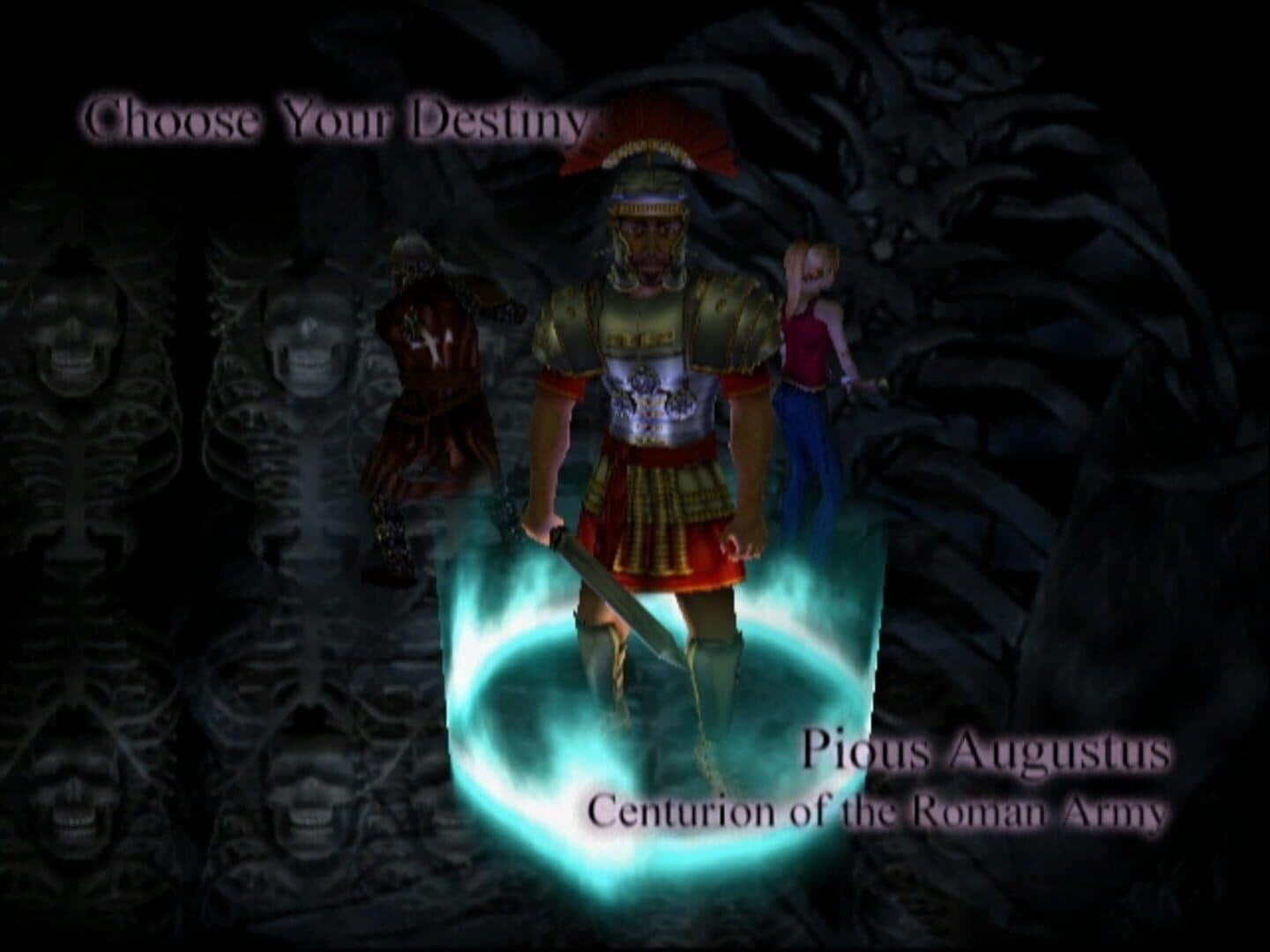
On release, the game was hailed as a mature, technically polished, and narratively ambitious work, unfolding its story across centuries through a cast of historical characters. The accolades followed: multiple year-end distinctions from specialized media of the era, solid critical scores. On paper, everything pointed to a franchise being born. That's not what happened.
Silicon Knights, the Canadian studio behind the game, underwent a gradual dissolution over the 2000s. Its relationship with Epic Games—tied to the Unreal Engine 3—resulted in a high-profile lawsuit that Silicon Knights lost in 2012, leading to the destruction of thousands of units of its own games and the near dissolution of the studio. Denis Dyack, Silicon Knights founder and central figure of the Eternal Darkness project, has since cofounded Quantum Entanglement Entertainment, without producing any observable continuation of the license.
The legal complication is straightforward: Nintendo owns the Eternal Darkness trademark. Silicon Knights developed the game, but the intellectual property belongs to the Japanese publisher. As a result, neither Dyack nor any third party can revive the franchise without Nintendo's approval—and Nintendo has shown no public interest in exploiting this catalog to date. Rumors of a remaster or sequel have circulated at regular intervals since 2012, never materializing. A Kickstarter called Shadow of the Eternals, presented as a spiritual successor by former Silicon Knights members, attempted crowdfunding in 2013: it failed twice without reaching its goals.
This stalemate illustrates a well-known structural problem in the industry: an intellectual property can outlive its creator, belong to a holder with no immediate commercial interest in it, and remain suspended indefinitely. It's not unique to Nintendo—dozens of licenses are in similar situations at defunct or merged publishers—but the Eternal Darkness case is particularly stark because the original game clearly had franchise potential and the obstacle is purely legal and commercial, not technical or creative.
An Intact Legacy, a Real Gap in the Genre
What makes the absence of a sequel genuinely frustrating is that psychological horror has evolved without ever truly recovering what Eternal Darkness established. Player manipulation through the interface, deconstruction of medium conventions as narrative tool—these ideas remained marginal, exploited sporadically rather than developed in depth. A direct successor, with current technical resources, would represent real creative space, not a simple nostalgia play.
Nintendo holds a license that proved its critical value and conceptual originality. Twenty-four years later, letting it sleep is not a neutral decision: it's an editorial choice that impoverishes the genre's catalog. Players waiting for a sequel stopped believing long ago, and that may be the real takeaway—not that the sequel is cursed, but that it was never a priority for whoever holds the keys.
In brief
Released 24 years ago on GameCube, Eternal Darkness: Sanity's Requiem remains one of the most inventive horror games ever made, famous for its sanity system that literally broke the fourth wall. Critically acclaimed and award-winning, it seemed destined for a lasting franchise. Yet no sequel ever materialized. Behind this failure lies a story of rights disputes, fractured studios, and unfulfilled ambitions—the kind of trajectory that reveals how fragile the video game industry truly is.