God of War: Sons of Sparta — A Legacy That Weighs Heavy
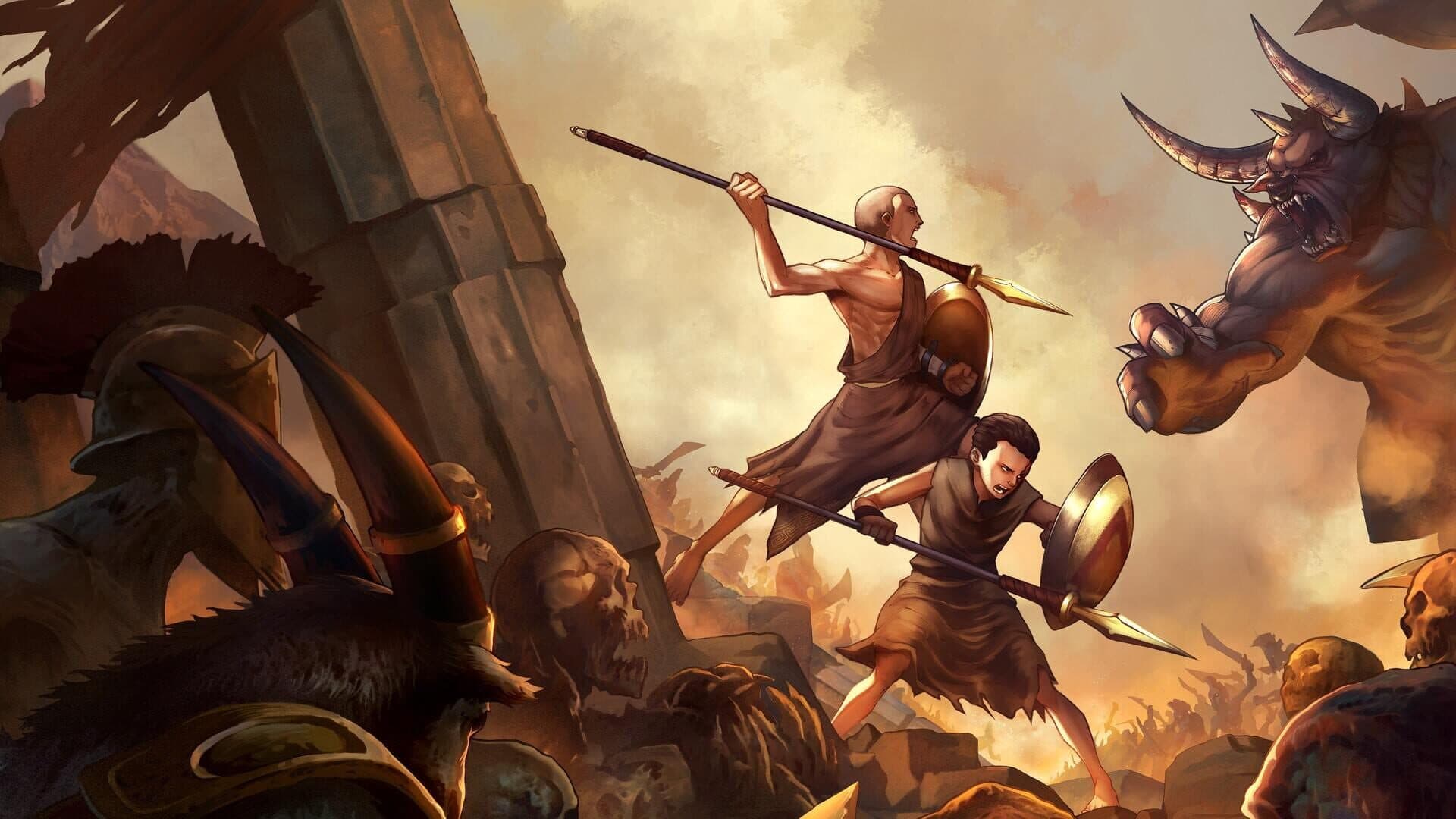
Sony Santa Monica is back with Sons of Sparta, the latest chapter in a saga that reinvented Nordic action-RPG in 2018. The weight of Ragnarök still lingers in memory, and expectations are sky-high. Does this new chapter deliver on its promises, or is it destined to live in the shadow of its predecessors? Find out after twenty hours wielding the Leviathan axe and traversing the nine realms.
Topic
Review
Reading
5 min read
Updated
Tuesday, May 12, 2026
Key points
- 1Sony Santa Monica is back with Sons of Sparta, the latest chapter in a saga that reinvented Nordic action-RPG in 2018.
- 2The weight of Ragnarök still lingers in memory, and expectations are sky-high.
- 3Does this new chapter deliver on its promises, or is it destined to live in the shadow of its predecessors?
Lumnix angle
We isolate the useful facts first, then keep the analysis focused on what changes for players.
| Platform | PS5, PC |
|---|---|
| Genre | Action-RPG |
| Developer | Sony Santa Monica Studio |
| Playtime | 18–25 hours (main story) |
| Price | $79.99 |
Atreus Grows Up, the Saga Seeks Its Wind
Eight years. That's how long it took Sony Santa Monica to transform Kratos into a tormented father figure, then into a quasi-paternal mythological force for a generation of gamers. God of War (2018) was a sharp break from the PS2-PS3 Greek era, and Ragnarök (2022) confirmed the overhaul wasn't a fluke but a deliberate artistic direction. Sons of Sparta arrives, then, with a delicate mission: extend without repeating, innovate without betraying.
This new chapter places Atreus at the center of the story. Kratos is present, but in the background—a narrative choice that divides, and one you'll feel all the way through the gameplay structure. We'll get to that.
Combat: Fluidity Achieved, Boldness Absent
Sons of Sparta's combat system rests on the foundation laid by Ragnarök: the Leviathan axe, Blades of Chaos, versatile shield, and a rage meter that rewards aggression. The feel is immediate for anyone who's played the previous entries. Newcomers will face a reasonable but not brutal learning curve.
What changes is the introduction of Atreus's runic bow as a primary weapon in certain sequences. The character now has its own skill tree, leaning toward ranged control and positioning rather than face-to-face melee. On paper, it's a solid idea. In practice, Atreus-controlled segments lack the satisfying brutality that Kratos delivers with every axe swing. The impact feedback is less immediate, less visceral. It's not bad—it's simply different, and that difference can frustrate.
Boss fights remain the undisputed high point. Three of them rank among the best-constructed confrontations in the entire franchise, with demanding patterns, well-paced multi-phase sequences, and direction that knows when to step back and let the mechanics speak. Conversely, mid-game battles against standard enemies suffer from a lack of variety in the second half—a recurring flaw since Ragnarök that Sons of Sparta fails to address.
Narrative: Legacy as Throughline
Writing is where Sons of Sparta takes its boldest risks. The game explores the father-son relationship from an inverted angle: now Atreus must learn to let go as a aging Kratos becomes less certain than ever before. The dynamic is intriguing, occasionally touching, but the script stumbles on dialogue that's too expository, hammering home themes that are already obvious.
Christopher Judge still embodies Kratos with economic restraint and physical presence that transcends the screen. Scenes between the two leads work when they embrace silence. Secondary scenes, particularly those introducing new mythological figures drawn from Slavic and Celtic traditions, are uneven—some enrich the lore, others feel like cosmetic filler.
Technical: PS5 Firing on All Cylinders, PC Playing Catch-Up
On PS5, Sons of Sparta is a display of visual muscle. The Fidelity mode at 4K/30 fps showcases environments of remarkable density, with volumetric lighting that sometimes gives the Nordic realms an almost photographic atmosphere. Performance mode at 60 fps is the recommended choice for combat: responsiveness benefits directly.
The PC version, however, repeats the stumbles of the God of War (2022) port on that platform. Load times are longer than expected, and some stutters persist even on rigs exceeding official specs. A day-one patch partially addressed the issue, but the PC launch state falls short of what we expect from a Sony first-party title in 2026. The studio has promised additional fixes in the coming weeks.
The art direction is beyond reproach. The nine revisited realms offer distinct color palettes, and the transitions between certain biomes remain among the spectacles only this engine seems capable of pulling off at this level of coherence.
Open World: Mastered Exploration, Variable Side Content
Sons of Sparta adopts a semi-open structure similar to its predecessors: a central hub connected to deeply explorable zones, with the ability to return and unlock new areas as the narrative progresses. It flows smoothly, the map is legible, secrets are hidden well enough to reward curiosity without punishing the impatient.
Side activities suffer from an imbalance, however. Quality favors—narrative side quests—are sparse but excellent. Conversely, arena challenges and collectibles scattered throughout environments lack diegetic justification: you complete them for trophies, not story. This is a foundational problem the franchise has dragged since 2018, one Sony Santa Monica hasn't yet solved.
Playtime hovers around 18 hours for the main campaign and exceeds 35 hours for a complete runthrough. That's fair for the genre.
Strengths and Weaknesses
- + Boss fights among the franchise's best
- + Flawless art direction, technical mastery on PS5
- + Brave narrative on legacy and letting go
- + Kratos gameplay as satisfying as ever in its fundamentals
- + Lore expanded into Slavic and Celtic mythology, refreshingly different angle
- − Atreus segments less impactful than Kratos sequences
- − Insufficient PC port at launch
- − Uneven side content, soulless collectibles
- − Some dialogue too didactic, overexplaining themes
- − Lack of mid-tier enemy variety toward game's end
Verdict: A Worthy Son, Not Yet a Father
God of War: Sons of Sparta is a good game. Probably a very good game for anyone discovering the franchise with this entry. But for players who lived through 2018's renaissance and Ragnarök's conclusion, there's a persistent sense of controlled repetition rather than bold reinvention. The shift toward Atreus is narratively daring, but it destabilizes gameplay cohesion. And the PC port botches its debut in inexcusable fashion for a studio of this caliber.
What Sons of Sparta succeeds at—and it succeeds well—is keeping alive a franchise that could have sputtered out after Ragnarök. The foundation is there. What's missing is the spark that transforms a very good chapter into a generational moment. The saga has bright realms ahead, provided the next installment dares to reach further.
In brief
Sony Santa Monica is back with Sons of Sparta, the latest chapter in a saga that reinvented Nordic action-RPG in 2018. The weight of Ragnarök still lingers in memory, and expectations are sky-high. Does this new chapter deliver on its promises, or is it destined to live in the shadow of its predecessors? Find out after twenty hours wielding the Leviathan axe and traversing the nine realms.
Our verdict
God of War: Sons of Sparta — A Legacy That Weighs Heavy
PS5, PC