Does GTA VI Deliver? The Real Verdict Across Early Reviews
Leonida impresses almost unanimously, but critics disagree on satire, pacing and freedom inside missions. We compared several full reviews to separate consensus, disagreement and unknowns, without pretending this is a Lumnix review or revealing the plot.

Topic
News
Reading
7 min read
Updated
Sunday, November 22, 2026
Key points
- 1Leonida impresses almost unanimously, but critics disagree on satire, pacing and freedom inside missions.
- 2We compared several full reviews to separate consensus, disagreement and unknowns, without pretending this is a Lumnix review or revealing the plot.
- 3Grand Theft Auto VI has received a wave of acclaim rarely seen at this scale.
Lumnix angle
We isolate the useful facts first, then keep the analysis focused on what changes for players.
Community pulse
Are you planning to buy this game?
GTA VI
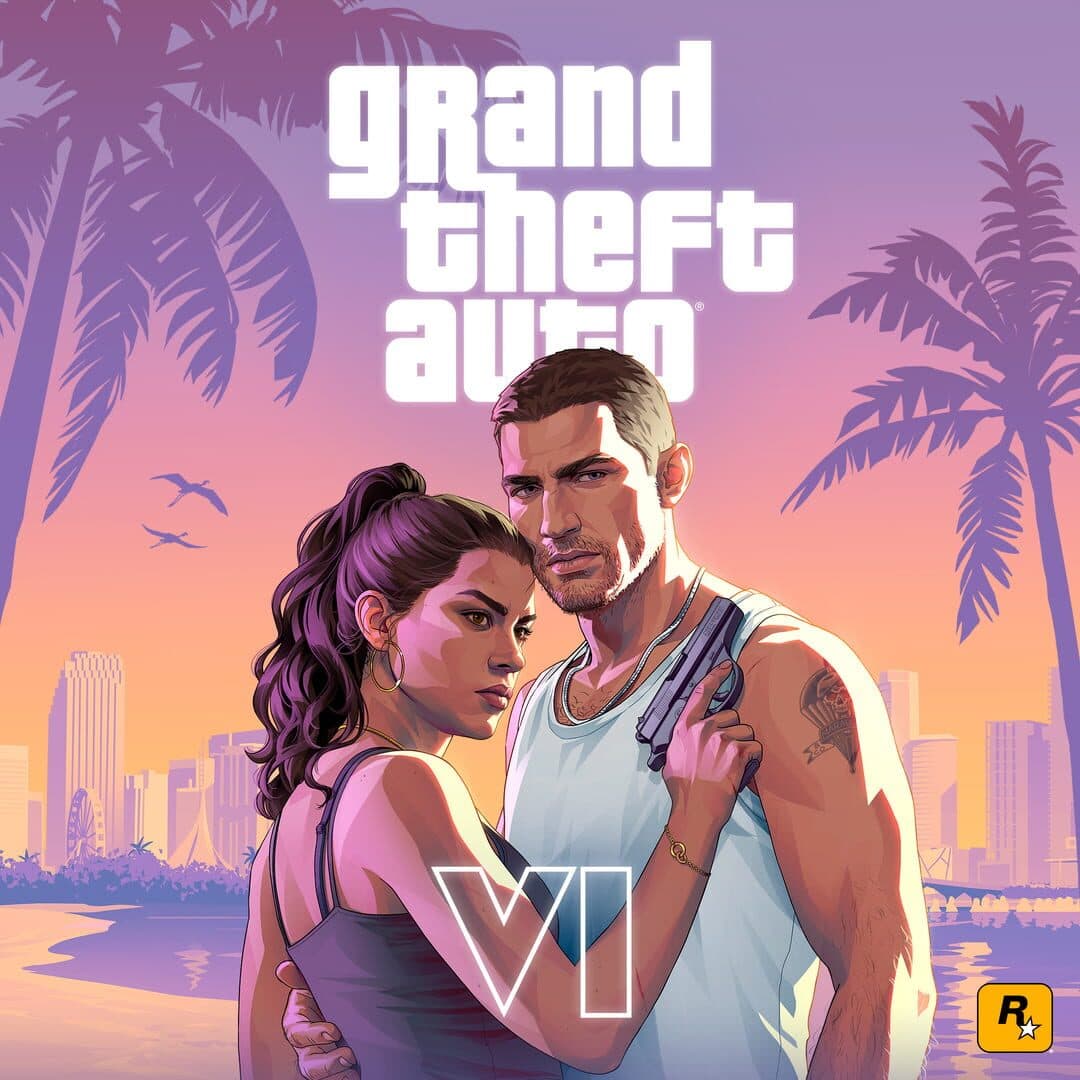
Grand Theft Auto VI has received a wave of acclaim rarely seen at this scale. Yet reducing its reception to an average or a row of perfect scores would erase what matters. Reviews from VGC, The Guardian, The Washington Post, Ars Technica, TechRadar and Creative Bloq do not describe precisely the same game. They converge on Leonida’s extraordinary density and the strength of Jason and Lucia, but separate when judging satire, pacing and the player’s actual freedom.
This report is not a Lumnix review. We award no score and do not claim to have played the game. It is a comparison of identified critics published only three days after release. It avoids missions, surprise characters and the ending.
The strongest consensus: Leonida feels as though it exists
The wording changes, but the finding repeats. VGC describes an open world of exceptional scale and richness. The Guardian emphasises an almost indulgent accumulation of detail. Creative Bloq highlights overheard conversations, small scenes and activities that reward simply spending time in a place. The Washington Post focuses on believable inhabitants whose reactions give the environment social coherence.
That convergence is more meaningful than praise for map size. Critics are not only celebrating an amount of content. They describe a space where systems, animation, dialogue and staging combine into a sense of continuity. Across this group, that is probably the promise GTA VI fulfils most convincingly.
One reservation remains. A highly dense world can also become overwhelming, and amazement across the first dozens of hours does not prove that every activity retains its force. Reviewers had extended access — TechRadar reports roughly one hundred hours — but none can yet measure how the public will inhabit Leonida over months.
Jason and Lucia are more than a switching mechanic
The second strong agreement concerns the couple. VGC makes their relationship the emotional core of the story. The Guardian treats them as the lens through which Leonida gains meaning. Creative Bloq points to conversations, reactions and animation that sustain their bond beyond major scenes. The Associated Press also notes that early reviews find relationship-building deeper than a sequence of robberies and violence.
Those assessments align with Rockstar’s explanation that bringing both characters together in the open world lets storytelling move beyond cinematics. Consensus, however, does not mean every part of the writing persuades everyone.
Ars Technica offers an important objection: away from the central plot, some missions and side stories can make Jason and Lucia feel like supporting characters in their own adventure. That criticism does not invalidate the couple. It questions whether the game can keep its protagonists central within a world designed to generate endless encounters.
Satire divides critics far more than world-building
VGC argues that GTA VI avoids some easy political targets in favour of a personal story while retaining caustic satire. Creative Bloq recognises Rockstar’s contemporary caricature in fictional media, celebrity and culture-war noise.
Ars Technica is much less convinced. It finds several jokes dated or blunt and argues that social observation does not always become a stimulating statement. This is a genuine editorial disagreement: the same excess can look like a fierce portrait of the present to one critic and a repetition of old habits to another.
It would therefore be inaccurate to say that “critics validate the satire.” They overwhelmingly validate the richness of the representation, but not uniformly what Rockstar says through it. Time is also needed to see which jokes endure and which age as quickly as the news they imitate.
Spectacular freedom, sometimes constrained by missions
Reviews praise the number of activities, the world’s reactions and the possibilities between objectives. TechRadar emphasises systems that create the feeling of living Jason or Lucia’s trajectory. Several critics, however, distinguish this broad freedom from the more directed construction of story sequences.
Creative Bloq notes that some major missions remain tightly scripted to achieve cinematic ambition. That is not necessarily a flaw for every player: the same discipline produces the set pieces critics celebrate. It nevertheless exposes Rockstar’s familiar tension between sandbox freedom and authored staging. GTA VI appears to push the former remarkably far without removing the rails of the latter.
The real dividing line: causing chaos or inhabiting the world
Public reactions reveal an opposition that professional scores sometimes soften. An exploratory Kimola study of 1,850 YouTube, X and Reddit posts and comments found mechanical friction to be the most frequent complaint among messages comparing GTA VI with an earlier entry. This is neither a representative sample of all buyers nor a satisfaction survey. It identifies a recurring argument, not its prevalence across the entire audience.
Some players expected an immediately accessible chaos machine in which cars, weapons and pursuits deliver pleasure without delay. Others value precisely that GTA VI slows actions down, gives travel weight and asks players to work within its rules. Push Square notes that Rockstar provides shortcuts when realism would become needlessly inconvenient, while MobileSyrup argues that long walk-and-talk passages too often remove control.
Our analysis: this friction does not look like an accidental flaw at the edge of the project. It appears to be one of its organising choices. GTA VI wants players to inhabit Leonida before blowing it apart. Slowness gives changes of pace greater force, but it also imposes a contract: accepting that the game will not constantly provide the immediate gratification associated with GTA. This may determine long-term attachment or rejection more than reflections or map size.
Why GTA VI may change the open-world benchmark
The game’s historical singularity is not merely its budget, sales or amount of content. Its most influential contribution may be changing the unit of comparison. Open worlds have long been compared through surface area, icon counts or completion time. GTA VI reviews focus more often on coherent behaviour, invisible transitions, contextual conversations and human density.
We infer that after Leonida, announcing a larger map will sound less convincing if its inhabitants do not appear to live continuously within it. The innovation is not only a spectacular object on screen. It is the coordination of thousands of small elements that become credible enough for players to momentarily stop seeing their construction.
That ambition also sets a precedent few can reproduce. Rockstar’s resources are not a sustainable template for every studio. If the industry copies only scale, it risks an expensive and sterile race. If it instead learns coherence — fewer elements connected more convincingly — GTA VI’s influence may prove more productive than its gigantism.
What scores cannot establish
A perfect score means neither an absence of flaws nor identical judgments. It also says nothing precise about each console version, which belongs to technical analysis rather than editorial review. Nor can it fairly equate a critic’s PS5 Pro experience with a player’s Series S experience.
User ratings posted immediately after launch are not yet a clean counter-verdict. They combine lived experiences, cultural reactions, design protests and organised rating campaigns. Without a method to separate those categories, an average does not measure the game’s quality.
What early GTA VI reviews establish—and what they do not
To the question “Does GTA VI deliver?”, the first reviews support a precise answer: yes regarding the ambition of its world, its visual and behavioural credibility, and the central role of its protagonists. The answer is more qualified for satire, some side stories and the balance between freedom and directed spectacle.
The most remarkable result may not be the uniformity of the scores but the nature of the debate. Critics are no longer merely asking whether Rockstar can build an enormous city. They are asking whether it has something new to say, whether its protagonists remain masters of their story, and whether thousands of details become more than a demonstration of power. Three days after release, those questions remain open — a more honest position than a verdict carved in stone.
Sources reviewed: VGC, The Guardian, The Washington Post, Ars Technica, TechRadar, Creative Bloq, Push Square and MobileSyrup reviews; Associated Press for its account of early critical response; and Kimola’s exploratory study to map, without generalising, public discussion. Aggregator scores, forum posts and plot-revealing summaries are not treated as evidence.
In brief
Leonida impresses almost unanimously, but critics disagree on satire, pacing and freedom inside missions. We compared several full reviews to separate consensus, disagreement and unknowns, without pretending this is a Lumnix review or revealing the plot.