Midnight Club: Why Rockstar Shelved Its Racing Crown Jewel
Midnight Club: Los Angeles launched in 2008 and the series never resurfaced. No canceled sequel announcement, no official statement—just gradual radio silence. Eighteen years later, the question lingers: why did Rockstar, which dominated street racing against Need for Speed, bench its most celebrated racing franchise? The answer reveals what the studio has become.
Topic
News
Reading
4 min read
Updated
Sunday, August 9, 2026
Key points
- 1Midnight Club: Los Angeles launched in 2008 and the series never resurfaced.
- 2No canceled sequel announcement, no official statement—just gradual radio silence.
- 3Eighteen years later, the question lingers: why did Rockstar, which dominated street racing against Need for Speed, bench its most celebrated racing franchise?
Lumnix angle
We isolate the useful facts first, then keep the analysis focused on what changes for players.
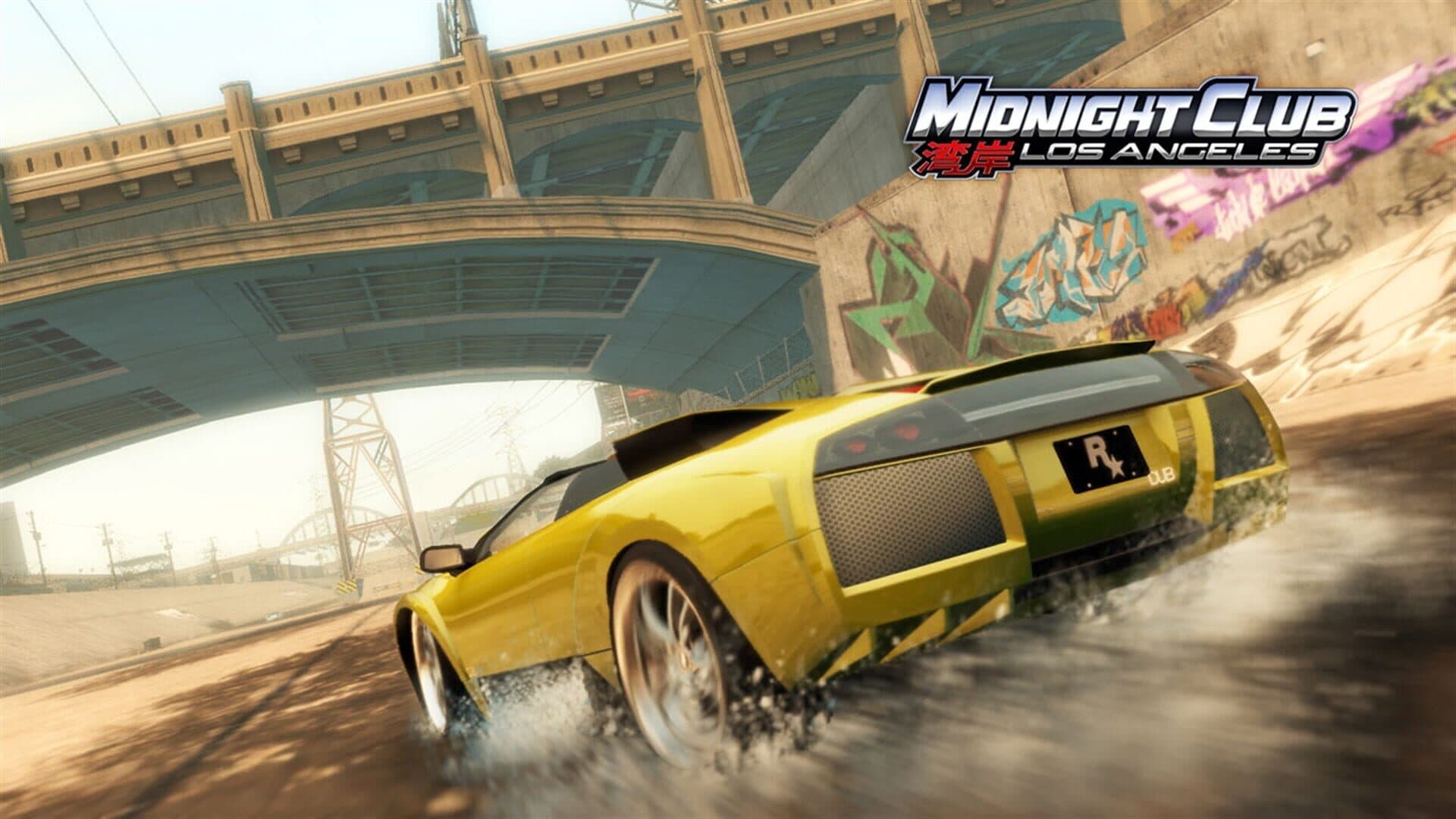
In 2008, Midnight Club: Los Angeles released on PS3 and Xbox 360. It was an ambitious racing game, technically solid, with an open map faithful to the real geography of the city—a feat for its time. It sold respectably, received positive reviews, and logically should have paved the way for a sequel. It never came.
Midnight Club's death wasn't caused by commercial failure. It was a strategic choice, assumed in practice if not in words, that illustrates Rockstar Games' radical transformation from the late 2000s to today.
A franchise that matched Need for Speed stride for stride
Between 2000 and 2008, the Midnight Club series released four main entries. The first, developed by Angel Studios—later renamed Rockstar San Diego—established the blueprint for nocturnal street racing without checkpoints, with real traffic and total route freedom. It was radical for the era, bucking the rigid circuit-based conventions of competitors.
Midnight Club II (2003) refined the formula with more responsive vehicles and international settings—Los Angeles, Paris, Tokyo. Across from it, Need for Speed: Underground (EA Black Box, 2003) dominated charts with its tuning culture and rap/metal soundtrack. The two series split an audience, but with different philosophies: Need for Speed banked on aesthetics and customization, Midnight Club on physics and navigation freedom.
Midnight Club: Los Angeles arrived five years after the third installment and represented a clear major investment. The Los Angeles map was detailed, progression well-paced, and the graphics engine held its own against what Burnout Paradise (Criterion, 2008) offered at the time. This wasn't a second-tier title.
GTA IV absorbed all the studio's oxygen
That same year, Rockstar released GTA IV. The game became a cultural phenomenon, set new production standards for open worlds, and claimed an increasing share of Take-Two's resources. Rockstar San Diego, which had developed Midnight Club: Los Angeles in parallel, subsequently found itself working on Red Dead Redemption (2010), a project of unprecedented scope for the studio.
The issue wasn't that Midnight Club was bad. It was that it was expensive to produce for returns incomparable to GTA's. From GTA V (2013) onward and the explosion of GTA Online, Rockstar restructured its model around a single ecosystem generating continuous revenue. Maintaining multiple franchises at that level of graphical demand and open-world ambition simply no longer fit the math.
The street racing arcade market underwent profound restructuring since 2008. Need for Speed cycled through numerous entries with mixed results—Need for Speed: The Run (EA Black Box, 2011) disappointed, Need for Speed Heat (Ghost Games, 2019) fared better—never recapturing the cultural dominance of the Underground years. Forza Horizon (Playground Games, since 2012) captured the open-world arcade racing niche with industrial regularity.
In that landscape, a Midnight Club revival would have required clear positioning: either a return to the edgy, nocturnal style of the original, or a direct competitor to Forza Horizon—two directions demanding budgets and editorial vision Rockstar seems unwilling to invest outside GTA and Red Dead.
Rockstar has issued no official statement regarding the franchise's future. No executive has mentioned a sequel in development, not even a re-release of older entries—Midnight Club II remains unavailable on current platforms. That silence is itself an answer.
Midnight Club is the mirror of a studio that changed its nature
Rockstar in 2026 is no longer the generalist studio experimenting with billiards games (Rockstar Games Presents Table Tennis, 2006), gang management (Canis Canem Edit, 2006), or street racing. It's a machine concentrated on two colossal franchises whose development cycles stretch across ten years.
Midnight Club didn't vanish because the series was creatively exhausted. It vanished because Rockstar decided, gradually and without announcement, that it no longer fit its economic model. It's a business decision, not an artistic verdict—and that may be why it's harder to swallow for those who grew up driving Los Angeles at night, pedal down.
In brief
Midnight Club: Los Angeles launched in 2008 and the series never resurfaced. No canceled sequel announcement, no official statement—just gradual radio silence. Eighteen years later, the question lingers: why did Rockstar, which dominated street racing against Need for Speed, bench its most celebrated racing franchise? The answer reveals what the studio has become.