Warcraft III at 24: The RTS That Reinvented Its Genre by Accident
On July 3, 2002, Blizzard released Warcraft III: Reign of Chaos on PC. Twenty-four years later, this title remains a textbook case: by imposing individual hero management within a massive RTS framework, it fractured an entire genre and planted the seeds of the MOBA without intending to. With the RTS spinning its wheels today, revisiting this rupture isn't nostalgia—it's understanding why the genre still struggles to reinvent itself.
Topic
News
Reading
3 min read
Updated
Friday, July 3, 2026
Key points
- 1On July 3, 2002, Blizzard released Warcraft III: Reign of Chaos on PC.
- 2Twenty-four years later, this title remains a textbook case: by imposing individual hero management within a massive RTS framework, it fractured an entire genre and planted the seeds of the MOBA without intending to.
- 3With the RTS spinning its wheels today, revisiting this rupture isn't nostalgia—it's understanding why the genre still struggles to reinvent itself.
Lumnix angle
We isolate the useful facts first, then keep the analysis focused on what changes for players.
On July 3, 2002, Blizzard Entertainment released Warcraft III: Reign of Chaos on PC in the United States. The California studio was emerging from an intense cycle with StarCraft, released in 1998, which had pushed the 2D RTS formula to its competitive limits. Reign of Chaos didn't come to refine that model—it came to break it.
An RTS That Refused to Be a Pure RTS
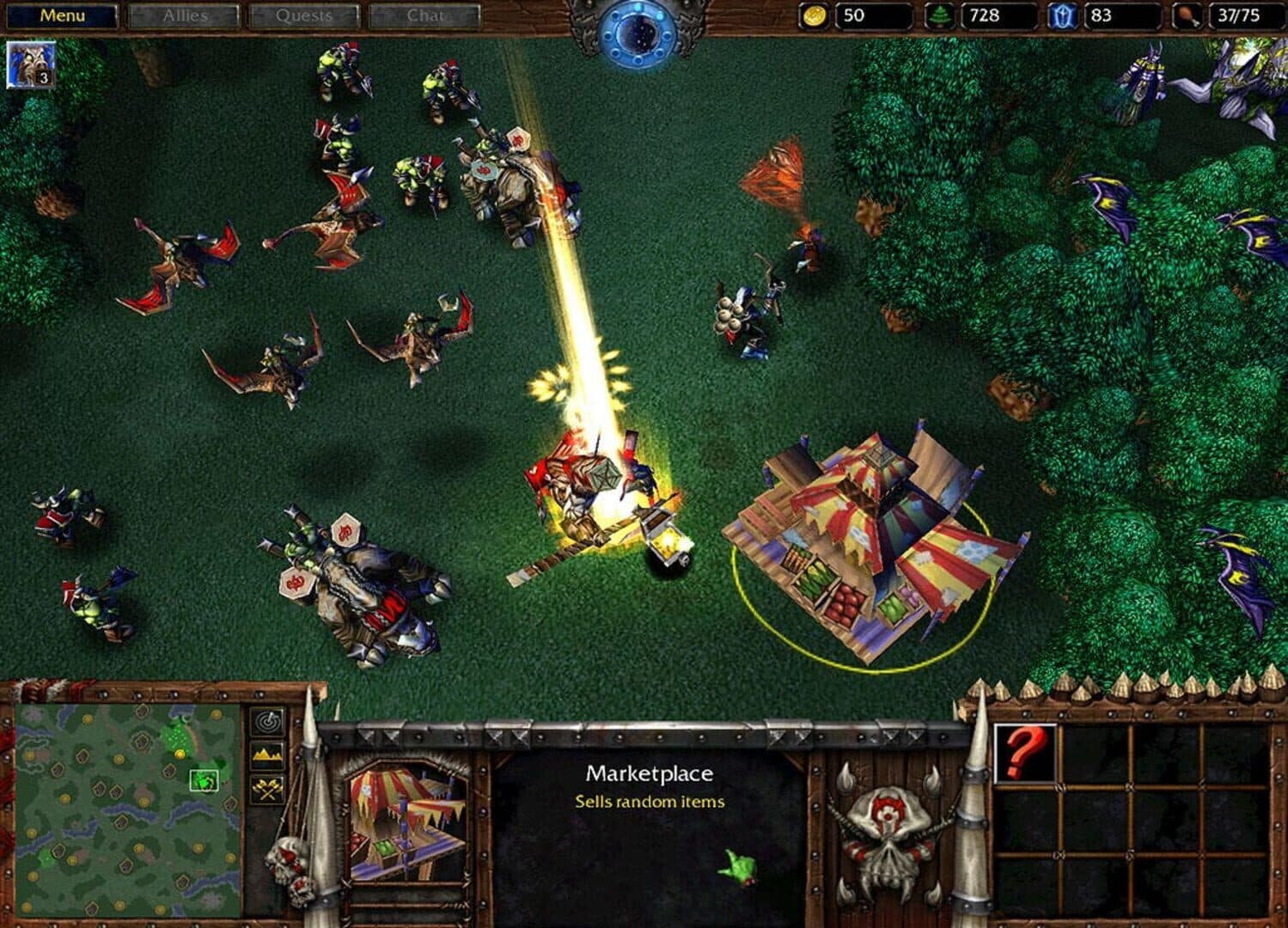
Where StarCraft demanded cold military management—economy, production, unit micro-mechanics—Warcraft III introduced heroes with experience levels, inventories, and active abilities. Players now had to command an army and constantly monitor the status of two or three priority units at the heart of engagements. This paradigm shift wasn't trivial: it transformed a command-and-conquer logic into a logic of individual tracking, far closer to role-playing games than pure strategy.
This tension between macro-managing a base and micro-managing heroes produced a particular cognitive experience, often described as exhausting by new players. Blizzard wasn't simplifying the genre—it was complexifying it differently, shifting the cursor of attention.
The Fracture That Birthed the MOBA
The most tangible legacy of Reign of Chaos lies not in RTS continuity but in its bifurcation. The community map Defense of the Ancients, built in Warcraft III's editor, extracted precisely the hero layer to make it the heart of a new genre. What would become the MOBA—with League of Legends in 2009 by Riot Games and Dota 2 in 2013 by Valve—springs directly from this central-character mechanic that Blizzard had grafted onto its RTS.
Reign of Chaos thus gave birth to a genre that would vastly surpass it in audience. It's a structural irony: Blizzard's most influential title in terms of design may not be the one that built the studio's competitive empire, but the one that provided the tools for others to build theirs.
The RTS in 2026: A Genre That Failed to Learn Its Lesson
Twenty-four years after Reign of Chaos, the RTS remains a genre seeking commercial purpose. Age of Empires IV, released in 2021 by Relic Entertainment, chose conservative continuity over rupture. Stormgate, launched in early access in 2024 by Frost Giant Studios—founded by former Blizzard veterans—attempts to recapture StarCraft's DNA without proposing a mutation comparable to 2002's.
The problem lies here: Warcraft III took a major editorial risk by hybridizing two game logics that had no reason to coexist. That risk produced fertile creative friction. Current attempts to revive the RTS seek more to reassure a historical player base than to shake up their habits.
What 2002 Still Says Today
Reign of Chaos wasn't perfect. Its single-player campaign alternated carefully crafted narrative sequences with lengthy missions that tested patience as much as reflexes. Its multiplayer balance took months to stabilize. But the studio had made a structural bet: that strategy players could tolerate a layer of individual attachment to units within a mass context.
That bet held. And it still holds, precisely because nobody in the genre has found an equivalent formula in relevance since. The RTS doesn't lack serious contenders—it lacks a title capable of questioning its foundations with the same quiet radicality that Blizzard managed in July 2002.
In brief
On July 3, 2002, Blizzard released Warcraft III: Reign of Chaos on PC. Twenty-four years later, this title remains a textbook case: by imposing individual hero management within a massive RTS framework, it fractured an entire genre and planted the seeds of the MOBA without intending to. With the RTS spinning its wheels today, revisiting this rupture isn't nostalgia—it's understanding why the genre still struggles to reinvent itself.