Silent Hill 2 Remake: Six Months Later, Bloober Team's Work Deserves a Second Look
October 2024. The Silent Hill 2 remake arrived in a climate of widespread suspicion: a fanbase traumatized by years of silence and false hope, a Polish studio with an uneven track record, and the crushing weight of a game considered one of the absolute peaks of the medium. The first weeks sparked heated debates between purists and newcomers. Six months, two DLC packs, and several major patches later, a reassessment is in order. What Bloober Team actually pulled off deserves to be stated plainly — without blind nostalgia or naive enthusiasm.
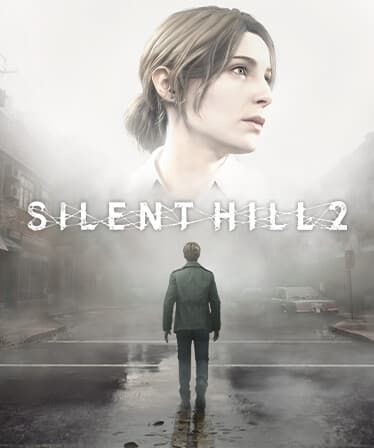
Some projects should never have worked. Silent Hill 2 Remake is the most striking example of that this generation. Handing the adaptation of a 2001 psychological masterpiece to Bloober Team — the studio behind The Medium and Layers of Fear, known for ambitions that consistently outpaced their execution — was a borderline insane gamble. Konami, after years of franchise drought, signed that contract anyway in 2022. The result dropped on October 8, 2024, on PlayStation 5 and PC. While the initial critical consensus hovered somewhere between respectful surprise and polite skepticism, time has done its work. Revisiting the game today, six months out, with two narrative expansions and four significant patches behind it, reveals something more coherent, more daring, and more durable than anyone was willing to admit at launch. This isn't a blanket endorsement. It's an honest reassessment.
Bloober Team Faces Everest: The Context of an Impossible Bet
To understand what this remake represents, you have to remember what Silent Hill 2 means in gaming history. Released in September 2001 on PlayStation 2 and developed by Konami's Team Silent, the original redefined what horror could mean in an interactive medium. Where Resident Evil leaned into survival tension and resource management, Silent Hill 2 explored pathological grief, repressed guilt, and unconscious self-punishment. James Sunderland searching for his wife, dead three years, in a fog-covered town wasn't a hero — he was a broken man the player accompanied without ever fully understanding, until everything collapsed in the final twenty minutes.
Bloober Team, founded in Krakow in 2008, had built its reputation on first-person atmospheric horror games. Layers of Fear (2016) was slick but shallow. Observer (2017) showed genuine narrative ambition. The Medium (2021), launched as an Xbox Series exclusive, stumbled on an overly rigid gameplay structure despite undeniable art direction. That mixed track record explains the community's initial anxiety. When Konami made the partnership official in March 2022, forums burned for weeks. The skepticism was legitimate. It was also, as we now know, partially unwarranted.
What the Launch Obscured: A Reception Worth Decoding
On October 8, 2024, specialized press scores settled around 84/100 on Metacritic for the PS5 version, with an unusually wide spread between outlets. IGN gave it 9/10, praising its creative courage. Eurogamer was more guarded at 3 out of 5 stars, flagging certain narrative additions as over-explanatory. On the player side, user scores hovered around 7.2/10 in the opening weeks, with a visible split between enthusiastic newcomers and skeptical veterans of the original.
Two technical issues clouded that reception. The PC version suffered from pronounced stuttering tied to shader compilation, making some combat sequences nearly unplayable on rigs that cleared the recommended specs. Patch 1.04, deployed October 29, partially addressed it. It wasn't until patch 1.07 in January 2025 that the PC version reached genuine stability. On PS5, issues were less severe, but the 60fps Performance mode sacrificed the lighting — which, in this game specifically, is part of the artistic language. These technical circumstances shaped reviews written under the pressure of launch deadlines, and that has to be factored into any honest reassessment.
The Directing Choices: Betrayal or Legitimate Reinterpretation?
The central debate around this remake was always about the liberties taken with the source material. Bloober Team didn't deliver an HD port — the studio rethought entire sequences, added dialogue, developed secondary characters, and adjusted certain narrative rhythms. Those interventions drew the sharpest criticism from purists.
Take the opening scene. In the 2001 original, James stared at himself in a restroom mirror with striking minimalism — a few lines, a flat voice, immediate unease. The remake stretches that opening, adds a more explicit inner monologue and visual details about James's mental state. Some read that as condescending hand-holding. Revisiting the sequence now, the read is more nuanced: Bloober Team understood that the silence of 2001 worked for a 2001 audience accustomed to filling in the gaps, and that twenty-three years later, with a player base encountering the work for the first time, additional grounding serves the intent without distorting it. The addition doesn't erase the ambiguity — it just sets it up differently.
Even more convincing are the performance direction choices. The original James, voiced by Guy Cihi, was deliberately flat, almost dissociated. Luke Roberts, who plays James in the remake, performs a more subtle dissociation — a physical presence concealing an inner absence. It's not a superior performance; it's a performance calibrated to contemporary graphical realism, where the same neutral vocal delivery would have simply read as bad direction.
The "Fog World Chronicles" DLC: Enrichment That Respects the Silences
The two narrative expansions released since launch may be the strongest argument for reassessing the project. Fog World Chronicles: Angela has been available since February 5, 2025, and Fog World Chronicles: Eddie since March 12, 2025 — $14.99 each or $24.99 as a bundle.
Angela Orosco was one of the original's most devastating characters: a young woman searching for her dead father in Silent Hill, visibly carrying a trauma the game suggested without ever naming. The DLC dedicated to her runs about four hours and makes the remarkable choice not to spell out what the original left in shadow. Instead, it deepens her relationship to the world — how she perceives the creatures, how Silent Hill appears to her differently than it does to James. The gameplay incorporates stealth mechanics absent from the main game, consistent with the character's psychology. This is authorial work, not commercial padding.
The DLC focused on Eddie Dombrowski is shorter — around three hours — and more direct in its treatment. Eddie, in the original, remained ambiguous until his final breakdown. The expansion traces his arrival in Silent Hill with a visual bluntness that, in other hands, could have felt gratuitous. Bloober Team maintains an analytical distance that forces the player to understand without absolving. The result enriches the main game without rewriting it.
The Tech in 2025: When the Engine Becomes Language
The January 2025 patch 1.07 transformed the technical experience enough to warrant its own section. On PC with an RTX 4070 or equivalent, ray-tracing in quality mode now runs at a stable 60fps — and that's not a cosmetic footnote in a game where light carries meaning.
Toluca Prison, one of the original's most dreaded environments, illustrates the point perfectly. In the patched remake, ray-traced lighting makes the shadows of cell bars interact with the geometry of the corridors in a way that turns every hallway into a study in claustrophobia. The reflections in the puddles on the Brookhaven Hospital basement floor aren't a tech demo — they serve the spatial disorientation the level design is deliberately engineering. The original Mist Engine created mystery through technological limitation. Bloober Team faced the inverse challenge: manufacturing mystery with technology that can render everything. The result, assessed in 2025 rather than October 2024, is equal to that challenge.
On PS5, the locked 30fps Quality mode is now the unambiguous recommendation. The frame generation added via patch improved Performance mode, but it's at maximum image quality that Bloober Team's artistic work fully expresses itself.
The Controversy That Remains: What the Remake Doesn't Solve
Any honest reassessment has to name what's still broken. Two friction points remain real six months in.
The first is combat pacing. The 2001 original used combat as punishment — James fought poorly because James wasn't there to fight; he was there to run. The remake smoothed out the combat mechanics to the point where certain sequences become enjoyable in a way that directly contradicts the game's psychological intent. The dodge mechanic, absent from the original, is the symbol of that drift. On higher difficulties the effect is mitigated, but the design choice remains debatable.
The second concerns the alternate ending unlocked with the DLC. Without spoiling specifics, this additional conclusion — accessible only to bundle owners — takes narrative positions on questions the original deliberately left open. For a work whose power rests on unresolved ambiguity, this tendency to close doors that Keiichiro Toyama and his team had intentionally left open represents a genuine limitation of the project. Enriching something isn't always the same as deepening it.
What the Remake Means for Players Who Never Knew the Original
We need to talk about this audience, often absent from veteran discussions: players experiencing Silent Hill 2 for the first time through this remake. They represent, according to VGChartz estimates and Steam data shared by Konami, roughly 60% of buyers. For them, the question of fidelity to the original simply doesn't arise — it can't.
What those players are experiencing is a psychological horror game that refuses the contemporary genre's conventions. No crafting system, no RPG progression, no open world. One town, one man, one guilt. In a landscape dominated by Resident Evil Village (2021) and its spectacular action sequences, or Alan Wake 2 (2023) and its exuberant meta-narrative, Silent Hill 2 Remake offers something radically different: a game that slows down, that suffocates, that refuses to reward the player with adrenaline spikes. The responses from this new generation of players — visible across Reddit and Steam Reviews — reflect a deep and often deeply unsettling reception. That's exactly the effect the original produced in 2001. If the remake accomplishes that, it accomplishes what matters most.
What's at Stake: How the Remake's Success Shapes Silent Hill's Future
The remake surpassed two million copies sold in January 2025, according to figures Konami shared during their third fiscal quarter investor presentation. That's a meaningful commercial success for a franchise that had been dormant since Silent Hills — the Hideo Kojima and Guillermo del Toro project canceled in 2015. Those numbers have direct consequences.
Konami confirmed in February 2025 that two new Silent Hill projects are in development, one of which involves Bloober Team again in an unspecified capacity. Silent Hill f, announced for a 2025 release with studio NeoBards Entertainment, points in an entirely different creative direction — a 1960s Japanese setting, far from Toluca Lake. The remake's relative success demonstrated that the franchise can exist in a contemporary format without losing its identity. That's significant information for the industry: every publisher sitting on dormant psychological horror catalogs — Capcom with Haunting Ground, Konami itself with Silent Hill 4 — now has fresh reason to consider similar projects.
The question now is whether the model holds. A remake enriched with quality narrative DLC, sold at $69.99 with $14.99 expansions — can that become a standard for works of this kind? The answer depends less on the business model than on execution quality. And that's precisely where Bloober Team surprised everyone.
Verdict: What History Will Remember
Six months after release, Silent Hill 2 Remake is neither the disaster some feared nor the uncontested masterpiece others demanded at full volume. It's something more interesting: an adaptation that understood what made the original valuable — the atmosphere of embodied guilt, the symbolism of creatures as manifestations of the unconscious, the simultaneously mundane and tragic relationship between James and Mary — and that had the courage to take risks where a more cautious studio would have delivered a high-definition copy-paste.
Bloober Team made mistakes. The combat system that's slightly too competent, certain narrative additions that over-explain what worked better as ambiguity, the alternate ending that draws conclusions where uncertainty was a virtue — these are legitimate criticisms. But they exist within a whole that works, that lands, and that introduces Silent Hill 2 to an entire generation of players with a formal honesty that's rare in the remake business.
Our position at Lumnix is straightforward: if you've been waiting for stable patches and solid DLC before diving in, April 2025 is the moment. Not because the game is perfect — no great game is. But because the complete experience, in its current state, says something true about guilt, grief, and what we do to the people we claim to love. That's exactly what the original said in 2001. And that's precisely what a remake should accomplish.