Digital Devil Saga Deserves a Remaster as Much as Raidou
Released in two parts on PS2 between 2004 and 2005, Shin Megami Tensei: Digital Devil Saga stands as one of Atlus's creative peaks—a futuristic dystopia, Hindu architecture, dense narrative. With Raidou Remastered proving Atlus can resurrect its spin-offs with care, whether Avatar Turner merits the same treatment is no longer trivial. It's an editorial angle on a studio's catalog policy, one that carefully selects what it revives and why that choice demands reevaluation.
Topic
News
Reading
3 min read
Updated
Wednesday, July 15, 2026
Key points
- 1Released in two parts on PS2 between 2004 and 2005, Shin Megami Tensei: Digital Devil Saga stands as one of Atlus's creative peaks—a futuristic dystopia, Hindu architecture, dense narrative.
- 2With Raidou Remastered proving Atlus can resurrect its spin-offs with care, whether Avatar Turner merits the same treatment is no longer trivial.
- 3It's an editorial angle on a studio's catalog policy, one that carefully selects what it revives and why that choice demands reevaluation.
Lumnix angle
We isolate the useful facts first, then keep the analysis focused on what changes for players.
Atlus set a clear precedent with Raidou Remastered: a Shin Megami Tensei spin-off, long relegated to PS2 curiosity status, can return in polished form and find an audience in 2026. This editorial gesture reopens a question players know well but Atlus carefully avoids answering: what becomes of Digital Devil Saga?
Two Inseparable Games, a Work Time Has Preserved
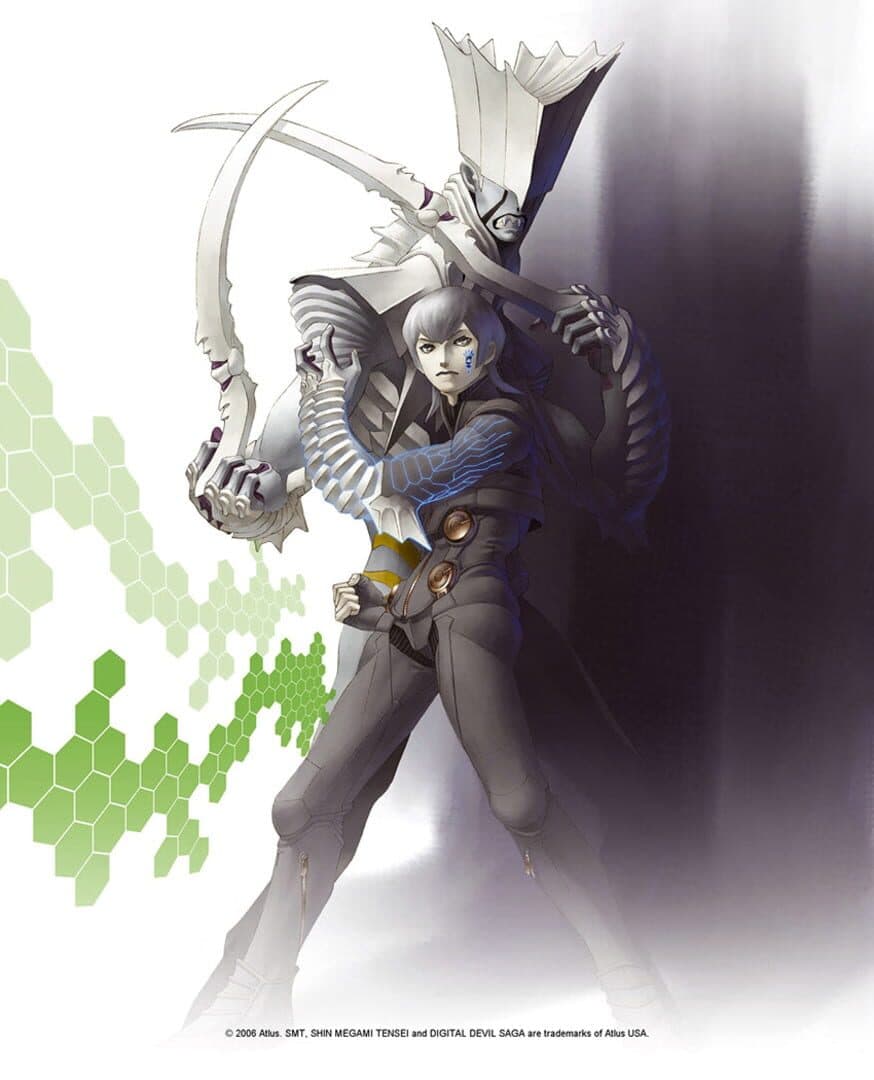
Digital Devil Saga — subtitled Avatar Turner in its Japanese release — resembles nothing else in the Atlus catalog. The world breaks radically from Tokyo high schools of Persona or the standard post-apocalyptic ruins of the parent series: the setting is a futuristic dystopian wasteland built around architecture drawing massive inspiration from Hindu iconography — Mount Meru as narrative and visual structure, Vedic pantheon deities reinterpreted as data entities. This is ambitious world-building for a 2004 RPG, and it holds up.
What makes the situation particularly delicate is that both installments form a single work. Digital Devil Saga (2004) and Digital Devil Saga 2 (2005) cannot be remastered independently without betraying their narrative construction. Atlus knows this. It's probably one reason the matter stays closed: a dual remaster represents double investment, with more complex marketing for an audience potentially smaller than Persona 3 Reload's or even Raidou's.
What Raidou Changed in the Equation
Raidou Kuzunoha vs. The Soulless Army and its sequel were also niche PS2 spin-offs, built around a silent protagonist and a Taisho-era Japan aesthetic that hardly screamed mainstream. Atlus remastered them anyway. The signal is clear: the studio no longer requires a title to be Persona to deserve a second life.
Digital Devil Saga would benefit from the same legitimacy arguments. The combat system — blending skill acquisition through enemy consumption with demonic form management — remains mechanically dense and coherent. The art direction, supervised by Kazuma Kaneko, hasn't aged conceptually, even if PS2 resolution predictably shows its years. And the soundtrack composed by Shoji Meguro places the duology in the same demanding sonic register as Atlus's most celebrated titles from that era.
The Commercial Logic That Blocks Everything
The real problem isn't technical; it's economic and strategic. Atlus manages a strained catalog today: Persona 6 must claim major creative resources, Persona 3 and Persona 5 remasters have already captured most solvable nostalgic players. A Digital Devil Saga remaster would target a narrower player base — those already deep in the series — yet still demand work equivalent to two separate projects.
Atlus could rely on a tested model: a compilation of both episodes sold as a complete work, with a French localization these titles originally lacked. This would limit marketing costs while answering documented demand — specialized forums and community rankings regularly cite the duology among overlooked PS2 JRPG peaks, alongside Shadow Hearts: Covenant (Nautilus, 2004) and Xenosaga Episode I (Monolith Soft, 2002).
The real stakes aren't whether Digital Devil Saga is good — it is, and players who've experienced it know that. The stakes are whether Atlus considers its non-Persona catalog worthy of systematic revival or if Raidou Remastered remains a permitted exception to appease older fans.
A studio that leaves works as dense as Digital Devil Saga in inaccessibility — playable only through secondhand hardware or alternative methods — makes an editorial choice by default. That choice always turns against it when a competitor or market trend puts the genre back in the spotlight. Atlus has the tools, the precedent, and the artistic legitimacy to act. The question is how much longer Avatar Turner will wait.
In brief
Released in two parts on PS2 between 2004 and 2005, Shin Megami Tensei: Digital Devil Saga stands as one of Atlus's creative peaks—a futuristic dystopia, Hindu architecture, dense narrative. With Raidou Remastered proving Atlus can resurrect its spin-offs with care, whether Avatar Turner merits the same treatment is no longer trivial. It's an editorial angle on a studio's catalog policy, one that carefully selects what it revives and why that choice demands reevaluation.