Immersive Sims: Understanding the Genre No One Can Define
An immersive sim lets players solve situations through consistent systems rather than a sequence of prescribed solutions. A first-person camera, science fiction, or stealth alone cannot define the approach. From Ultima Underworld to Prey, this guide examines its principles, limits, and lineage, then suggests starting points for fans of action, exploration, and role-playing choices.
Topic
Feature
Reading
10 min read
Updated
Sunday, November 8, 2026
Key points
- 1An immersive sim lets players solve situations through consistent systems rather than a sequence of prescribed solutions.
- 2A first-person camera, science fiction, or stealth alone cannot define the approach.
- 3From Ultima Underworld to Prey, this guide examines its principles, limits, and lineage, then suggests starting points for fans of action, exploration, and role-playing choices.
Lumnix angle
We isolate the useful facts first, then keep the analysis focused on what changes for players.
An immersive sim presents situations players can resolve by combining tools, rules, and the properties of their environment. In Deus Ex (2000, Ion Storm) and Prey (2017, Arkane Studios), the point is not simply to choose a different door: it is to understand what the world allows, then use that knowledge to find your own solution. Defining the approach through its systems helps distinguish genuine freedom of action from a path that merely offers a few branches.
The term describes less a fixed genre than a way of building a game. It guarantees neither an open world, realism, nor absolute freedom. To decide whether the approach suits you, consider three questions: Are the rules reliable, can your tools interact, and does the game accept multiple answers to the same problem?
A design philosophy, not a camera angle
An immersive sim can be defined as an approach that prioritizes player agency in an environment governed by relatively consistent rules. The word simulation does not mean every detail reproduces reality. Rather, it indicates that certain phenomena exist as systems players can manipulate: enemy perception, the spread of an alert, the movement of objects, or the operation of security devices.
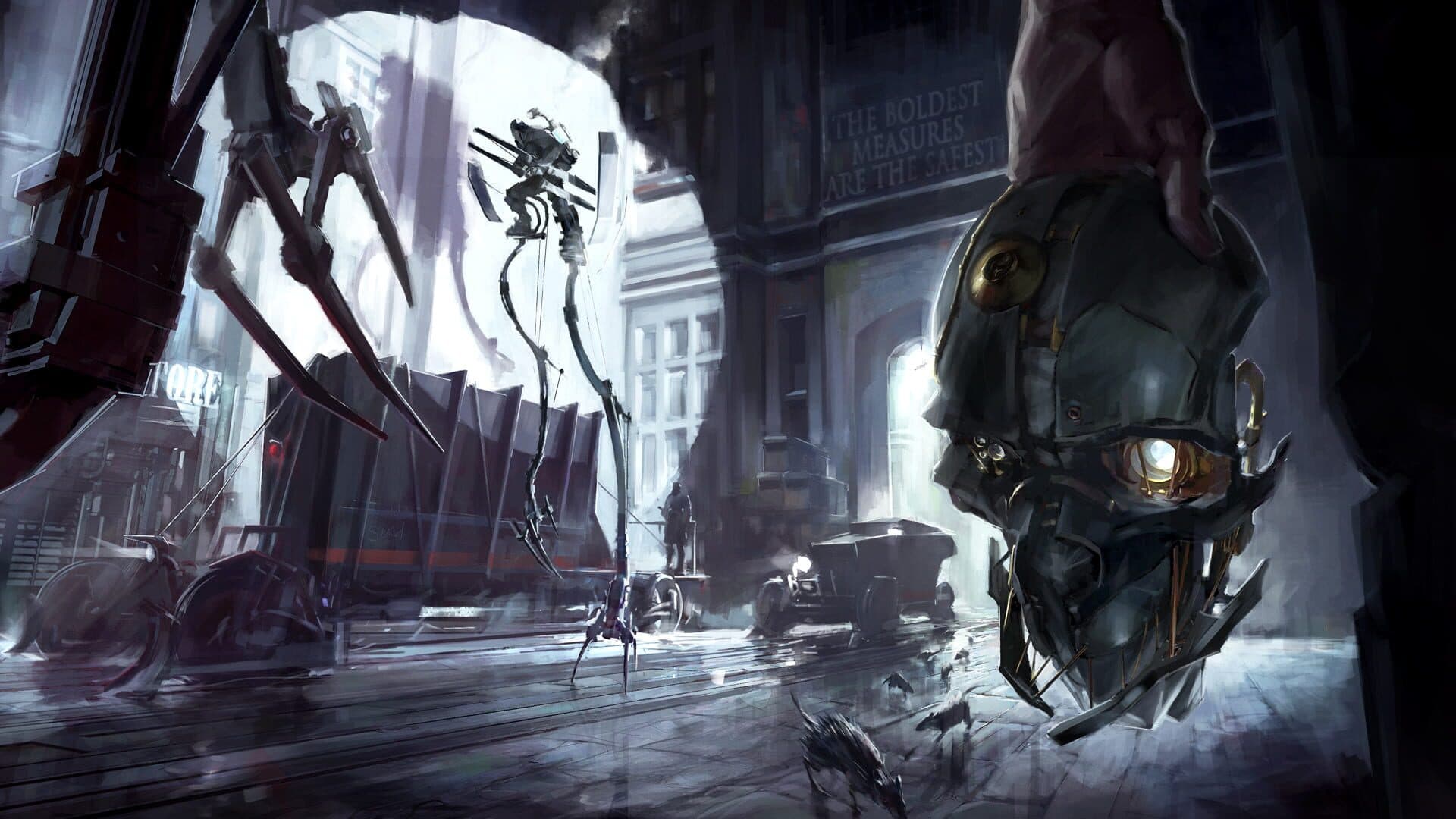
Thief: The Dark Project (1998, Looking Glass Studios) and Dishonored (2012, Arkane Studios) put observation and stealth at the center of many situations, without sharing the same pace or powers. Their kinship lies in how players exploit a guarded space, not in identical mechanics. A first-person camera is not enough to define the approach: it can make a location easier to read without offering any systemic freedom.
This distinction changes what players should expect. The appeal is not just a branching story or a generous arsenal, but the ability to turn an intention into action. The framework is still authored, with its restrictions and mandatory passages. The difference lies in the latitude players have between the stated objective and the means they choose to achieve it.
Consistent rules let players engage with the world
A system becomes interesting when its rules can be learned, anticipated, and reused. In Thief: The Dark Project (1998, Looking Glass Studios), light and the noise you make while moving affect how exposed you are to guards. A noisy surface or a brightly lit area is not merely level decoration: it changes how you can move through the space.
Prey (2017, Arkane Studios) offers another example with its GLOO Cannon. Among other uses, its projectiles can hinder enemies and create footholds that let you reach higher ground. One tool therefore has multiple uses tied to its properties rather than to a single lock designed for it. Understanding the tool opens up possibilities for exploration as well as combat.
Consistency does not require a total simulation. Above all, it requires the game not to change its rules arbitrarily when a solution becomes convenient for the player. If an object looks movable but never is, or a power stops working for no apparent reason, trust erodes. The issue is practical: to improvise, you need to be able to form a hypothesis and get an understandable response.
Freedom is measured in solutions, not paths
A room accessible through three doors does not automatically make for a rich situation. If every entrance leads to the same mandatory fight, the choice is mostly geographical. In Deus Ex (2000, Ion Storm), skills, equipment, and exploration can change how you get past an obstacle. The route matters, but its significance comes from the abilities it requires and the risks it lets you avoid.
Dishonored (2012, Arkane Studios) also brings movement, observation, powers, and violence together around its objectives. Taking the high ground, distracting a guard, or neutralizing one produces a different sequence of events. That does not mean everything is open-ended: missions still have objectives and limits. Players choose how to act within a framework rather than rewriting that framework entirely.
It is also important to distinguish tactical choices from narrative consequences. Saving ammunition, avoiding an alert, or discovering an entrance can make a decision meaningful even without a specific ending scene. Conversely, a major dialogue choice does not on its own turn a game into an immersive sim. The central question remains what actions are actually possible, not just what intentions appear in a menu.
Emergence begins when tools combine
Emergence here describes an outcome produced by the interaction of several rules. It requires neither a technical miracle nor a completely unpredictable event. In Prey (2017, Arkane Studios), moving objects, exploiting vertical space, and using your abilities can let you approach an area differently from its most obvious entrance. The appeal comes from the combination, not the sheer number of available functions.
In Dishonored (2012, Arkane Studios), watching a patrol and then using a movement power can turn a few seconds into an opportunity to cross an area. The guard, the environment, and the power are not just three elements placed side by side: their relationship produces a solution. That solution may be simple and entirely predictable. It is still satisfying because the player identified the conditions for it independently.
This distinguishes emergence from a strictly contextual interaction. Pressing a button to trigger a prescribed action at a specific spot offers an option, but not necessarily a reusable system. The boundary is not absolute: an immersive sim also contains scripted sequences and specialized interactions. What matters is how much room the game actually gives versatile tools in solving problems.

From Ultima Underworld to Prey: a timeline
The following list presents the six games covered in this guide in release order. It is neither a quality ranking nor an exhaustive genealogy. It places different forms of the approach in context, from the underground journey of Ultima Underworld to the spaces of Prey, without suggesting that each game adopts all the systems of its predecessor.
GameYearStudioDesign focusUltima Underworld1992Looking Glass TechnologiesExploration of an underground environment and opportunities for interaction.System Shock1994Looking Glass TechnologiesExploration, resources, and systems aboard a hostile station.Thief: The Dark Project1998Looking Glass StudiosReading light, sound, and guard behavior.Deus Ex2000Ion StormSkills and multiple approaches to completing missions.Dishonored2012Arkane StudiosPowers, verticality, and stealth in self-contained missions.Prey2017Arkane StudiosStation exploration and tools with multiple uses.Ultima Underworld (1992, Looking Glass Technologies) and System Shock (1994, Looking Glass Technologies) provide two useful early points of comparison: exploration demands an understanding of the environment, not just the elimination of whatever blocks the way. Thief: The Dark Project (1998, Looking Glass Studios) and Deus Ex (2000, Ion Storm) then demonstrate two distinct directions, one centered on stealth, the other on the interplay between character abilities and mission approaches.
Dishonored (2012, Arkane Studios) and Prey (2017, Arkane Studios) extend that lineage while emphasizing different pleasures. The former favors mobility and making use of mission spaces; the latter gives more weight to exploring an interconnected station and managing resources. Talking about a family of games helps compare them, but should not erase their differences.
Neither an open world nor stealth is required
Open world describes how space is organized, not the depth of its interactions. Dishonored (2012, Arkane Studios) is built around self-contained missions; Prey (2017, Arkane Studios) organizes its exploration around the sectors of a station. Yet both let players revisit a situation, examine its access points, and bring different tools to bear. The amount of space available is not the decisive criterion.
Stealth is another common source of confusion. Thief: The Dark Project (1998, Looking Glass Studios) makes it central, while Deus Ex (2000, Ion Storm) also offers ways to tackle obstacles through combat or technical abilities. Stealth fits well with observing systems, but it is not a requirement for defining the entire family.
Finally, immersion and immersive sim are not synonyms. A convincing atmosphere can draw attention to a location without making that location particularly open to manipulation. Conversely, dated visuals can still support rewarding interactions. To judge the approach, it is better to ask what the environment lets you do, how enemies react, and what uses tools allow than to measure only how believable the image looks.
This freedom demands attention and has limits
The downside of open-ended systems is their learning curve. Deus Ex (2000, Ion Storm) asks players to understand the value of their skills and equipment; Prey (2017, Arkane Studios) encourages them to examine locations and manage resources. Playing quickly, without observing or experimenting, can reduce these games to a series of fights more laborious than expected. Freedom is useful only if you take the time to discover how to exercise it.
You also have to accept that a game will not validate every idea. Consistency has limits, objects do not necessarily share all the same properties, and some entrances require a specific ability. In Thief: The Dark Project (1998, Looking Glass Studios) and Dishonored (2012, Arkane Studios), learning guard behavior matters more than assuming guards possess unlimited human intelligence.
A system can also be exploited in repetitive ways. Finding an effective method does not mean it will remain interesting for the entire game. Varying your approach can enrich the experience, but players should not have to fix a game's balance on their own. The immersive sim label excuses neither a confusing interface nor poorly explained solutions: it describes a design ambition, not an automatic guarantee of quality.
Which game should you choose for your play style?
For a first experience focused on action and stealth, we recommend Dishonored (2012, Arkane Studios). Its missions provide a concrete setting for learning to observe access points, exploit height, and combine movement with powers. This is an editorial recommendation, not a matter of historical order: you do not need to start with the oldest game to understand the principles.
For methodical exploration and versatile tools, choose Prey (2017, Arkane Studios). If you are most interested in building a character and choosing how to approach a mission, Deus Ex (2000, Ion Storm) is a better starting point, provided you can accept its older interface and controls. The three games satisfy different interests, even if they share an approach built around open-ended problems.
- You like to observe before acting: choose Thief: The Dark Project (1998, Looking Glass Studios) for its full commitment to stealth.
- You want to study the foundations: start with Ultima Underworld (1992, Looking Glass Technologies), and be prepared to spend time learning its conventions.
- You prefer a hostile station and resource management: pick System Shock (1994, Looking Glass Technologies), and make sure you are choosing this original version.
The best starting point is the one whose constraints appeal to you as much as its possibilities. Pick Dishonored for movement and stealth, Prey for exploration and experimentation, and Deus Ex for the interplay of role-playing and tactics. Save Thief for when you want stealth, and Ultima Underworld and System Shock for historical curiosity. An immersive sim is ultimately defined by a concrete promise: your understanding of the world should matter as much as your ability to execute the expected solution.
In brief
An immersive sim lets players solve situations through consistent systems rather than a sequence of prescribed solutions. A first-person camera, science fiction, or stealth alone cannot define the approach. From Ultima Underworld to Prey, this guide examines its principles, limits, and lineage, then suggests starting points for fans of action, exploration, and role-playing choices.