The Evolution of Stealth Games: From Thief to Hitman
From Metal Gear's sound radar to Hitman's social simulation, stealth gaming has traded simple sneaking for reading entire systems. This dossier traces the milestones—Thief, Metal Gear Solid, Splinter Cell, Dishonored—that shaped modern infiltration and explains what remains today.
Topic
Feature
Reading
10 min read
Updated
Sunday, October 25, 2026
Key points
- 1From Metal Gear's sound radar to Hitman's social simulation, stealth gaming has traded simple sneaking for reading entire systems.
- 2This dossier traces the milestones—Thief, Metal Gear Solid, Splinter Cell, Dishonored—that shaped modern infiltration and explains what remains today.
- 3The stealth game has never been a fixed genre: it's an accumulation of layers.
Lumnix angle
We isolate the useful facts first, then keep the analysis focused on what changes for players.
The stealth game has never been a fixed genre: it's an accumulation of layers. Basic sneaking—hiding, avoiding detection—existed as far back as the late 1980s, but it only became a readable, auditory, and spatial system a decade later. Understanding this history means grasping why games as different as Thief, Metal Gear Solid, and Hitman share the same DNA while offering radically opposite experiences.
This dossier follows a precise chronological thread: the mechanical origins of the genre, the pivotal shift of 1998, the invention of sound and light as a game language, the emergence of social sandboxes, and what persists from that legacy in recent productions.
Before the Genre: Stealth as Technical Constraint
Metal Gear, released in 1987 on MSX2 by Konami, didn't invent infiltration as a deliberate artistic choice: the studio lacked the processing power to pit players against dozens of simultaneous enemies, and stealth became a workaround that evolved into an identity. Players had to avoid enemy vision cones, hug walls, and anticipate scripted patrols. It was rudimentary stealth, binary: seen or not seen.
This constraint established a vocabulary the genre would reuse for decades: vision zones, predictable patrols, score bonuses or penalties for detection. But in the late 1980s and early 1990s, infiltration remained a secondary mechanic, grafted onto action or exploration games, never a standalone system capable of carrying an entire game by itself. The foundation was being laid, but the structure wasn't yet understood as something independent.
What made this period crucial wasn't its sophistication, but its honesty. Designers weren't trying to hide the mechanical simplicity behind emergent complexity—they were being forced to acknowledge that limits breed clarity. A guard's vision cone wasn't a simulation; it was a transparent rule. This transparency would later become the genre's greatest strength once the technology caught up to ambition.
1998: The Year the Genre Became an Autonomous System
Two games released the same year transformed stealth into a full-fledged game design discipline. Thief: The Dark Project, developed by Looking Glass Studios, made shadow and sound quantifiable resources: each footstep on a different surface changed the noise level emitted, each lighting zone modified character visibility. The player no longer endured a patrol script—they read an entire environment as a text.
At the same moment, Metal Gear Solid, developed by Konami Computer Entertainment Japan, popularized this logic on a far larger scale through 3D graphics, cinematic presentation, and a radar that materialized enemy vision cones in real-time. The two games shared neither universe nor tone, but they posed the same foundational idea: infiltration must give players the tools to anticipate, not merely to react. The radar wasn't a crutch for weaker players—it was a translation of spatial information into visual form, making the invisible visible.
What distinguished 1998 wasn't just innovation; it was consensus. Both games proved independently that stealth could anchor an entire experience. Before this, stealth was borrowed from other contexts. After this, stealth was its own context. Developers suddenly saw the framework: if you could make players understand threat in spatial and temporal terms, you could let them solve problems through observation rather than reflexes alone.
Sound and Light Become the True Language of the Genre
After 1998, studios grasped that stealth wasn't reducible to a crouch button. Tom Clancy's Splinter Cell, developed by Ubisoft Montreal and released in 2002, pushed the logic further by introducing an explicit light meter and an ambient noise system that masked player movement based on the scene's sonic context. Sam Fisher didn't just avoid sight—he literally calculated his exposure level.
This granularity transformed level design itself. Level architects now had to think in terms of manipulable light sources, differentiated sound surfaces, and alternative routes based on enemy alert states. The genre abandoned simple evasion to become precise management of environmental variables, a principle later refined in productions like Metal Gear Solid V: The Phantom Pain from Kojima Productions, where day-night cycles and weather directly influenced player visibility in the field.
The sophistication went beyond mere numbers on a screen. Splinter Cell understood that players needed to see what the game was measuring. By making the light meter visible, designers allowed players to develop intuition about exposure without requiring a degree in physics. You could look at a shadow and know, through the meter's feedback, whether it was deep enough. This feedback loop—between player action, environmental simulation, and numerical readout—became the genre's lingua franca.
This design philosophy also meant that level construction became an act of careful choreography. A room wasn't just a space; it was an instrument. Where you placed a light fixture, how bright it was, whether backup generators could restore power—these weren't decorative choices. They were compositional decisions that shaped how the player would move through the space, much like a composer determines how musicians navigate a score.
Hitman and the Birth of Social Simulation
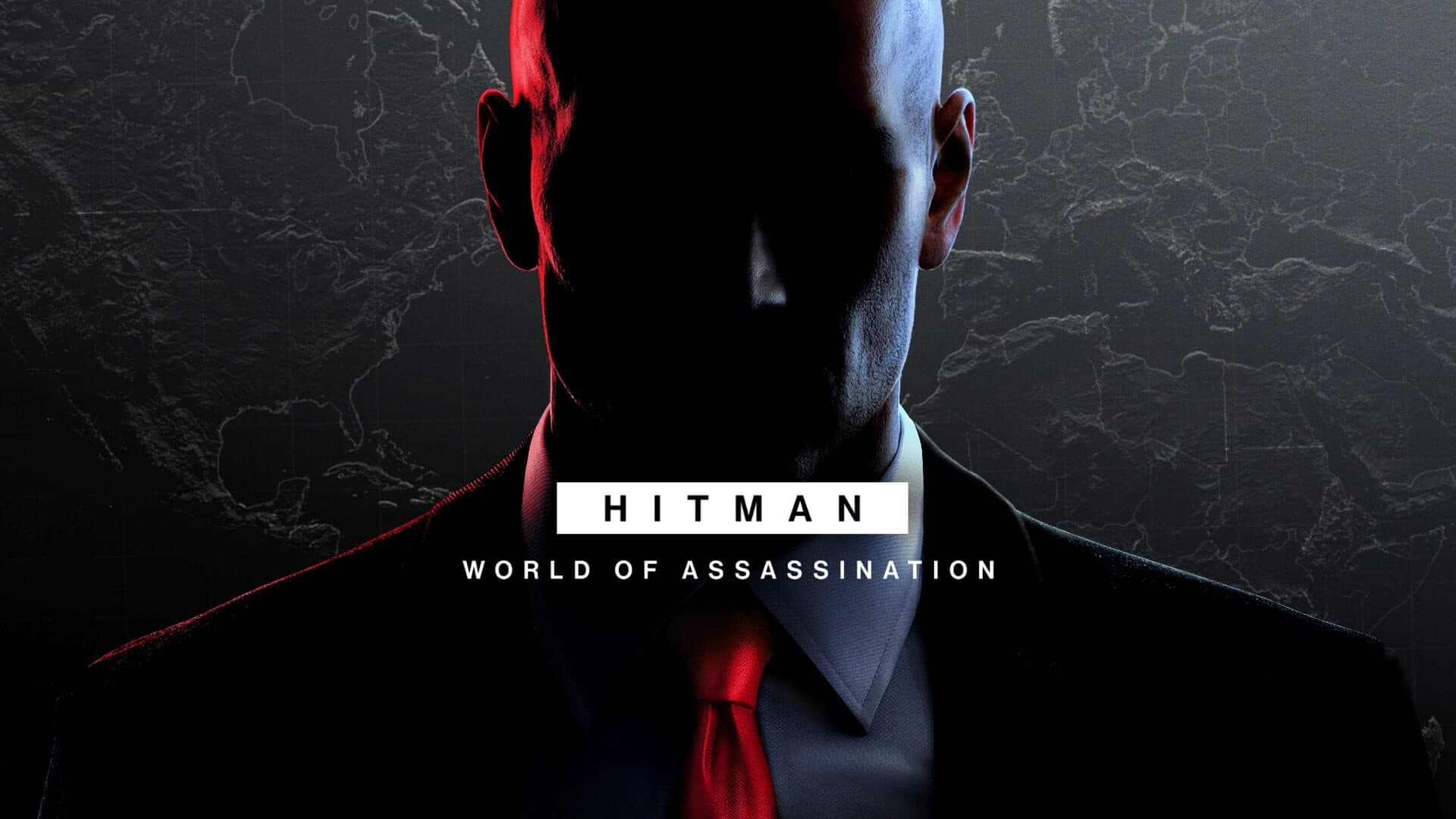
Hitman: Codename 47, released in 2000 by IO Interactive, shifted the genre's center of gravity. Here, infiltration no longer relied solely on shadow and sound, but on identity: disguise became the primary stealth tool. Agent 47 didn't hide from guards—he blended into a crowd by assuming their social role as cook, technician, or officer.
This approach spawned an idea the genre would exploit for over two decades: environments weren't merely spaces to traverse, but social systems to understand. The most refined levels in the series, later popularized through the World of Assassination trilogy launched in 2016 by IO Interactive, rest on seemingly unscripted character routines, where each guard follows a credible schedule the player could observe and exploit. Infiltration here became an intelligence operation before it became an exercise in manual dexterity.
What made Hitman distinct wasn't just mechanically novel; it was psychologically shrewd. By making disguise the core tool, IO Interactive forced players to think like their target: to predict behavior, to understand hierarchies, to recognize which uniforms opened which doors. You weren't reading a light meter or listening for footsteps—you were reading a social structure. This shift meant players had to become profilers, not just athletes.
The social simulation deepened over subsequent entries. By the World of Assassination trilogy, IO Interactive had achieved something remarkable: a sandbox where NPCs weren't following branching dialogue trees but inhabiting credible routines. A chef went to the kitchen at certain times, took breaks, interacted with other staff. A security guard had shift patterns, favorite patrol routes, moments of vulnerability. The systems didn't announce themselves; they existed to be discovered through patient observation, the same way the light meter in Splinter Cell could be discovered through experimentation.

Dishonored and Freedom as Design Principle
Dishonored, developed by Arkane Studios and released in 2012, synthesized the preceding decades into one simple principle: offer players multiple resolution paths of equivalent validity. Corvo Attano could traverse a level unseen, eliminate targets discreetly, or trigger open massacre—each approach modified the narrative through a chaos system that weighted the mood and difficulty of subsequent levels.
This design choice reframed infiltration as one option among many rather than an obligation. It directly influenced later productions like Dishonored 2 in 2016, also from Arkane, which pushed vertical level design even further to multiply possible silent routes. The genre stopped imposing stealth as the only path to success and recast it as a playstyle players consciously chose to adopt.
What Dishonored achieved was liberation through constraint—not the technical constraint of early Metal Gear, but a philosophical one. By acknowledging that players might want different things from a level, Arkane Studios dignified all approaches equally. The ghost run—completing a mission without being detected—wasn't the only valid path; it was simply one valid path. This was radical because it meant designers had to craft levels that worked across multiple difficulty curves and player intentions simultaneously. A route that worked for a stealthy player had to coexist with a route for an aggressive player, and the level design had to support both without feeling diluted.
What the Genre Lost Along the Way
This sophistication came at a cost. The richer a stealth system became in variables—light, sound, social routines, narrative chaos—the more active and patient reading it demanded from players, opposed to the nervous rhythm many contemporary action productions seek. Series that integrated stealth elements peripherally within larger systems, such as Assassin's Creed from Ubisoft starting in 2007, progressively diluted this requirement in favor of more forgiving combat, where detection no longer meant genuine failure but merely a rhythm change.
This shift explains why certain purists argue that pure infiltration—the kind that severely punishes error and rewards slow observation—became rare outside dedicated productions. Titles like Styx: Master of Shadows from Cyanide in 2014 or the Hitman series itself maintained this demand, but they remained niches compared to hybrid action games dominating the market. The genre's sophistication had paradoxically created a barrier to entry. A player accustomed to the forgiving detection systems in Assassin's Creed would find the unforgiving demands of pure stealth punishing rather than rewarding.
The loss was real but not catastrophic. What disappeared wasn't stealth itself but stealth as cultural dominance. In the late 2000s, when action-adventure hybrids became the industry standard, pure stealth games couldn't compete on sales metrics or player engagement statistics. Publishers saw diminishing returns on niche products and redirected resources accordingly. Yet the mechanics didn't vanish—they migrated, like cultural DNA entering the broader bloodstream.
Current Legacy: A Dispersed Language Rather Than a Unified Genre
The vocabulary invented by Thief and Metal Gear Solid lives today not in an isolated genre but scattered across hybrid productions. Graduated detection mechanics, corpse hiding, and sonic distraction appear in third-person action games and 2D infiltration titles like Mark of the Ninja from Klei Entertainment in 2012, which visually translates vision cones and sound into instantly readable on-screen information.
This dispersal doesn't signal disappearance but maturity: the genre produced a sufficiently robust toolkit that it could be repurposed elsewhere without requiring rebranding under a stealth label. The World of Assassination trilogy from IO Interactive remains the most comprehensive reference for those seeking the most refined infiltration experience in social simulation, while Dishonored retains its status as the model for resolution freedom.
Modern level design across multiple genres now incorporates stealth's lessons implicitly. A third-person action game might not call itself stealth, but when it includes hiding mechanics, it's drawing from decades of refinement that began with Metal Gear's simple vision cones. A puzzle game that lets you avoid obstacles through clever routing is speaking a language Thief helped establish. The genre's invisibility in contemporary discourse masks its pervasiveness in game architecture.
Which Game to Choose Based on What You're Looking For
For a newcomer wanting to understand the genre's historical foundation, Metal Gear Solid remains the most accessible entry point: strong presentation, simple rules, readable radar. For those wanting to feel the pure demand of light and sound as central mechanics, Thief: The Dark Project stands as the most radical reference, accepting dated control rigidity as the price.
Fans of complex social systems and replayability will find the modern Hitman trilogy from IO Interactive richest in possibility. Finally, for players preferring free choice between stealth and confrontation without moral penalty, Dishonored remains the most balanced model. These four reference points don't oppose each other—arranged chronologically, they narrate how a genre born from technical constraint became a complete language of game design.
In brief
From Metal Gear's sound radar to Hitman's social simulation, stealth gaming has traded simple sneaking for reading entire systems. This dossier traces the milestones—Thief, Metal Gear Solid, Splinter Cell, Dishonored—that shaped modern infiltration and explains what remains today.