The Simpsons: Hit & Run, the GTA for Kids That Broke Spirits
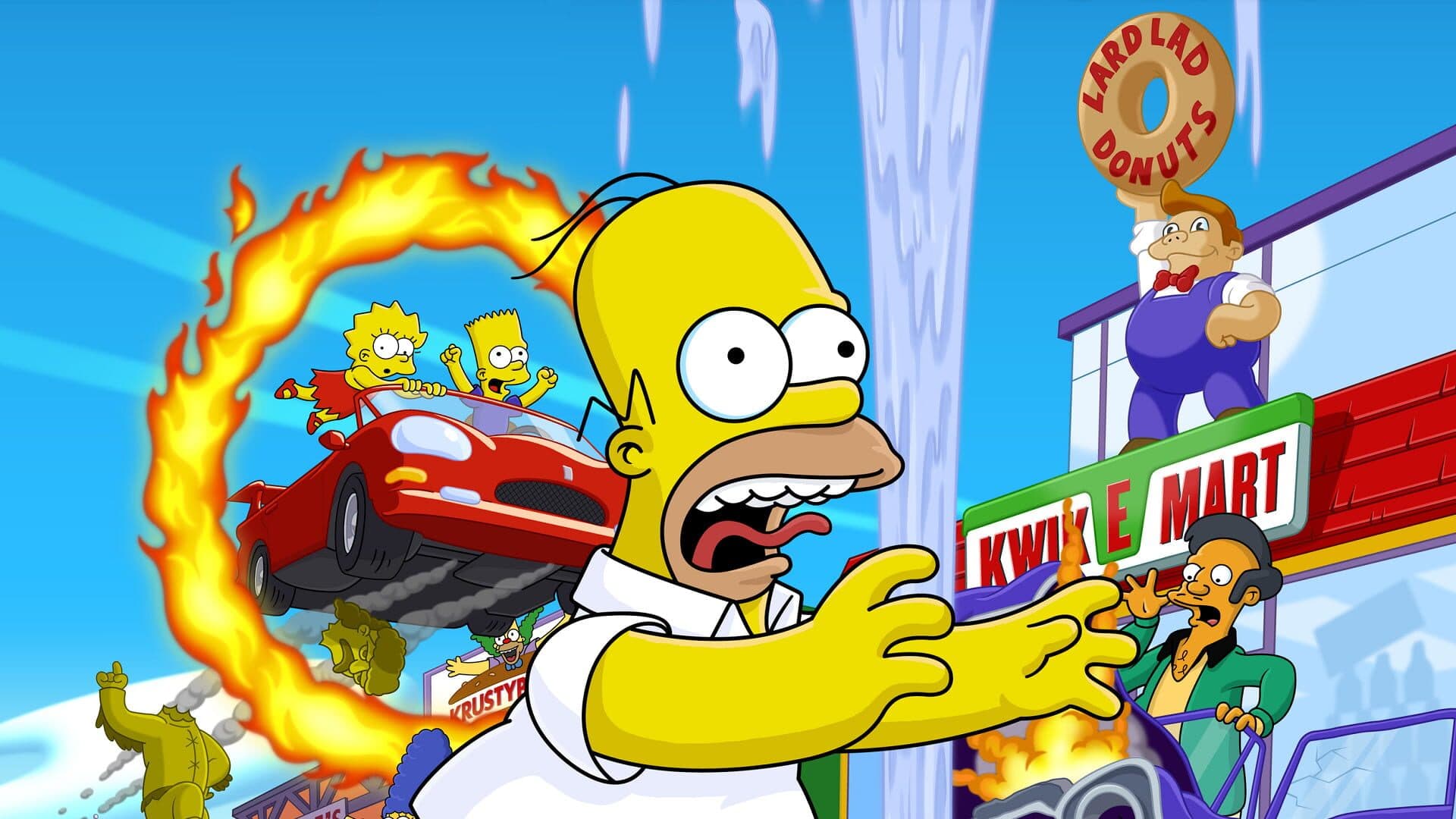
Released in 2003 on PlayStation 2, Xbox, GameCube, and PC, The Simpsons: Hit & Run long carried the image of a harmless open-world, with parental approval virtually guaranteed. Twenty-three years later, Radical Entertainment's title reveals another side: a game that's technically accessible on the surface, but architected around a difficulty that traumatized an entire generation. This paradox says something important about how we make—and how we mythologize—games meant for everyone.
Topic
News
Reading
4 min read
Updated
Wednesday, September 16, 2026
Key points
- 1Released in 2003 on PlayStation 2, Xbox, GameCube, and PC, The Simpsons: Hit & Run long carried the image of a harmless open-world, with parental approval virtually guaranteed.
- 2Twenty-three years later, Radical Entertainment's title reveals another side: a game that's technically accessible on the surface, but architected around a difficulty that traumatized an entire generation.
- 3This paradox says something important about how we make—and how we mythologize—games meant for everyone.
Lumnix angle
We isolate the useful facts first, then keep the analysis focused on what changes for players.
The Simpsons: Hit & Run launched in 2003 on PlayStation 2, Xbox, GameCube, and PC. It sold massively, partly because parents saw it as a socially acceptable GTA: Springfield instead of Vice City, Homer instead of Tommy Vercetti, no graphic violence. That marketing position worked. What gets left out is that the game developed by Radical Entertainment was simultaneously one of the most punishing titles of its generation for its supposed target audience.
An Open-World Facade, Racing Missions Calibrated to the Millimeter
The big lie of Hit & Run is that the freedom to drive around Springfield was just a decompression chamber between scripted missions with zero tolerance. Driving a car too slowly during a tail mission: failed. Miss a jump: back to the starting point with no checkpoint. Racing sections demanded nearly flawless trajectories, with opponents whose behavior looked more like the rubber-band AI of the 1990s than fair game design.
This isn't a flaw unique to Hit & Run. Driver (1999, Reflections Interactive) and Midnight Club (2000, Rockstar San Diego) shared this philosophy of invisible walls disguised as open missions. But Hit & Run flaunted an art direction and license that promised relaxation. The gap between the promise and the actual experience hit harder for an eight-year-old discovering the game on Christmas morning.
The Simpsons License as Shield and Constraint
Radical Entertainment worked with exceptionally rich narrative material: twenty-three seasons of dialogue, a Springfield geography codified by millions of viewers, characters whose personalities are set in stone. The result is a game whose writing is genuinely polished—the dialogue carries the same bite as the show, cultural references are sharp, and levels faithfully recreate iconic locations from the animated universe with an unusual level of care for a tie-in of that era.
But that same license may have encouraged a kind of complacency in mechanical design. Since the brand sold itself, game design didn't need to be accessible to attract players. Studios working under license in the 2000s—from Traveller's Tales on LEGO games to Blue Tongue on Marvel adaptations—all had the same blind spot: assuming franchise loyalty would absorb player frustration.
Why Nostalgia Endures Anyway
Hit & Run continues to fuel passionate discussions, unofficial remake projects, and recurring pleas for re-release, though no ports have been announced to date. This paradox has a simple explanation: the frustration of racing missions sits alongside genuine success everywhere else. The humor lands, exploration feels rewarding, the soundtrack is instantly recognizable, and Springfield offers a spatial coherence that few licensed games have ever achieved.
There's also a generational dimension that's hard to dismiss. Players who grew up with Hit & Run remember their roadblocks as vividly as their victories. That difficulty, however poorly tuned, created strong memories. It's different from a game you forget the next day because it offered no resistance.
A Title Deserving Better Than Simple Nostalgic Rehabilitation
Reducing Hit & Run to a kid's GTA does it a disservice. It also reduces GTA to gratuitous violence, which Rockstar's series has always transcended. Radical Entertainment's title is better understood as a transitional open-world, caught between two eras of game design: one where difficulty was a value in itself, another where accessibility became a design mandate.
Twenty-three years after release, Hit & Run deserves recognition for what it truly is: a game whose racing mechanics are technically dated, remarkably faithful to its license, and singular enough to warrant a proper re-release rather than a cosmetic remake. If Activision or another rights holder wonders what to do with this legacy, the answer isn't to sand down the difficulty until it disappears—it's to make it intelligible.
In brief
Released in 2003 on PlayStation 2, Xbox, GameCube, and PC, The Simpsons: Hit & Run long carried the image of a harmless open-world, with parental approval virtually guaranteed. Twenty-three years later, Radical Entertainment's title reveals another side: a game that's technically accessible on the surface, but architected around a difficulty that traumatized an entire generation. This paradox says something important about how we make—and how we mythologize—games meant for everyone.