Metaphor: ReFantazio — Atlus Rewrites the Rules of the JRPG
Atlus's new masterpiece surpasses Persona on its own turf. A political world, an auteur's vision, and 80 hours of a density rarely achieved.
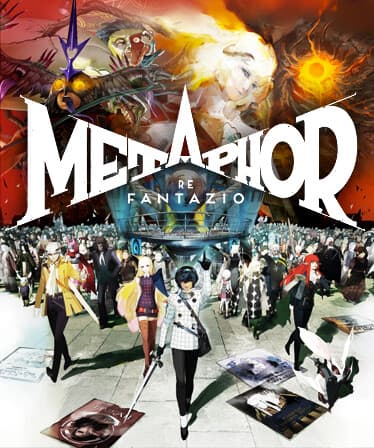
Topic
Review
Reading
9 min read
Updated
Thursday, March 5, 2026
Key points
- 1Atlus's new masterpiece surpasses Persona on its own turf.
- 2A political world, an auteur's vision, and 80 hours of a density rarely achieved.
- 3Platform PS5, Xbox Series X, PC Genre JRPG Publisher Atlus / Sega Release Date October 11, 2024 Atlus couldn't afford to stumble.
Lumnix angle
We isolate the useful facts first, then keep the analysis focused on what changes for players.
| Platform | PS5, Xbox Series X, PC |
|---|---|
| Genre | JRPG |
| Publisher | Atlus / Sega |
| Release Date | October 11, 2024 |
Atlus couldn't afford to stumble. It did something better.
After Persona 5 Royal, expectations for Atlus had become a trap. The studio had so thoroughly redefined the standards of the modern JRPG that a follow-up of merely equal quality would have read as a step backward. Everyone was watching for the crack — the sign that the formula had calcified, that genius had curdled into industrial routine. Metaphor: ReFantazio gives the skeptics no such satisfaction. It takes exactly the opposite path: total risk. New world, new mythology, new combat system, new political discourse. Atlus burned everything behind it and started from scratch on untouched ground, and the result is devastating. Not devastating like a blockbuster that dazzles you for twelve hours before collapsing under its own weight. Devastating like a work that keeps operating inside you long after you've set down the controller. Metaphor is the kind of game that comes along once a decade — one that resets the bar for what we have the right to demand from a Japanese RPG, one that makes half the year's releases feel instantly obsolete just by existing. This is what we expected from Atlus. This is what it delivered.
Euchronia: a world that thinks, bleeds, and lies
The fictional kingdom of Euchronia is not a backdrop. It's an argument. Built around a royal election open to all citizens — a revolutionary idea in a medieval-fantasy world governed by rigid castes — the narrative framework of Metaphor is a machine that generates political meaning with every hour of play. The tensions between the eight races coexisting under the same crown aren't reduced to local color: they are the central dramatic engine. The Clemar, the dominant aristocratic race, wield an economic and symbolic hegemony that suffocates the Roussainte and other marginalized peoples. The game doesn't let you observe this injustice from a distance. It makes you live it, feel its weight in every line of dialogue, every route you choose, every interaction in taverns and marketplaces.
The royal election campaign, onto which the entire main plot is grafted, demonstrates a narrative intelligence that's genuinely rare. The candidates aren't black-and-white puppets: they embody recognizable ideologies, rhetorics that resonate immediately with the present moment without ever sliding into lazy allegory. The populist candidate Louis Guiabern — charismatic, dangerous, worshipped by crowds — is one of the best-written antagonists in recent JRPG history, surpassing even Goro Akechi in moral complexity. The rise of resentment, the manipulation of collective fear, the weaponization of the weak against the even weaker: Metaphor speaks about our world with surgical precision without ever uttering a single real name. It's political literature disguised as a Japanese role-playing game, and it's absolutely brilliant.
The Archetype system: tactical freedom without a safety net
On paper, Archetypes replace Personas. In practice, they surpass them in terms of raw flexibility. Every party member can freely adopt and develop any unlocked Archetype — from base classes like Warrior and Mage all the way to advanced branches like Spectral Knight or Soul Alchemist, whose synergy effects reward genuine tactical thinking. Unlike the Persona system, which remained tethered to an all-consuming protagonist, building your entire team here is strategy in the fullest sense of the word.
The game doesn't hold your hand. Early bosses will flatten you if you charge straight ahead with a poorly configured team, and late-game encounters demand a mastery of guard-break mechanics, party buffing, and resource management that rivals the depth of Final Fantasy XIV or Bravely Default II. The real-time attack mechanic before entering combat — striking an enemy from behind in the open world to trigger a fight with a positional advantage — creates a fluidity that Persona 5 had sketched out but that Metaphor pushes much further, with enemies that patrol intelligently and danger zones that demand real spatial awareness.
The calendar management, a direct inheritance from the Persona series, is pushed to dramatic extremes here by the electoral structure: every day spent optimizing your social relationships is one fewer day to push through dungeons before the next political deadline. The time pressure is never crushing, but it's constant, and it turns every decision into a conscious trade-off. This is game design at its purest.
Art direction and technical execution: the living illuminated manuscript
Katsuhisa Tajima deserves to be discussed as a painter, not an art director. The visual language he developed for Metaphor is a standalone object of contemplation. The menu interfaces borrow from European medieval illuminated manuscripts while integrating Art Nouveau motifs reminiscent of Mucha or Klimt, all animated with a fluidity that turns even navigating the options into an aesthetic experience. Every scene transition, every animated cutscene produced by Wit Studio, every world map scrolling past like a page of a medieval codex tearing itself free: visually, Metaphor is consistent from start to finish with a formal rigor you rarely see in video games.
Technically, the PS5 version runs at a stable 60 frames per second with near-instant load times thanks to the SSD. Environments are dense without feeling cluttered, the lighting effects in dungeons create a perfectly calibrated oppressive atmosphere, and character models in combat are remarkably expressive for the genre. No visible aliasing, no framerate drops observed across seventy hours of play — it's clean, professional, without a single technical compromise.
And then there's Shoji Meguro. The Metaphor soundtrack is his most ambitious work since Persona 4. Choral compositions in the vein of Arvo Pärt sit alongside piano pieces that flirt with Satie, orchestral swells evoking Bach's great masses, and battle themes incorporating imaginary folk rhythms native to the world of Euchronia. This is music with a geography. It sounds like it belongs to this world and only this world.
Content and longevity: abundance under control
Budget between 80 and 120 hours depending on how thoroughly you play. And unlike many RPGs that pad their runtime with filler, Metaphor maintains a remarkably consistent narrative and gameplay density from beginning to end. Side quests aren't item-retrieval chores: they're self-contained stories that deepen the politics of Euchronia, reveal new dimensions of secondary characters, and sometimes result in concrete changes to the state of the world. When you help a Roussainte community resist a forced eviction, you return to that town several hours later to see the consequences of your intervention.
The main dungeons, called Labyrinths, are constructed with an architectural care that recalls the best Palaces from Persona 5 but with superior verticality and level design complexity. The environmental puzzles embedded in some of them — particularly the Labyrinth of Mirrors at the game's midpoint — demand logical thinking that pleasantly shifts the pace away from combat. No two dungeons look alike, and none feel like they were generated by a procedural tool: each one is an artistic statement in its own right.
New Game Plus, generous in what it preserves and what it refreshes, gives a concrete reason to dive back in after the credits roll. Certain narrative events locked on a first playthrough reveal their full meaning on a second pass. Metaphor is a game designed to be experienced twice.
Strengths
- + Exceptionally mature political storytelling — the best JRPG scenario since Xenogears, without exaggeration.
- + Archetype system — tactical depth that rewards investment without punishing experimentation.
- + Iconic art direction — every screen is a magazine image, every interface a functional work of art.
- + Meguro's soundtrack at its peak — the best JRPG music of the year, probably of the generation.
- + Runtime without filler — 100 dense hours where every hour earns the next.
- + Characters written like adults — not a single shōnen archetype cliché anywhere in the main cast.
- + Coherent world-building — Euchronia functions like a real civilization with its own internal contradictions.
Weaknesses
- − Steep learning curve — the first two hours lack gradual onboarding; players less familiar with the genre risk checking out before the machine really gets rolling.
- − A few late side quests fall short — out of the hundred or so available, a handful in the mid-game revert to fetch quest structures that feel generic against the quality of the rest.
- − PC optimization needs work at launch — some micro-stutters on mid-range configurations, partially patched but not fully resolved as of this review.
- − Camera handling in certain dungeons — in the narrowest corridors of the Labyrinths, the camera occasionally gets wedged into uncomfortable angles that break immersion.
Verdict: the JRPG of the generation
Metaphor: ReFantazio is the kind of work that makes games journalism uncomfortable in the best possible way: it forces you to find new language because the standard formulas feel inadequate. Saying it's the best JRPG since Persona 5 is true but reductive. Saying it's the best game of 2024 is probably accurate but still too narrow. What happens in Metaphor is that Atlus managed to make the intellectual rigor of a political novel, the generosity of a 100-hour RPG, the visual coherence of a total work of art, and the tactical pleasure of a deep combat game coexist — without any one of those ambitions sabotaging the others.
In a landscape where too many JRPGs settle for recycling genre tropes with a next-gen coat of paint, Metaphor takes the risk of meaning something. It has something to say about democracy, about fear of the other, about the way oppressive systems perpetuate themselves with the consent of the oppressed — and it says it through every mechanic, every design decision, every line of dialogue. This isn't a game that decorates its ideas with gameplay. It's a game whose gameplay is the ideas.
A score of 10/10 doesn't mean Metaphor is flawless. It means it achieves exactly what it set out to do, and what it set out to do was set immeasurably higher than what the vast majority of its competition even dares to attempt. A game that justifies owning a console, a screen, and however many dozen hours you have left to give.
Lumnix Score: 10/10
In brief
Atlus's new masterpiece surpasses Persona on its own turf. A political world, an auteur's vision, and 80 hours of a density rarely achieved.
Our verdict
Metaphor: ReFantazio — Atlus Rewrites the Rules of the JRPG
PS5, Xbox Series X, PC