Hitman, Fallout, RDR2: Games That Are Hilarious Without Trying
An Agent 47 dressed as an inflatable flamingo, a ghoul philosophizing about human nature in Boston's ruins, Arthur Morgan tripping over a rock mid-heroic gallop. The most effective video game humor doesn't always come from games labeled "comedy." It emerges where you least expect it — in absurd level design, a throwaway line buried three menus deep, or physics so brutally honest they're hilarious.
Topic
Feature
Reading
5 min read
Updated
Monday, May 25, 2026
Key points
- 1An Agent 47 dressed as an inflatable flamingo, a ghoul philosophizing about human nature in Boston's ruins, Arthur Morgan tripping over a rock mid-heroic gallop.
- 2Unintentional humor isn't really unintentional When a game makes you laugh without being a comedy, it's rarely an accident.
- 3It's a controlled editorial choice, often harder to nail than the in-your-face humor of High on Life (Squanch Games, 2022) or Sam & Max (Telltale Games, 2006–2007).
Lumnix angle
We isolate the useful facts first, then keep the analysis focused on what changes for players.
Unintentional humor isn't really unintentional
When a game makes you laugh without being a comedy, it's rarely an accident. It's a controlled editorial choice, often harder to nail than the in-your-face humor of High on Life (Squanch Games, 2022) or Sam & Max (Telltale Games, 2006–2007). In those titles, the contract is clear from the title screen: you're here for laughs. In Hitman World of Assassination (IO Interactive, 2021–2023) or Fallout: New Vegas (Obsidian Entertainment, 2010), the humor ambushes you between sequences that take themselves dead seriously.
It's precisely this tension — between the game's apparent tone and what it actually lets you do or discover — that produces the most memorable moments. A deep dive was overdue.
Hitman: the world's most serious absurdity simulator
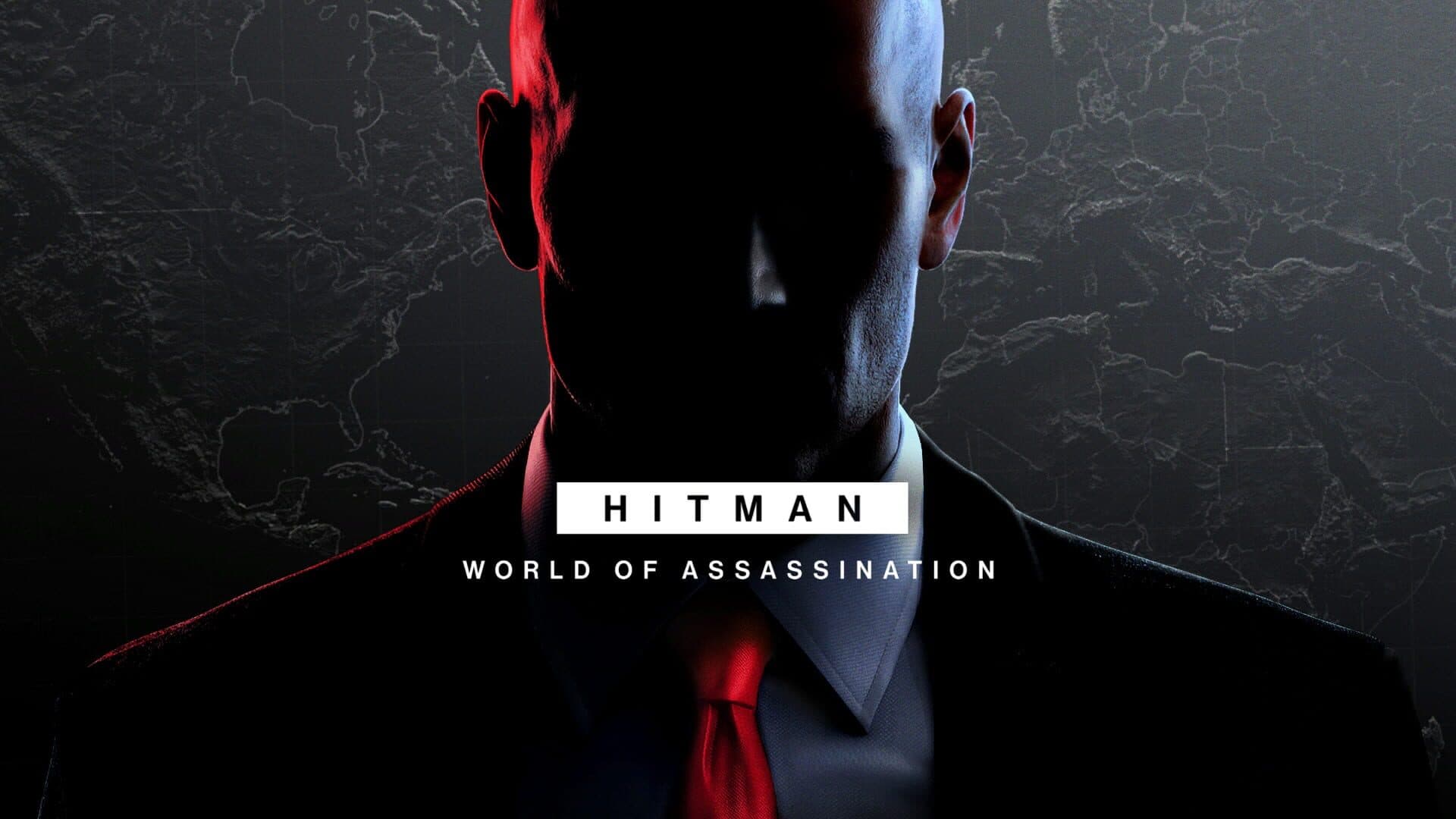
The Hitman series is probably the textbook example of this phenomenon. IO Interactive built a stealth-action franchise that's ultra-serious in its mechanics — meticulous movement, rigid detection systems, complex targets — and utterly unhinged in its content.
The premise itself is an invitation to slapstick: you play a bald, impeccably dressed clone whose job is eliminating targets by posing as literally anyone else. On paper, Hitman. In practice: a man in a chicken mascot costume drowning a crime boss in a toilet at a Paris fashion show.
What sets Hitman's humor apart is that it's entirely systemic. IO doesn't write jokes in the traditional sense. The studio builds situations — a theater stage, a Formula 1 pit lane, a flower market in Amsterdam — and gives you absurd enough tools (costumes, distractions, scripted opportunities) that the ridiculous emerges naturally from your own choices. When your target dies electrocuted by a massage device they ordered themselves, nobody wrote that joke. You just created it.
The "Story Missions" add another layer: they're written with a gleeful sense of the grotesque. In Hitman 2 (IO Interactive, 2018), the mission that has you infiltrating a professional card tournament in New Zealand achieves a kind of absurdist poetry that few written comedies ever reach.
Fallout: dark humor as a lens on the world
Where Hitman plays with situations, Fallout — especially Fallout: New Vegas (Obsidian, 2010) — builds its humor through text and worldbuilding. The retro-futuristic 1950s aesthetic projected into a post-apocalyptic world creates constant cognitive dissonance: billboards hawking nuclear bombs as home appliances, helpful robots greeting you at crumbling motels with the enthusiasm of a TV commercial.
The game doesn't mock its characters — it treats them with absolute seriousness, which makes their absurdities even funnier. The Courier can negotiate treaties between factions, manage entire settlements, and simultaneously help a paranoid ghoul find his hat. The coexistence of these stakes is itself a form of comedy.
Fallout 4 (Bethesda Game Studios, 2015) plays this card less effectively — the writing is smoother, less cutting — but the series overall has sustained that satirical vein that makes it far more than a standard post-apocalyptic RPG.
Red Dead Redemption 2 and physical humor
Arthur Morgan in Red Dead Redemption 2 (Rockstar Games, 2018) represents a different case: humor emerges from the character himself, his reactions, his world-weary cowboy commentary from someone who's seen too much. His journal entries — where he sketches the animals he hunts with touching sincerity, before dryly noting he "shot people again" — rank among the funniest writing moments of the decade.
But RDR2 also laughs at itself in more physical ways. The simulation engine is so detailed, the animations so precise, that the physics regularly derails in spectacular fashion. Arthur tumbling down a hillside after missing a horse jump, NPCs clipping into scenery with absolute conviction — Rockstar didn't program these as jokes, but their simulation engine is so advanced that reality sometimes spills over into the grotesque.
Other games that hide their hand well
Disco Elysium (ZA/UM, 2019) builds purely literary humor through philosophical tangents and interior monologues with your own skills that often devolve into barroom arguments. Metal Gear Solid 3: Snake Eater (Konami, 2004) shifts without flinching between breathless espionage and codec conversations where Snake discusses cooking recipes with a Soviet scientist. Baldur's Gate 3 (Larian Studios, 2023) piles burlesques situations into an universe that never abandons dramatic weight — the magical chicken scene in Act I became a meme for good reason.
What these games share: they're not trying to be funny. They're trying to be true — faithful to their worlds, their characters, their mechanics — and humor emerges from that excess of coherence pushed to its logical limits.
Why this is harder than straight comedy
Calibrating humor in a "serious" game demands a mastery of tone that few studios achieve. Overplay it and the joke breaks immersion. Underplay it and the moment passes unnoticed. IO Interactive, Obsidian, and Rockstar succeed because they trust their systems and their players: they set the conditions, then let absurdity do the rest.
It's ultimately a lesson in game design as much as writing. The best comedic moments in the medium aren't written — they're built.
In brief
An Agent 47 dressed as an inflatable flamingo, a ghoul philosophizing about human nature in Boston's ruins, Arthur Morgan tripping over a rock mid-heroic gallop. The most effective video game humor doesn't always come from games labeled "comedy." It emerges where you least expect it — in absurd level design, a throwaway line buried three menus deep, or physics so brutally honest they're hilarious.