Saw: Genesis Delays Early Access to 2027 Amid Testing Concerns
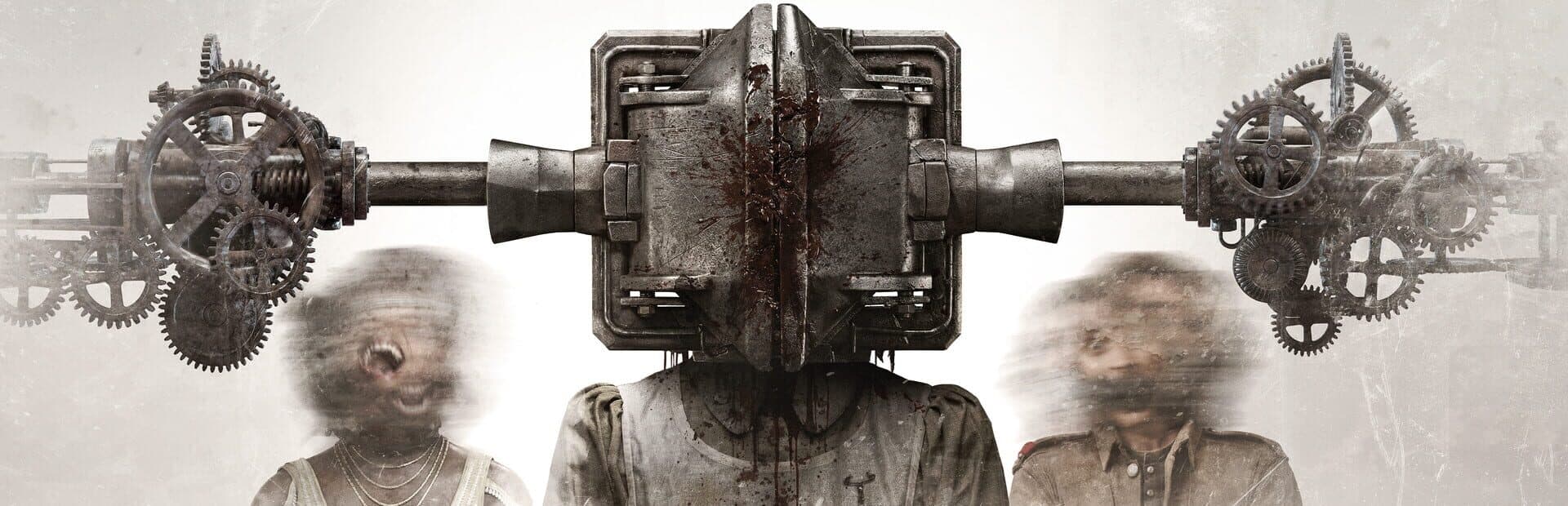
Originally slated for late 2026, Saw: Genesis won't enter early access until 2027. Initial testing feedback apparently convinced the team to pump the brakes. In a market where premature launches leave lasting scars, this delay is less an admission of defeat than a survival choice. The question remains whether the game can deliver on its promises when it finally arrives.
Topic
News
Reading
4 min read
Updated
Friday, September 25, 2026
Key points
- 1Originally slated for late 2026, Saw: Genesis won't enter early access until 2027.
- 2Initial testing feedback apparently convinced the team to pump the brakes.
- 3In a market where premature launches leave lasting scars, this delay is less an admission of defeat than a survival choice.
Lumnix angle
We isolate the useful facts first, then keep the analysis focused on what changes for players.
Saw: Genesis won't be playable in early access by year's end. The studio has officially pushed that window to early 2027, after preliminary test sessions sent back signals troubling enough to justify several additional months of work. The decision is clear, and it says something about the project's actual state.
A Delay That Confirms What Testing Revealed
Feedback from early demonstrations of Saw: Genesis apparently didn't impress. Without specific details on the issues flagged going public, the studio chose not to ignore these signals and adjusted its timeline accordingly. That's a stance that cuts against the usual push to hit an announced date no matter what.
This kind of early access delay is paradoxically more honest than most big-bang launches. Early access is supposed to work as an iteration tool, not a safety net to compensate for lack of polish. If the game isn't ready for that intermediate phase yet, it was better to own it now.
That decision matters because early access is where structural problems get exposed. A game can't hide fundamental gameplay or narrative weaknesses behind a six-month runway. If Saw: Genesis needed to postpone to address them, the real work still lies ahead.
The Saw Legacy: A Franchise That Doesn't Forgive Missteps
Banking on the Saw universe means inheriting a franchise with a complicated relationship to video games. Previous adaptations—particularly the Saw and Saw II: Flesh & Blood titles released between 2009 and 2010 by Zombie Studios—divided even the most forgiving saga fans. The bar is therefore double: survival horror enthusiasts expect tight mechanics and atmosphere, while cinema license admirers expect narrative weight and thematic fidelity. Those two audiences don't always want the same thing.
Genesis positions itself as an origin story, a way to revisit the foundations of the Jigsaw universe before the franchise spiraled into its most mechanical excesses. That's a narrative angle with potential, but it demands solid writing and direction. Gaps in those areas don't get fixed with a few extra months of polish.
The Saw games have historically struggled because they treated the license as window dressing rather than genuine creative constraint. Genesis has a chance to reverse that if—and only if—the core narrative and design philosophy are sound from the ground up.
Early Access: The Tool That Exposes Structural Fragility
The Saw: Genesis delay raises a question bigger than this single project. Early access has become, for many independent and mid-tier studios, a funding model as much as a development tool. When a game isn't stable enough to clear even that first hurdle, it signals that foundations remain shaky, and the time gained is time actually owed.
Cases like Hades from Supergiant Games or Deep Rock Galactic from Ghost Ship Games show that early access can build a solid community and generate useful feedback—provided the gameplay core is already coherent at entry. It's not a disguised beta phase: paying players expect a functional product, not a prototype. If Saw: Genesis needs several more months just to reach that threshold, the remaining work is probably structural rather than cosmetic.
That doesn't automatically doom the project, but it does narrow the margin for error. The studio has to prove it identified and is actively solving the real problems, not just spinning its wheels.
2027 as a New Starting Line, Not a Guarantee
Pushing to 2027 isn't inherently a bad call. It would be one if the studio simply coasts and avoids the core issues flagged during testing. The date is just a frame; what matters is what the team does with the time.
Saw: Genesis potentially has room to exist in a survival horror market still hunting for fresh narrative angles after Resident Evil Village in 2021 or Alien: Isolation in 2014. But potential alone doesn't cut it. A delay well-used can salvage a game; a delay merely absorbed changes nothing about its underlying problems.
In brief
Originally slated for late 2026, Saw: Genesis won't enter early access until 2027. Initial testing feedback apparently convinced the team to pump the brakes. In a market where premature launches leave lasting scars, this delay is less an admission of defeat than a survival choice. The question remains whether the game can deliver on its promises when it finally arrives.