What Zero Company gets right when Star Wars stops trying to show everything
Zero Company does not need to simulate the entire Clone Wars. It only needs to make us regret a single bad decision.
Topic
Feature
Reading
10 min read
Updated
Monday, September 21, 2026
Key points
- 1Zero Company does not need to simulate the entire Clone Wars.
- 2It only needs to make us regret a single bad decision.
- 3Cruisers that blot out the sky, entire planets that sum up an era, families whose personal disputes end up determining the fate of the galaxy.
Lumnix angle
We isolate the useful facts first, then keep the analysis focused on what changes for players.
Star Wars loves sweeping vistas. Cruisers that blot out the sky, entire planets that sum up an era, families whose personal disputes end up determining the fate of the galaxy. It is a franchise that feels naturally at home in wide angle. Cinema taught it that very early on, and video games long followed the same instinct. When a franchise this vast enters a new medium, the temptation is almost automatic: show everything, reference everything, condense everything. More places, more heroes, more systems, more lore. In short, more Star Wars.
And yet, the series’ most convincing games are often the ones that take the opposite route. They do not try to give us a tour of the galaxy like a tourist brochure on steroids. They choose a narrower, more precise angle, sometimes seemingly more modest. A squadron. A cockpit. A unit. A mission. A poorly handled fight. A bad decision whose cost is no longer abstract. That is precisely what makes the Star Wars Zero Company preview published on Lumnix so interesting: the real question is not simply whether the XCOM / Star Wars combination works on paper, but whether it can sustain an entire campaign without that promise evaporating. To my mind, it can do so precisely because it deliberately reduces the scale.
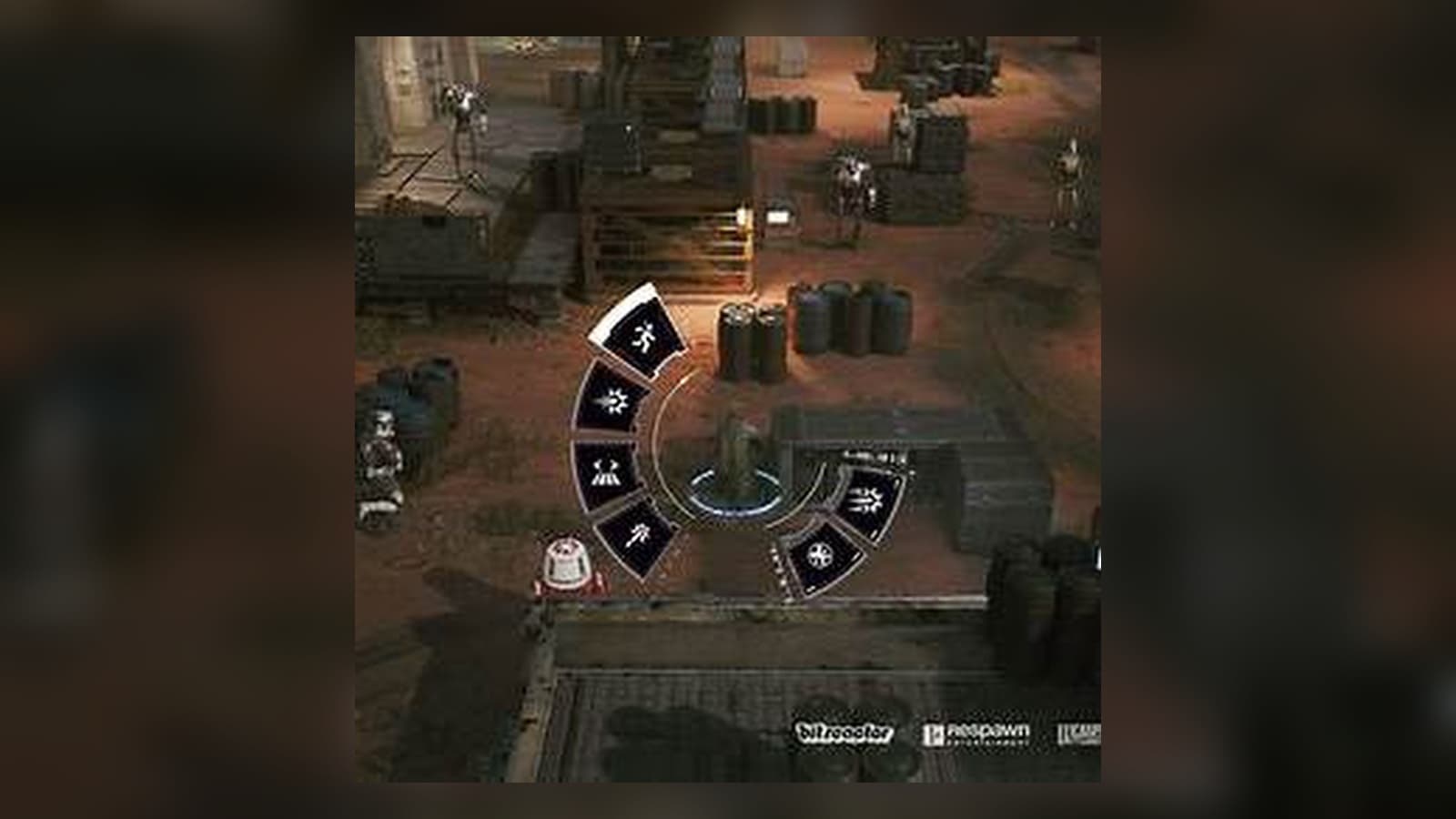
Zero Company is not trying to simulate the entire Clone Wars. It asks the player to worry about four people, an injury, an action order, a poor choice of cover and a budget too tight to fix every mistake. In other words, it makes the war legible because it is willing to make it smaller. This is an old truth of Star Wars video games, and our dedicated Zero Company hub shows just how fruitful this approach can become once it is taken seriously. The paradox is simple: Star Wars often becomes more believable when it stops trying to show everything.
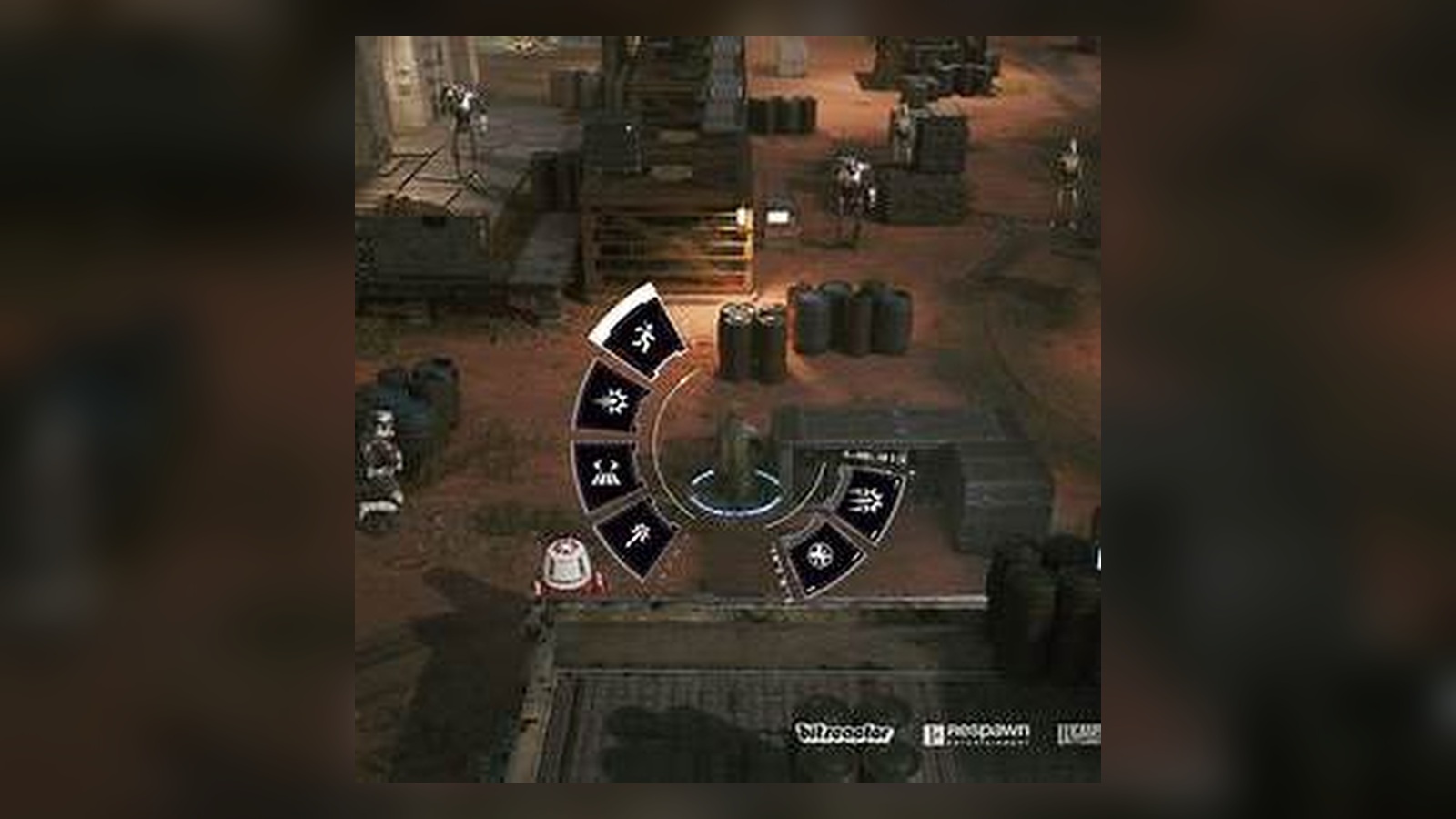
Zero Company: four faces are sometimes worth more than an entire galaxy
In a tactical game, the word “scale” is never innocent. It refers at once to what we see, what we control and what we can lose. Zero Company seems to have understood that it had nothing to gain by imitating the whole of Star Wars. Its interest lies neither in lining up planets like boxes to tick nor in handing out nods to the franchise like rewards. Its soundest instinct is to turn the Clone Wars into a series of concrete problems. Who moves first? Who stays exposed? Which resource should be saved for later? Who becomes irreplaceable once the mission goes wrong?
That shift changes everything. In the films, war is often an epic backdrop. In a tactical system, it becomes a series of trade-offs. This also fits rather well with the broader line of thought suggested by Lumnix’s article on Rainbow Six Tactics: when a franchise adopts a tactical form, it does not just change its pace; it changes its vocabulary. Tension no longer comes from a spectacular explosion, but from the interval preceding it. You read an angle, calculate a range, hesitate. And suddenly, myth becomes mechanics.
This is where Zero Company can achieve something very Star Wars without lapsing into dutiful imitation. The point is not to prove that a familiar franchise can be pasted onto a proven structure. It is to show that the galaxy gains substance when the player is forced to make limited, localised decisions that nevertheless carry consequences. An abstract Republic is an idea. A wounded soldier, an unavailable specialist or a compromised mission already constitute a world.
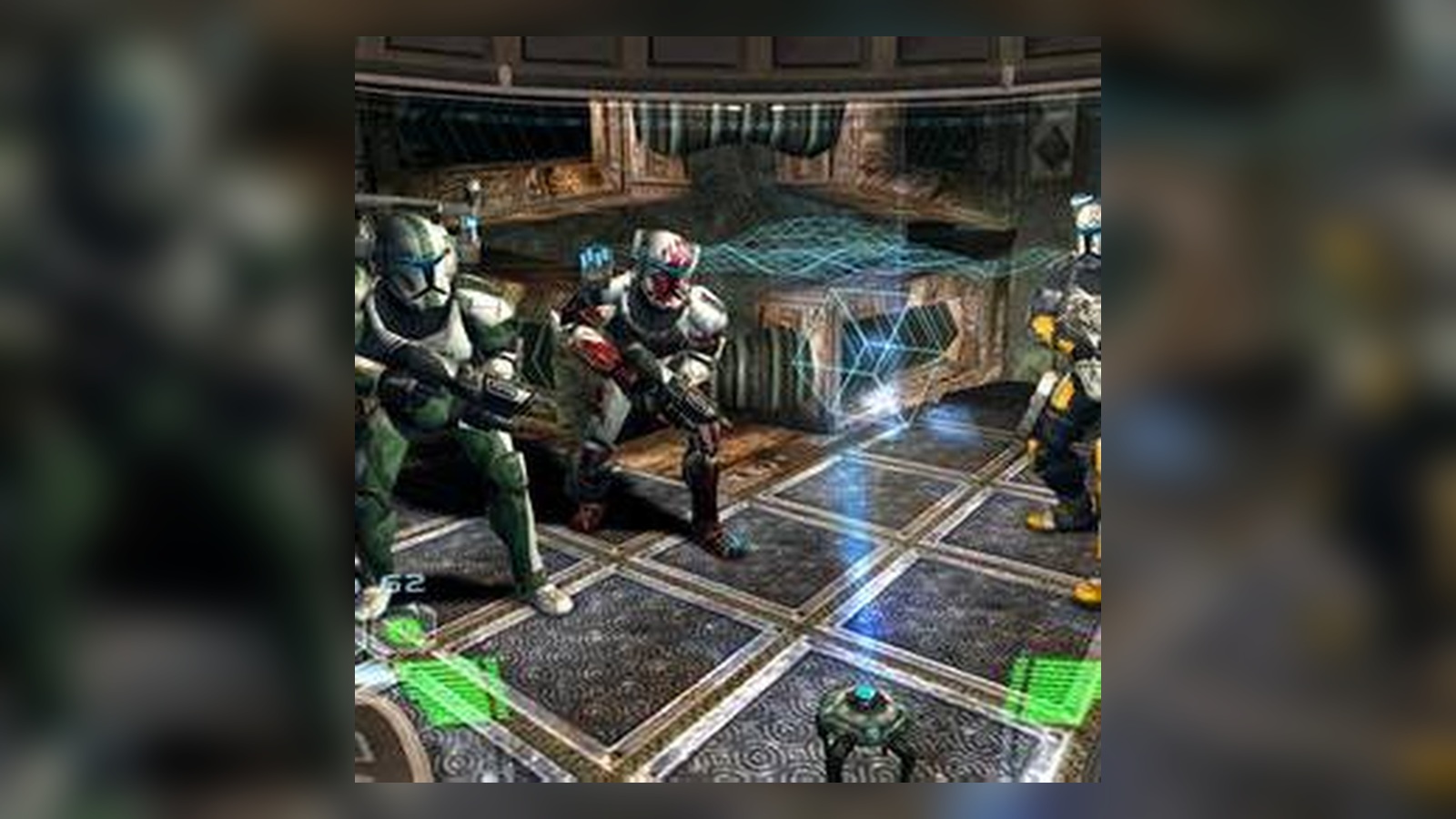
Republic Commando: war reduced to a door, an order and three teammates
There is nothing new about this logic. Republic Commando understood it long ago, with an almost brutal elegance. The game did not offer us “Clone Wars” as a grand, all-encompassing narrative. It gave us four commandos, very concrete objectives and the constant feeling that every room we entered could become one more problem. It was a remarkably effective way of making war tangible. Ideologies and vast troop movements then fade into the background. What matters is who will slice the door, who will plant the charge, who is covering the advance, who will get back on their feet first.
This reduction in scale does not impoverish the world. It makes it denser. The Star Wars universe stops being a summary of itself. It becomes a place inhabited by professionals, with their procedures, their reflexes and their fatigue. War stops being decorative. It becomes work, in the almost thankless sense of the word. It may be less grandiose than a prophecy, but it is infinitely more alive.
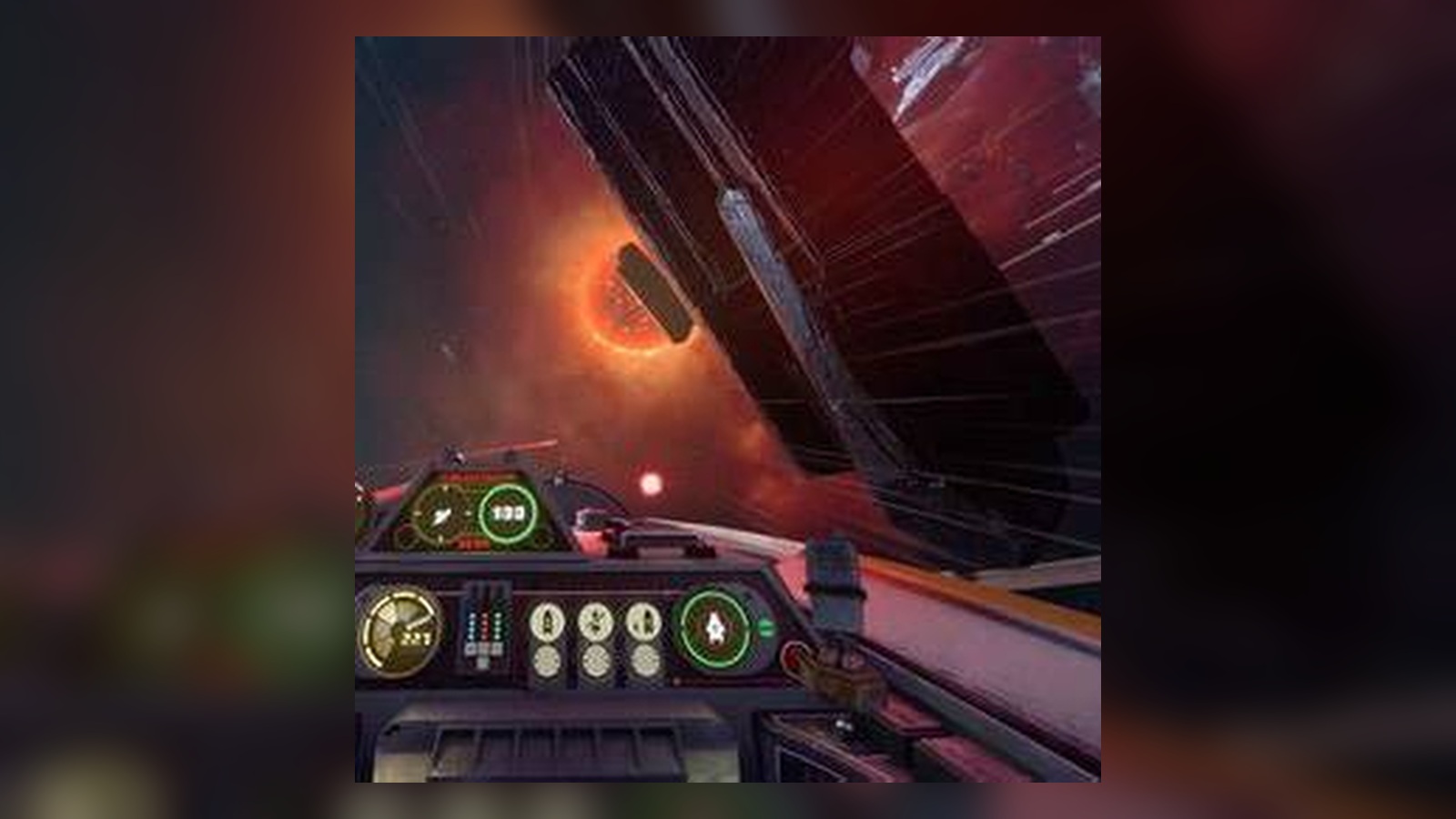
Squadrons: when a cockpit is enough to tell the story of an entire front
The same idea works in a completely different register with Star Wars: Squadrons. Here, the reduction in scale comes not through the group, but through the viewpoint. The game literally shuts the player inside a cockpit. That seems obvious, almost mundane, and yet the effect is considerable. The conflict is no longer a grand spectacle viewed from a distance. It becomes a matter of engine power, shield distribution, imperfect visibility and formation discipline. Suddenly, all of Star Wars fits into an instrument panel, audible alarms and the space framed by a canopy.
This narrowing makes the world more intense. Allowing for the differences, one could almost draw a parallel with some of the questions raised in Lumnix’s feature on 007 First Light: a franchise becomes interesting not when it accumulates the outward signs of its identity, but when it finds a form of gameplay capable of translating that identity coherently. Squadrons tells Star Wars better not because it shows more of it. It tells it better because it is willing to show just one slice, and to commit to that choice all the way.
There is even something rather precious about this modesty. Star Wars sometimes tends to believe that everything must revolve around historical events, famous bloodlines or cosmological revelations. Squadrons reminds us that the tactical everyday life of a front can be enough. A turn, a chase, a radio transmission, an overheating engine. The world becomes more believable precisely because its immediate horizon narrows.
Strategy games: finding the right distance also means knowing what to simplify
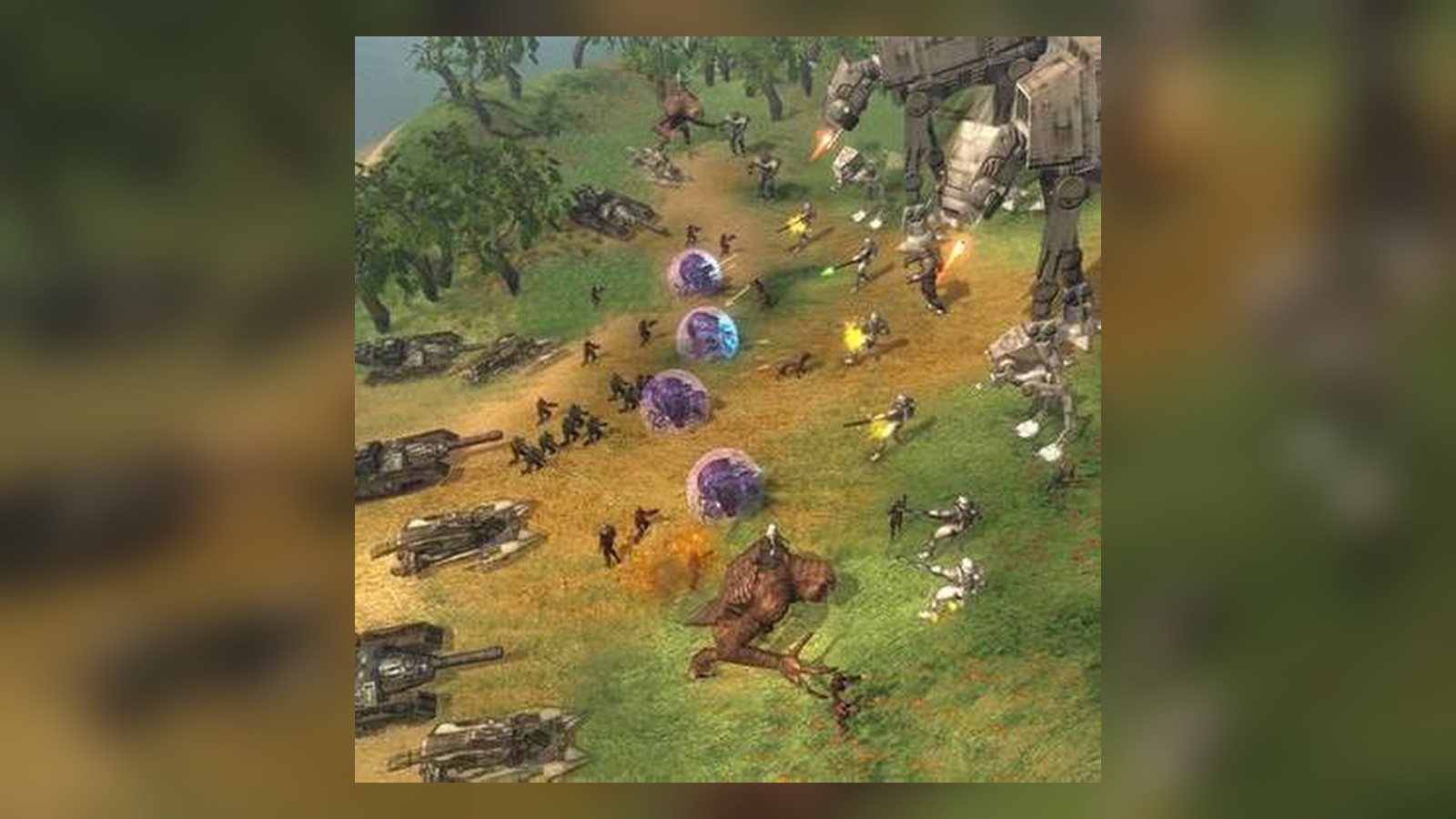
At first glance, strategy games seem to contradict this argument. After all, they love distance, the big picture, fleet movements and planets turned into production nodes. Yet they too only work when they choose what really matters. Empire at War, for example, never represents the galaxy in all its complexity. It offers a legible version, built around a few essential variables: position, economy, recruitment, routes, tempo. It is not “all of Star Wars”. It is a deliberately reduced set of relationships that is enough to produce meaning.
Perhaps this is where the real challenge of licensed games emerges. The danger is not showing too little. The danger is wanting to keep everything and no longer prioritising anything. A piece such as Lumnix’s reflection on Crimson Desert also reminds us that a game can quickly lose its way when it tries to embrace too many directions at once. Famous franchises face exactly the same temptation: they feel compelled to pile up signifiers instead of choosing a form. Yet choosing, in video games, does not mean impoverishing. It means making things perceptible.
In other words, even a game that takes a broad view only succeeds by clearing things out. It decides which planets matter, which movements count and which stakes the player must be able to read without drowning. The right scale is never a question of sheer size. It is a question of focus.
Why franchises so often get their priorities wrong
Adaptations are often afraid of leaving something out. They dread a player saying: “This is not Star Wars enough.” So they compensate with references, cameos, familiar locations, recognisable silhouettes and that almost museum-like impulse to put the entire display on show at once. But this logic often produces the opposite effect. In trying so hard to show everything, the franchise becomes a catalogue. It loses the sense of everyday life, of work, of substance, of constraint. In short, everything that makes an imaginary world stop being a list of recognisable elements and become a place where something happens.
Zero Company has a rare opportunity precisely because it seems to understand this from its very premise. It does not need to be the definitive synthesis of the Clone Wars. It only needs to be consistent with its scale. If it manages to make the player feel that a poor choice of cover, an injury or a decision about team composition carries lasting weight, then it will already have achieved something more interesting than a poorly sustained epic. And this is where older Star Wars games remain so useful: our complete list of Star Wars games tells a very broad story, but it is often the most tightly focused experiences that leave the clearest mark.
All of this could be summed up quite simply. Republic Commando reduces war to a squad. Squadrons reduces the front to a cockpit. Empire at War reduces the galaxy to a few decision-making systems. Zero Company seems to want to reduce the Clone Wars to a small group of individuals we do not want to sacrifice for nothing. Each time, Star Wars loses none of its intensity. It merely changes its focal length. And very often, it gains in truth.
The paradox, then, is this: Star Wars becomes better as a game when it gives up trying to be an encyclopaedia. It becomes stronger when it is willing to be a precise system, a situated viewpoint, a clearly defined activity. It needs to show less of itself to make us believe in it more.
Zero Company does not need to simulate the entire Clone Wars. It only needs to make us regret a single bad decision.
About the author
Søren Kamper writes for Star Wars: Gaming, where he covers the history, design and sometimes overlooked angles of Star Wars games. He is particularly interested in the moments when a major franchise stops looking at itself in the mirror and starts functioning as a real game.
In brief
Zero Company does not need to simulate the entire Clone Wars. It only needs to make us regret a single bad decision.