Bloody Roar at 29: The Lycanthrope Fighter We Couldn't Keep Alive
In July 1997, Hudson Soft and Eighting launched Beastorizer in Japanese arcades before rebranding it as Bloody Roar for PlayStation. Twenty-nine years later, the franchise sits in uncomfortable limbo: memorable enough to recall, but never quite solid enough to defend without reservations. That tension is precisely what deserves close examination.
Topic
News
Reading
4 min read
Updated
Monday, July 6, 2026
Key points
- 1In July 1997, Hudson Soft and Eighting launched Beastorizer in Japanese arcades before rebranding it as Bloody Roar for PlayStation.
- 2Twenty-nine years later, the franchise sits in uncomfortable limbo: memorable enough to recall, but never quite solid enough to defend without reservations.
- 3That tension is precisely what deserves close examination.
Lumnix angle
We isolate the useful facts first, then keep the analysis focused on what changes for players.
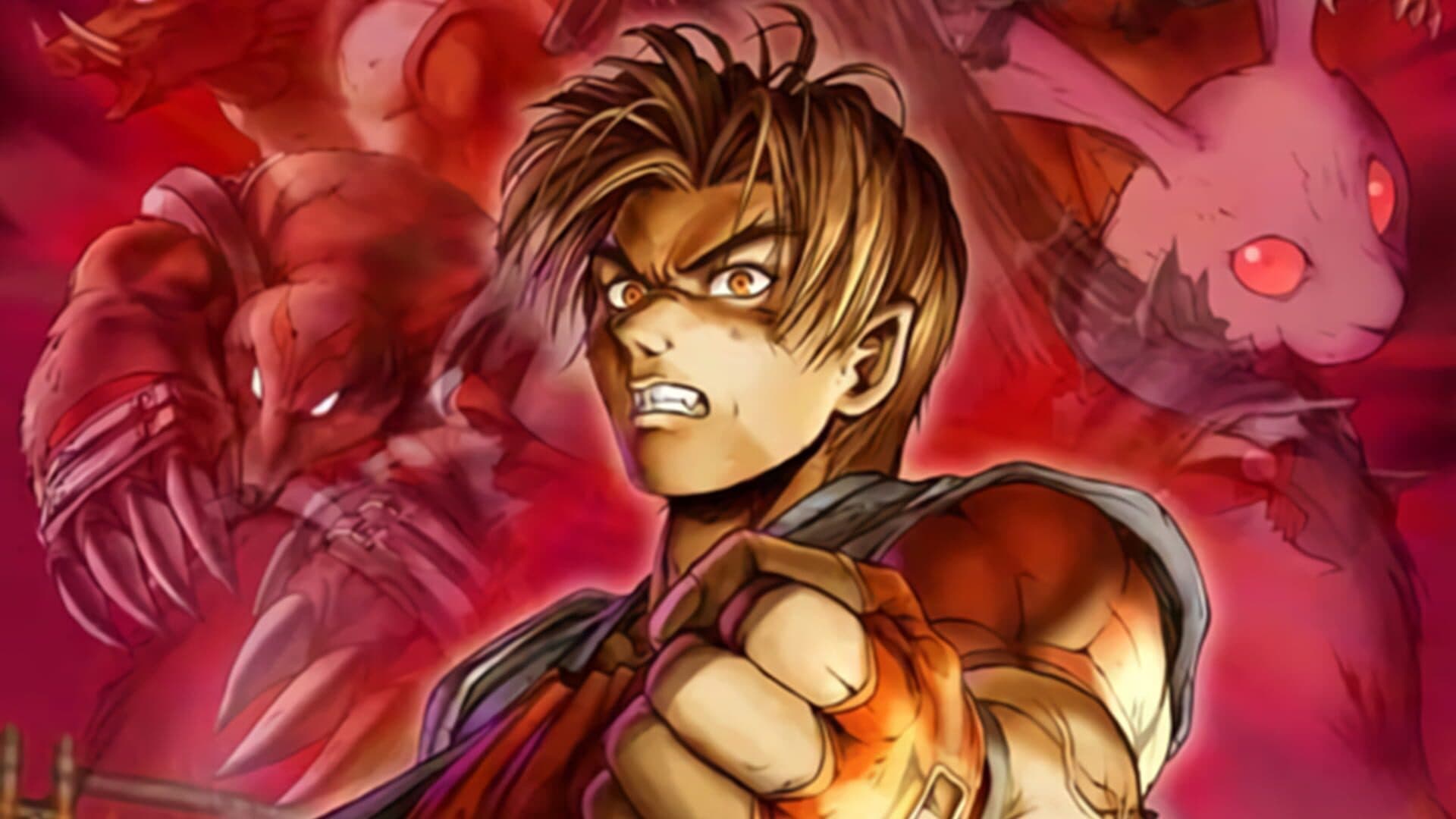
In July 1997, Japanese arcades welcomed a 3D fighting game from Hudson Soft and Eighting, modestly titled Beastorizer—a name that could have sprung straight from Roger Corman's B-movie catalog. Rebranded as Bloody Roar for its PlayStation debut in November of that same year, then arriving in France in January 1998, the title introduced a straightforward and brutal concept: humans who beat each other senseless, then transform into agitated wolves, tigers, or rabbits. Twenty-nine years later, the franchise is stalled, and that silence speaks volumes about what it truly was.
A Stroke of Genius Trapped in a Flawed Game
Bloody Roar's core premise remains, on paper, one of the most effective in the genre. The zoanthropic transformation isn't cosmetic window dressing: it alters combat rhythm, opens different offensive opportunities, and forces players to manage an additional gauge. In a market dominated by Tekken 2 (Namco, 1995) and Virtua Fighter 2 (Sega, 1994), which banked on pure technical depth, Bloody Roar offered immediate readability paired with genuine strategic substance. It wasn't filler.
The problem was that executing this idea oscillated between convincing and sloppy. Transformation animations were spectacular for the era, but the physics engine remained temperamental, certain characters absurdly unbalanced in ways hard to justify, and roster depth too uneven for the game to hold its ground in serious competition. Eighting, a studio far less experienced than Namco or Sega at versus fighting, delivered a rough draft that reeked of untapped potential.
A License That Never Found Its Stride
The sequels—Bloody Roar 2 in 1998, Bloody Roar 3 in 2000, Bloody Roar 4 in 2003—gradually refined the formula without ever transcending it. Each entry fixed flaws and introduced new ones, leaving the franchise feeling perpetually under construction. Bloody Roar: Primal Fury on GameCube in 2002 remains the entry most often cited as the series' technical peak, yet even it couldn't stand against contemporary titans like Tekken 4 (Namco, 2001) or Soul Calibur 2 (Namco, 2002).
Hudson Soft, the series' historic publisher, progressively vanished into Konami's orbit starting in 2011, taking any prospect of official resurrection with it. Eighting, meanwhile, pivoted to licensed game development—notably several Dragon Ball installments and Naruto titles—without revisiting the formula that made its name. Bloody Roar has slumbered since, with no announcements of ports, remasters, or sequels.
Selective Nostalgia and the Blind Spot of Criticism
What makes Bloody Roar difficult to assess in hindsight is how collective memory tends to smooth over its rough edges. Players who discovered it on original PlayStation recall the sensation of transformation, the energetic soundtrack, the immediate pleasure of early sessions. What conveniently gets overlooked is the pathetic single-player AI, skeletal game modes, and balance issues that would render any serious tournament incomprehensible.
That very tension—a strong concept hamstrung by imperfect execution—is precisely what makes the franchise worth dissecting today. Bloody Roar is neither an unjustly forgotten masterpiece nor a dud that deserved burial. It's a game that asked the right questions without possessing the means to answer all of them, in a genre where technical margins for error were razor-thin against Japanese competition.
What a Return Would Look Like Today
Transformation as a central mechanic hasn't aged as a concept. In a versus fighting landscape dominated by Street Fighter 6 (Capcom, 2023) and Tekken 8 (Namco, 2024), which heavily invest in drive and heat systems to deepen mid-game play, a well-designed metamorphosis mechanic would find a natural home. The problem isn't the idea: it's the absence of an identified studio serious enough to carry it forward.
Konami likely holds the rights through absorbing Hudson Soft, and the Japanese publisher has shown little appetite for resurrecting dormant fighting game licenses. Eighting still exists but remains positioned as contract development studio. Without a licensing deal to a specialized team—the path Capcom has followed with its Versus series at various points—Bloody Roar will remain what it already is: a 32-bit era reference we cite with affection, but can never genuinely recommend without an instruction manual.
In brief
In July 1997, Hudson Soft and Eighting launched Beastorizer in Japanese arcades before rebranding it as Bloody Roar for PlayStation. Twenty-nine years later, the franchise sits in uncomfortable limbo: memorable enough to recall, but never quite solid enough to defend without reservations. That tension is precisely what deserves close examination.