Monster Hunter Wilds: The Hunt Has Never Been Bigger
Capcom reaches a new milestone with a living open world, an unprecedented wealth of fauna, and combat that redefines the series. Our full review.
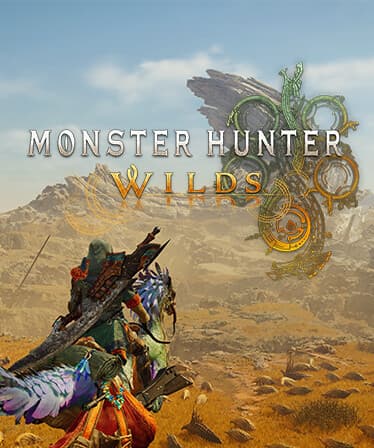
| Platform | PS5, Xbox Series X, PC |
|---|---|
| Genre | Action / RPG |
| Publisher | Capcom |
| Release Date | February 28, 2025 |
| Rating | 9.5/10 |
A Masterwork That Redefines the Franchise
Some games advance a genre. Others reinvent it from the ground up. Monster Hunter Wilds belongs to the second category, and stating this isn't posturing—it's a fact. Capcom took the risk of putting everything on the table: world structure, hunt pacing, storytelling, accessibility. Every decision holds up, resonates, justifies itself in practice. Seven years after World lifted the franchise out of its Japanese niche ghetto, Wilds climbs an even higher peak.
Don't expect a feature list recited in order here. This review comes from someone who spent over sixty hours in the Wild Frontier before writing a single line. Sixty hours of hunting, forging, brutal defeats against monsters that couldn't care less about your pride. Sixty hours watching a living ecosystem unfold with a generosity you hardly expected from a AAA in 2025. Monster Hunter Wilds isn't perfect—we'll get to that—but it's ambitious, coherent, and sovereign in its genre in a way that's painful for the competition.
Gameplay and Feel: The Hunt Finally Unleashed
The series' fourteen iconic weapon types are back, and Capcom didn't half-heartedly retool them. Each has been reworked in depth, with new combos, new windows of opportunity, and a significantly increased sense of weight. The Great Sword strikes with the same brutal satisfaction as previous entries, but its repositioning animations have been smoothed to reduce frustration without sacrificing risk. The Bow gains fluidity and verticality. The Gunlance reclaims an aggressive identity it hasn't had since Generations. You could spend an entire paragraph on each weapon, the care is that evident.
The system's central addition—Focus Mode—deserves attention. Concretely, it lets you, by holding a dedicated button, lock onto a specific wound you've previously inflicted on the monster and concentrate your attacks with surgical precision. It's not a mere cosmetic bonus: targeting an enraged Arkveld's fractured leg actually slows its movement, targeting its neck exposes counter-attack windows that don't exist otherwise. The hunt gains an organic tactical layer that didn't exist at this level in World or Rise, bringing Wilds closer to genuine, deliberate combat rather than a DPS check dressed up as action.
Mobility, finally, has been reimagined through the Seikret, a new winged companion that lets you traverse zones at full speed, reposition mid-hunt, or chase a migrating monster without immersion-breaking loading screens. Coupled with Wirebugs that let you launch into the air and chain diving attacks, the result is three-dimensional combat with a fluidity that even God Eater or Dauntless never approached in this space.
A World That Breathes: The Ecosystem as Main Character
Call it an open map, a living world, a sandbox—reductive labels don't fit. The Wild Frontier is an ecosystem, with all the interdependencies, fragilities, and surprises that implies. Monsters don't wait obediently in their assigned zones. They move, hunt, migrate, fight over territory based on entirely dynamic weather cycles. A sandstorm in the Cracked Desert can turn a routine hunt into a logistical nightmare. A downpour in the Misty Forest triggers the emergence of nocturnal species that shift the zone's balance for the entire phenomenon's duration.
This isn't decoration. Watching a Doshaguma lead its pack across a flood plain at sunset—and realizing you need to adapt your approach because soft terrain slows your dodge rolls—that's narrative mechanics embodied in level design. Compare that to Horizon Forbidden West, which simulated an ecosystem with scripted, rail-bound machines: Wilds goes further because its systems actually interact. An apex arriving in a zone scrambles the behavior of every species present, including the ones you were tracking. The hunt derails, spirals, reinvents itself in real time.
Five main biomes compose the Wild Frontier, each with its own climate logic, endemic fauna, and resources. The Golden Mist Forest, the Conflux Plain, the Coral Graveyards—each environment has a distinct visual and sonic identity, and every weather transition shifts the color palette strikingly. Wilds is probably the first franchise entry where you simply stop to look around.
Art Direction and Technical Prowess: A Show of Force
On PS5 and Xbox Series X, Wilds is a technological showcase without pretense. Capcom wielded the RE Engine with mastery you didn't expect from an engine originally designed for confined spaces like Resident Evil. Open environments benefit from an almost invisible LOD system, with vegetation density and directional lighting that put far more touted open worlds to shame. Performance Mode on PS5 holds a steady 60 fps even during multi-monster confrontations where particle effects flood the screen.
The monsters themselves are the game's graphical masterpiece. Real-time skin texture deformation under wounds, progressive limping animations, intimidation behaviors between species—everything displays an anatomical precision that gives creatures an unprecedented physical presence. The Arkveld, this episode's flagship monster, is one of the best-animated creatures in any action game. The way it coils its phantasmagorical appendages around prey before striking communicates predatory intent that makes every encounter with it memorable.
The orchestral, tribal soundtrack accompanies without overwhelming. Combat themes intensify progressively with monster rage, creating dramatic buildup synchronized with on-screen action. This seems trivial until you realize your play rhythm has unconsciously aligned with the music. On PC, recommended specs are demanding, but graphical customization options rank among the market's most comprehensive.
Content and Longevity: Generosity as Policy
Let's talk numbers, because Wilds' content is a statement of intent. The main campaign—remarkably narrative-driven for the series, with characters who finally have substance—clocks in at twenty-five to thirty hours for someone taking time to explore everything. That's not the destination; it's the introduction. Mid-game unlocks monster variants in extreme weather conditions, specialist quests testing your mastery of specific mechanics, and a difficulty curve that tightens honestly—without the artificial frustrating spike Iceborne suffered in its opening weeks.
Post-game is, without exaggeration, a second game. Higher ranks introduce monsters with entirely revamped attack patterns, a multi-layered forging system opening dizzying armor and skill combinations, and solo or co-op time trials that'll fuel the competitive community for months. Capcom announced an ambitious post-launch roadmap—we'll see, but the foundation's solid.
Four-player co-op remains smooth and well-integrated, with a distress signal system letting you join in-progress hunts frictionlessly. Solo play, meanwhile, never feels penalized: Palicos and the Seikret intelligently compensate for absent human hunters. Capcom finally grasped that accessibility doesn't mean easy, and depth doesn't mean rejecting newcomers.
Strengths
- + Dynamic Ecosystem: Biomes that react, evolve, and surprise every session
- + Focus Mode: An organic tactical layer enriching every weapon without complicating controls
- + Art Direction: Monsters with unmatched physical presence, environments of remarkable visual coherence
- + Progression Curve: Balanced, honest, generous without condescension
- + Mobility: The Seikret and Wirebugs transform traversal into its own gameplay mechanic
- + Content: Solid campaign, demanding mid-game, post-game promising hundreds of hours
- + Technical Performance: Stable 60 fps on current-gen consoles, RE Engine pushed to its limits
Weaknesses
- − Inter-Zone Loading Times: Still present on certain transitions, anachronistic on next-gen SSDs
- − Camera Management: In tight spaces—caves, narrow lairs—remains the series' historical Achilles heel, insufficiently addressed
- − Storytelling: Improved over World, sure, but secondary characters lack real depth and some cutscenes drag unnecessarily
- − PC Optimization at Launch: Some residual stutters on mid-range configs that warrant a quick patch
Verdict: The Hunt Has Never Been Bigger
Monster Hunter Wilds doesn't just follow World—it surpasses it, and does so with the confidence of a franchise knowing exactly what it is and where it's headed. Capcom refused formula complacency and chose ambition: a systemic and credible world, combat rewarding reading and adaptation, progression respecting player intelligence at every step. The result is a game that feels different whether you play twenty hours or a hundred—and stays captivating either way.
Flaws exist. Tight-space camera issues are an old series problem Capcom doesn't seem eager to solve. A few PC stutters at launch are unacceptable on a recommended config at this price point. And storytelling, despite real progress, remains the structural weak point of a franchise that tells its monsters better than its humans.
But none of these issues stand against the whole. Wilds is the best Monster Hunter ever made, the best action game of the current year, and one of this console generation's most accomplished titles. If you've never touched the series, this is your ideal entry point. If you're a veteran since PS2 days, this is the love letter you've been waiting for. Either way, the answer's the same: fire up the hunt.
Final Rating: 9.5/10
Our verdict
Monster Hunter Wilds: The Hunt Has Never Been Bigger
PS5, Xbox Series X, PC