RE3 Nemesis Wasn't Survival Horror: Mikami Understood This First
Resident Evil 4's paradigm shift in 2005 became gaming history's founding myth. Except Shinji Mikami had already transformed the franchise six years earlier. Resident Evil 3: Nemesis, released in 1999, isn't a failed survival horror game—it's an action game disguised as survival horror, and this distinction reframes two decades of Capcom history.
Topic
News
Reading
3 min read
Updated
Tuesday, September 22, 2026
Key points
- 1Resident Evil 4's paradigm shift in 2005 became gaming history's founding myth.
- 2Except Shinji Mikami had already transformed the franchise six years earlier.
- 3Resident Evil 3: Nemesis, released in 1999, isn't a failed survival horror game—it's an action game disguised as survival horror, and this distinction reframes two decades of Capcom history.
Lumnix angle
We isolate the useful facts first, then keep the analysis focused on what changes for players.
Resident Evil 4 may carry a reputation as a seismic shift in survival horror history, but the real fracture in the franchise's DNA is older. Resident Evil 3: Nemesis, released in September 1999 on PlayStation, already contained the seeds of what Shinji Mikami would formalize in 2005. The argument deserves to be stated plainly: RE3 isn't a survival horror game with action elements—it's an action game that retains the aesthetic and vocabulary of survival horror.
Nemesis as a Rhythm Break, Not Continuity
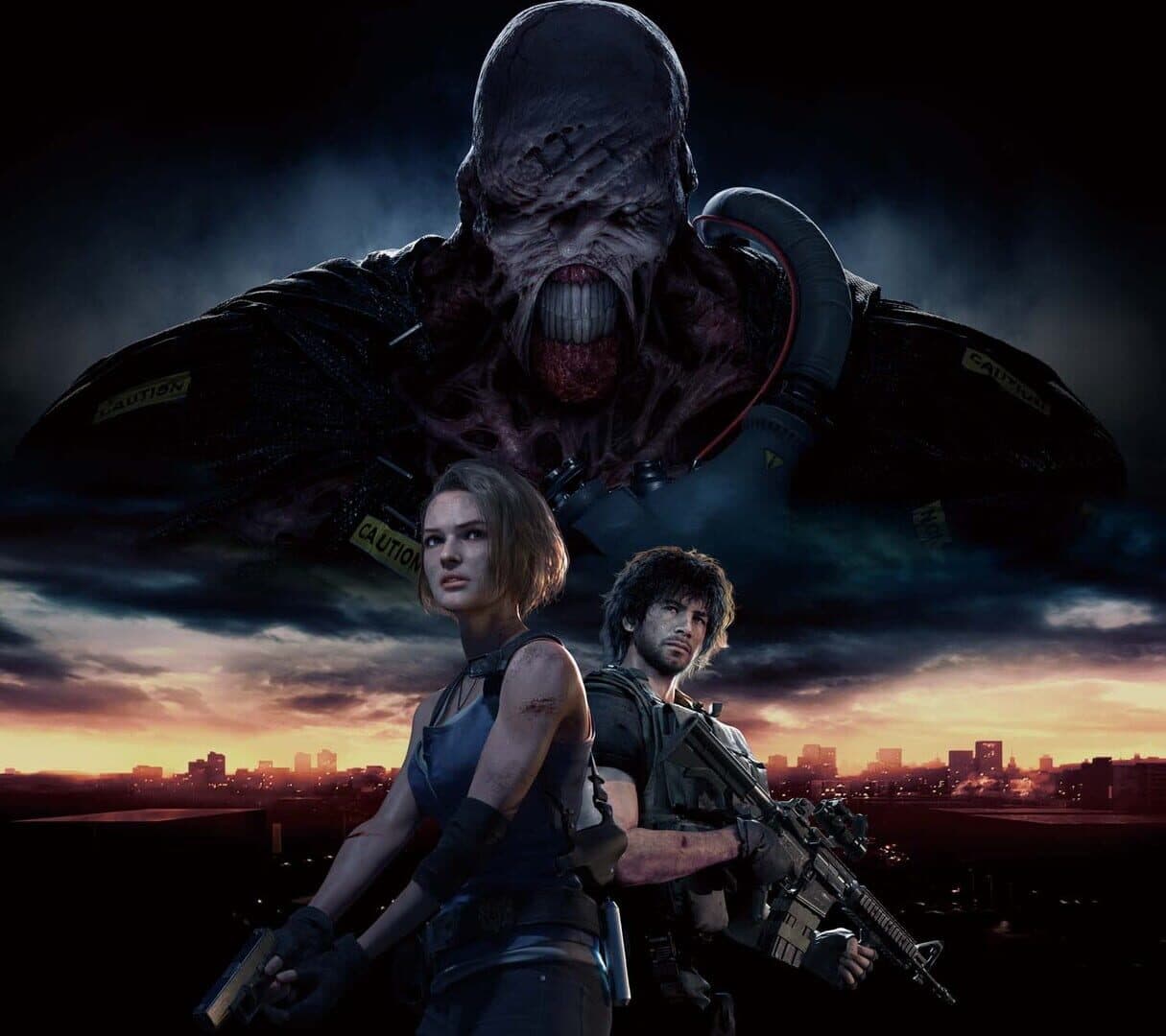
The first two Resident Evil games built their tension on scarcity: rationed ammunition, enemies to avoid rather than eliminate, confined spaces designed to disorient. RE3 methodically inverts these foundations. Jill Valentine has dodge rolls, combinable grenades, and noticeably greater mobility. The game encourages direct confrontation where its predecessors rewarded evasion. Nemesis itself—the centerpiece of the marketing campaign—functions less as a source of terror than as a challenge: defeating it multiple times yields rewards. Horror becomes an optional mechanical device, not a survival requirement.
This logic of spectacular confrontation recalls what Capcom would develop with Devil May Cry in 2001 or Dino Crisis 2 in 2000—both franchises born from Mikami's workshop—far more than the austere oppression of Silent Hill 2, released in 2001, or the opening hours of Resident Evil Remake in 2002. RE3 belongs to a different design family, even though it shares the same logo.
Why the Canonical Reading Persisted So Long
Video game collective memory structurally smooths transitions in favor of clean ruptures. Saying Resident Evil 4 changed everything is simpler and more marketable than admitting the series was already drifting since 1999. This comfortable reinterpretation was actively maintained by Capcom itself, which had every incentive to make RE4 an absolute event rather than a stage in gradual evolution.
The fact that RE3 landed between two titles perceived as canonical survival horror entries—RE2 in 1998 and RE: Code Veronica in 2000—helped erase it from analysis. It's often treated as a parenthesis or deluxe spin-off, which avoids interrogating its true nature. Yet RE3 is the only numbered title from the 32-bit era that explicitly abandons the resource-management logic that defines the genre.
If RE3 is already an action game in disguise, then Resident Evil's trajectory since 1999 isn't an orchestrated betrayal in 2005—it's a coherent line that Capcom paused with RE4, then resumed with the back-to-basics approach of RE7 in 2017. The franchise has oscillated for over twenty-five years between two poles that RE3 was first to blend without choosing.
The 2020 remake, signed by M-Two and Capcom Division 1, actually confirms this reading: it pushes the action emphasis even further, to the point of being criticized for its brevity and linearity. Not a production accident—a deliberate consistency with what the original already was.
Rehabilitating RE3 as precursor rather than relegating it to anecdotal action game status allows us to understand that Capcom didn't break Resident Evil in 2005: the franchise had been seeking to become something else since 1999, without openly admitting it. It's this foundational ambiguity, not Resident Evil 4, that deserves to be at the center of analysis.
In brief
Resident Evil 4's paradigm shift in 2005 became gaming history's founding myth. Except Shinji Mikami had already transformed the franchise six years earlier. Resident Evil 3: Nemesis, released in 1999, isn't a failed survival horror game—it's an action game disguised as survival horror, and this distinction reframes two decades of Capcom history.