Alex Kidd in High-Tech World: How SEGA Sabotaged Its Own Mascot
Before Sonic, SEGA bet everything on Alex Kidd to rival Mario on Master System. In 1987 in Japan, then 1989 in the West, the studio released Alex Kidd in High-Tech World, a game that would paradoxically seal the commercial death of its own champion. A case study in poor franchise management: how a publisher can destroy its mascot by giving it the wrong game.
Topic
News
Reading
3 min read
Updated
Sunday, July 19, 2026
Key points
- 1Before Sonic, SEGA bet everything on Alex Kidd to rival Mario on Master System.
- 2In 1987 in Japan, then 1989 in the West, the studio released Alex Kidd in High-Tech World, a game that would paradoxically seal the commercial death of its own champion.
- 3A case study in poor franchise management: how a publisher can destroy its mascot by giving it the wrong game.
Lumnix angle
We isolate the useful facts first, then keep the analysis focused on what changes for players.
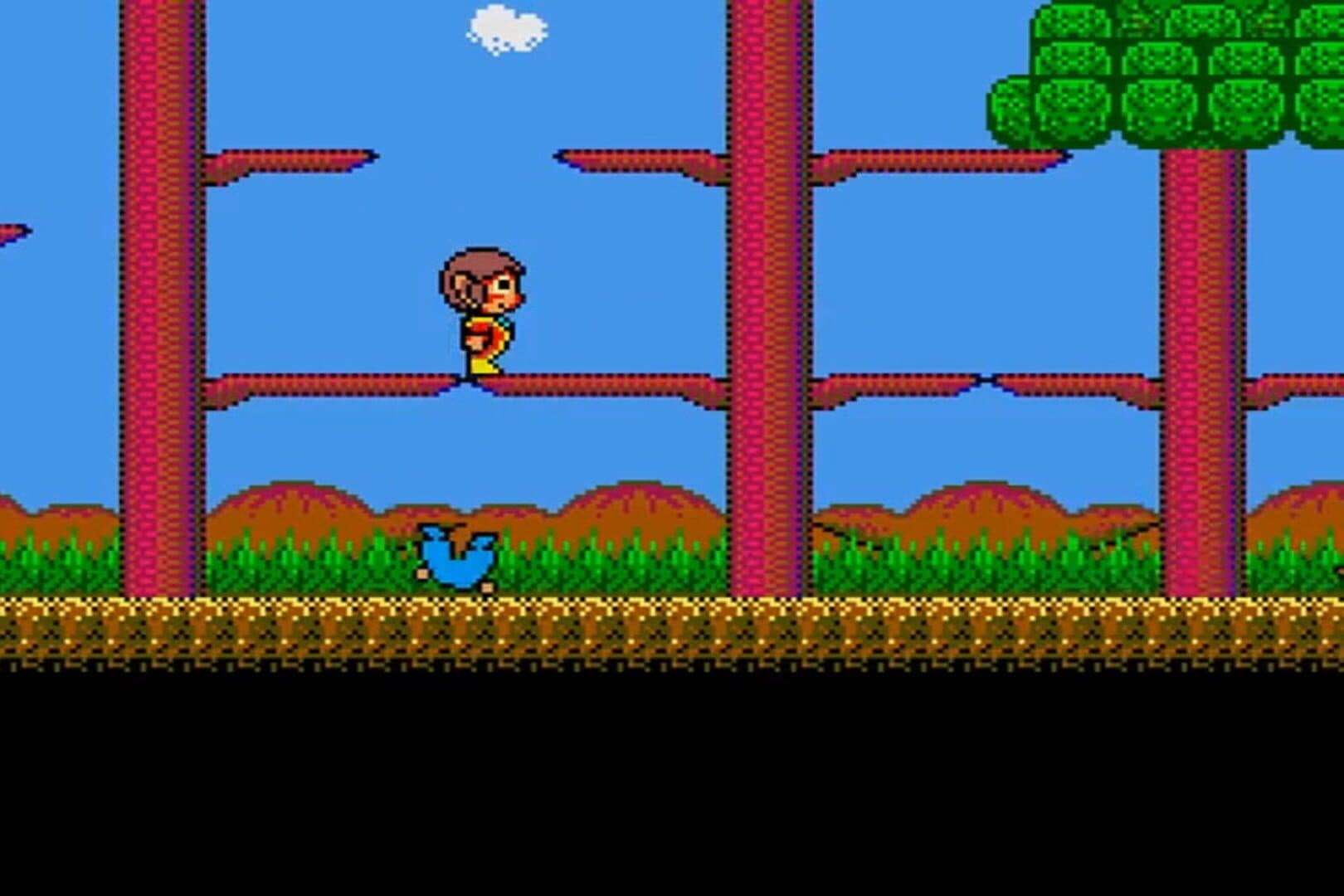
Alex Kidd in High-Tech World launched in 1987 in Japan under the title Anmitsu Hime, a platformer/adventure game adapted from a shojo manga with no connection whatsoever to the franchise. SEGA repurposed the engine, renamed the characters, and shipped it west two years later under the Alex Kidd banner. The result: a cobbled-together, incoherent title that had nothing of SEGA's mascot except the box art.
A surface-level port that betrayed the character
The fundamental problem with High-Tech World isn't its difficulty or isolated game design flaws. It's that it was never designed for Alex Kidd. The original Japanese game was built on a shojo manga universe with its own visual and narrative vocabulary. By swapping sprites while keeping the structure intact, SEGA didn't create a franchise entry—it produced a costume.
For Western players in 1989, Alex Kidd meant Alex Kidd in Miracle World, released three years earlier, a snappy platformer with a clear identity. Jumping into a point-and-click adventure game ahead of its time, stuffed with maze-like exploration sequences and nested dialogue, without any tonal continuity, was a brutal break. Not an evolution—a betrayal of the player's expectations.
Master System needed a Mario-killer, not a mismatched catalog
In 1987-1989, the 8-bit console war pitted Nintendo's NES against SEGA's Master System. Nintendo had Mario, a mascot with exemplary franchise coherence: every game reinforced the character's identity, from Super Mario Bros. (1985, Nintendo) to Super Mario Bros. 3 (1988, Nintendo). SEGA, meanwhile, churned out Alex Kidd episodes with no clear direction: Miracle World, then The Lost Stars, then High-Tech World—three games across incompatible genres released in under three years.
This editorial chaos was just as responsible for the commercial failure as High-Tech World itself. A mascot builds itself on repetition of a single gaming promise. Alex Kidd had no stable one. When Sonic arrived in 1991 with a crystallized identity from day one—speed, attitude, physics-based level design—the contrast with Alex Kidd's chaotic handling was stark.
The wrong game at the wrong time: a lesson the industry keeps repeating. Bubsy 3D (1996, Accolade) ended the career of a mascot that had found its audience on 16-bit hardware. Sonic the Hedgehog (2006, Sonic Team) almost repeated the disaster for the blue hedgehog himself, forcing Sega to overhaul the franchise with Sonic Colours in 2010. A strong character doesn't survive indefinite betrayals.
What High-Tech World demonstrates is that an opportunistic port can do more long-term damage than an outright flop. The game isn't technically catastrophic for its era. It's simply false—false in its relation to the license, false in its commercial promise, false in what it communicated about Alex Kidd's identity to players discovering it.
Nearly forty years later, the verdict is clear
SEGA attempted to revive Alex Kidd with Alex Kidd in Miracle World DX in 2021 (Jankenteam/SEGA), a remaster of the first episode that implicitly confirmed only Miracle World deserved preservation. High-Tech World received no rehabilitation, no recent ports, no nostalgic collector's edition. Its absence from SEGA compilations is a statement in itself.
The real lesson of this episode isn't about a mediocre game released nearly forty years ago. It's about how a publisher can squander franchise capital across a few poorly calibrated titles. Alex Kidd had the fundamentals to endure: readable design, original combat mechanics, embedded presence on Master System hardware. SEGA didn't know what to do with these advantages, and High-Tech World remains the most embarrassing proof of that management failure.
In brief
Before Sonic, SEGA bet everything on Alex Kidd to rival Mario on Master System. In 1987 in Japan, then 1989 in the West, the studio released Alex Kidd in High-Tech World, a game that would paradoxically seal the commercial death of its own champion. A case study in poor franchise management: how a publisher can destroy its mascot by giving it the wrong game.